
Your breath catches, your legs won't move, you try to scream and nothing comes out. You wake up with your heart still pounding.
Chase dreams are among the most common nightmare types worldwide, which is exactly why they've been studied so much.
Lumi
"You probably thought first about what was chasing you.
That matters too, but there's something more important.
What did you do? Did you keep running, or did you look back at some point?"
Table of contents
How You Ran Shapes the ReadingWhat Was Chasing YouA Modern Psychological PerspectiveThe Most Honest AnswerWhat to Do This MorningContinue ReadingHow You Ran Shapes the Reading
In traditional dream interpretation, being chased was generally treated as a symbol of pressure and burden — though it reads less like an entry predicting an outcome and more like one describing a state.
Breaking the scene down this way makes it easier to sort out.
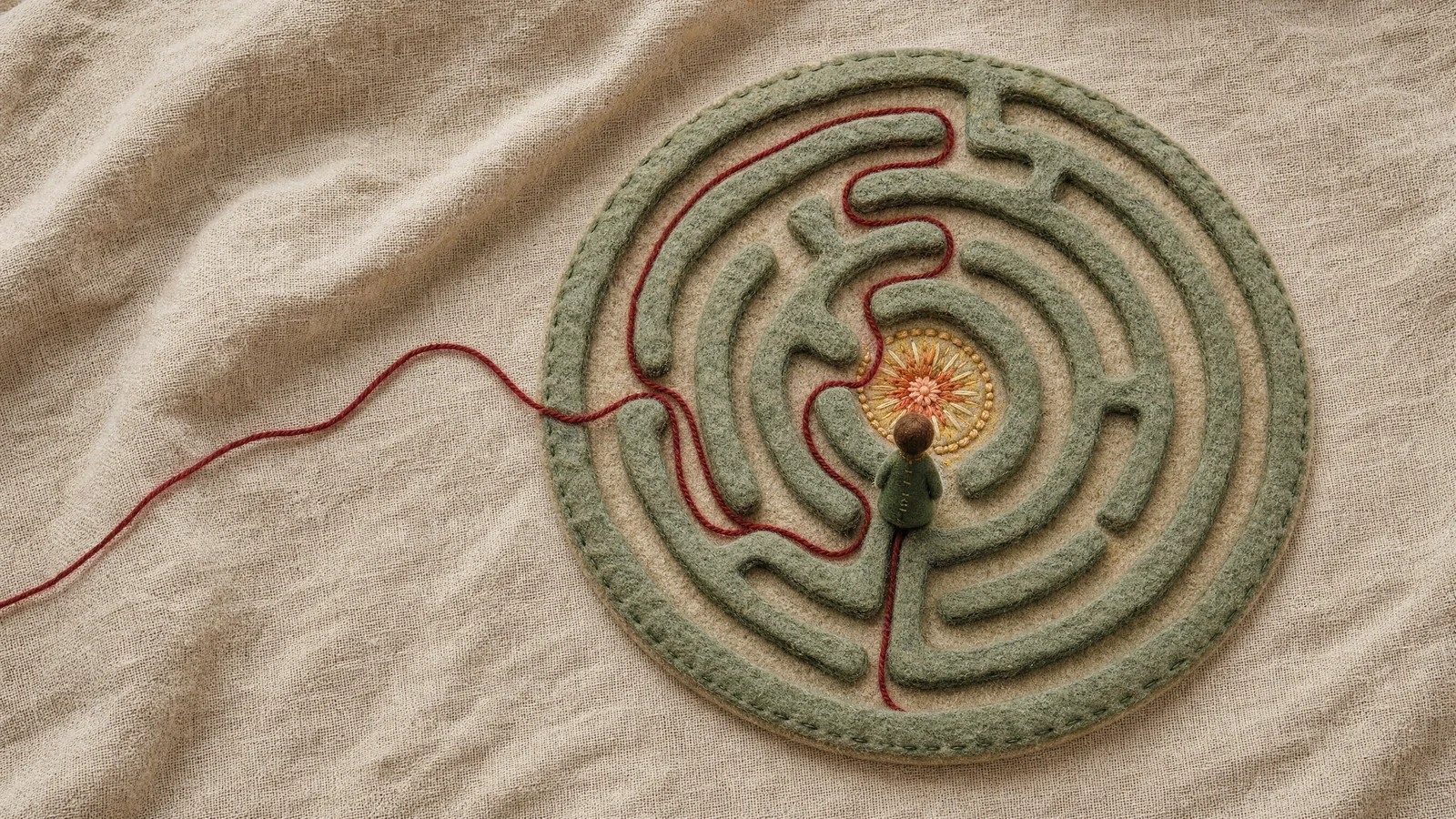
You kept running — the most common form. It's read as a sign that there's something you're currently avoiding.
Your legs wouldn't move — the sensation of wanting to run while your body won't cooperate. One explanation holds that this translates a physiological state, muscles relaxed during sleep, into a dream image.
Your voice wouldn't come out — a related but slightly different sensation. It tends to appear when there's something left unsaid.
You were caught — surprisingly, this isn't always read as a bad sign. What matters more is what happened afterward. If nothing happened, it can be read as a sign that the thing you feared was smaller than it seemed.
You turned and faced it — the rarest version, and the one most worth noting. It's read as a sign that a sense of control is returning.
What Was Chasing You

The pursuer is more often vague than clearly identifiable. That vagueness is characteristic of this dream.
If it was something you couldn't identify, that points less to a specific target and more to the situation itself being the source of pressure. If it was someone you know, it may be worth considering whether something in that relationship is still unresolved. If it was an animal, the particular animal carries its own separate symbolism.
A Modern Psychological Perspective
In modern psychology, chase dreams are frequently discussed as a marker of stress and avoidance. Some reports suggest the frequency rises before deadlines, during conflict, or when a decision is being put off.
Finnish psychologist Antti Revonsuo's threat-simulation theory is often cited here too. The hypothesis holds that dreaming functions as safe rehearsal for threatening situations — an attempt to explain why being chased, falling, and snakes recur across cultures regardless of background.
It remains a hypothesis. It is debated within the field and is not settled fact.
The Most Honest Answer
Many interpretations online read chase dreams as an omen of a specific event. Within the range of original sources we checked, nothing supports that connection.
This dream tends to tell you about the present rather than what's coming.
What to Do This Morning
- What was chasing you
- What you did (ran / froze / turned to face it)
- How your body felt (legs, voice)
This dream often repeats. A few weeks of notes can reveal which periods it clusters around.
Record today’s dream in Dream Talisman
Continue Reading
- Snake dream meaning — from white snakes and black snakes to being bitten
- Teeth falling out dream meaning — why it matters which tooth fell out
- Deceased dream meaning — why it isn't a frightening dream
References
- "Dreams" — Encyclopedia of Korean Culture (a major reference work on Korean history and culture, compiled by the Academy of Korean Studies), entry E0011278
- Antti Revonsuo, "The Reinterpretation of Dreams: An Evolutionary Hypothesis of the Function of Dreaming" (2000)
- General research in modern sleep and dream psychology