
It's been a long time since it ended, and then, out of nowhere, they show up.
Days had gone by without a single thought of them. You'd decided you were fine. Then you woke up and they'd been there. And the whole day feels strangely unsettled.
So you search for an answer. Why now, of all times? And — did they happen to be thinking of you too?
Let's answer the second question first: there's no way to know, and no basis for assuming so. But the first question is worth spending some time on.
Lumi
"Was their face accurate in the dream?
Was it how they look now, or how they looked when you broke up?
That matters more than you'd think."
Table of contents
People Had This Same Dream 400 Years AgoThe Person in the Dream Isn't Actually ThemHow the Old Records Treated PartingThe Dream of Meeting AgainThe Dream Where You Talked, and the One Where the Words Didn't LandThe Dream Where You Just Walked Past Each OtherThe Dream of Reaching for Them, and the Dream of Breaking Up AgainThe Dream Where They're With Someone ElseWhy It Showed Up Right Now"Were They Thinking of Me Too?"Told HonestlyFrequently Asked QuestionsPeople Had This Same Dream 400 Years Ago
Jeong Cheol (a mid-Joseon-era poet and government official) wrote a passage about a dream in his gasa poem "Sok Miin Gok" ("The Sequel to the Song of the Fair One"). In it, a speaker who has been wandering, unable to find the person she longs for, finally falls into a brief sleep.
My longing was so complete that I saw my beloved in the dream,
but the face that had once been like jade had aged more than halfway.
I meant to pour out everything I'd been holding in my heart,
but the tears kept coming, and the words wouldn't follow.
I couldn't finish saying what I felt — my throat closed with grief —
and then some untimely rooster's crow tore me out of sleep.
The entry on dreams in the Encyclopedia of Korean Culture (a major reference work on Korean history and culture) introduces this passage as a classic dream scene in traditional Korean verse — meaning that dreaming of a person you long for was common enough to become a recognizable literary pattern.
It's a dream from four hundred years ago, and the structure is identical to now.
First, the face was different. The face that had been like jade had aged more than halfway. It wasn't the face she remembered.
Second, she couldn't speak. There was so much she wanted to say, but the tears came and the words didn't. Her throat closed, and in the end she couldn't say it.
Third, it was cut off. A rooster's crow woke her before she could finish.
And when she woke, only her own shadow had followed her.
These three details line up almost exactly with what people describe today when they search for ex-lover dreams: the face was a little off, the words wouldn't come out, and the dream cut off mid-scene.
The Person in the Dream Isn't Actually Them
This is the most important point in this whole article.
From a modern psychological perspective, a person who appears in a dream isn't that person — it's an image of them that your own mind has stored. Your brain assembles it out of memory.
That's why the ex-lover in your dream tends to show a few consistent features:
- They appear as they looked at the time you broke up, because you have no way of knowing how they've changed since
- They say or do things they wouldn't actually say or do
- The face is subtly off
- Conversations don't quite hold together
Once you know that, the question changes. It stops being why did they show up and becomes why did that memory surface right now.
And that second question actually has some answers.
How the Old Records Treated Parting
The entry on dreams in the Encyclopedia of Korean Culture lists folk-belief dream-interpretation rules, but there is no entry for an ex-lover specifically — the concept itself didn't exist in the same form back then.
A few entries about relationships do appear, though:
- If a married couple sits together at a feast, it means divorce
- If a mirror breaks, the couple will separate
- If water overflows, it means a marriage is coming
A pattern shows up here. The entries dealing with separation are all conditioned on something breaking or going wrong. Sitting together, oddly, points to divorce; a broken mirror points to parting.
And there is no entry anywhere for a parted person reappearing. So there's no traditional basis for reading this dream as auspicious or inauspicious.
This one has to be read through a modern lens instead.
The Dream of Meeting Again

This is the most-searched scene.
From a modern psychological perspective, this dream is usually connected to unresolved feelings. But let's clear up a misunderstanding first.
Unresolved doesn't mean you still want them back.
A relationship ending doesn't mean the emotional processing ends with it. Something you meant to say. Never understanding why it happened. Never getting to say goodbye properly. When something like that is left hanging, the brain pulls the scene back out.
Wanting to see them again and wanting to properly finish things are two different wishes. And that's usually the real fork in this dream.
Lumi
"What did you actually do when you met them?
Did you talk? Or just look at each other?
Or did you act like nothing had ever happened?
Those are three completely different dreams."
The Dream Where You Talked, and the One Where the Words Didn't Land
The Conversation Actually Worked
From a modern psychological perspective, a fully coherent conversation is rare in dreams. So if you remember one clearly, that fact alone is worth noting.
If you remember what was said, it's worth writing down. But it doesn't mean those were words that person would actually say. It's more likely something you wanted to hear, or wanted to say yourself.
This is especially true if you dreamed of receiving an apology or an explanation. That wasn't given to you by them — you built it.
If you woke up feeling relieved, that's not a bad sign.
The Words Wouldn't Come, or Wouldn't Land
This gets reported surprisingly often. You try to speak and your voice won't come out, or you speak and the other person can't hear you.
From a modern psychological perspective, this belongs less to the "ex-lover dream" family and more to the broader family of dreams where you can't speak. It's the state of having something to say and being unable to say it.
The "Sok Miin Gok" passage above is exactly this scene. She meant to pour out everything in her heart, but the tears came and the words wouldn't follow; her throat closed and she couldn't finish. People couldn't get the words out in dreams four hundred years ago either.
The voice-loss sensation itself isn't yet covered in a dedicated guide on this site, but it belongs to a recognized category of dream experience.
The Dream Where You Just Walked Past Each Other
You saw each other, but nothing happened. You passed by without acknowledging it, or didn't even recognize them.
From a modern psychological perspective, some readings treat this scene as a sign that the processing is already underway, precisely because the emotion wasn't intense.
What matters here is how you felt in the moment.
- Did you feel nothing at all
- Did you feel a pang of disappointment
- Did you feel relief
The second suggests something is still unresolved; the third can mean you've moved through most of it already.
The Dream of Reaching for Them, and the Dream of Breaking Up Again
You Tried to Hold On
You reached for them as they walked away and couldn't grab hold, or your hand couldn't reach, or you chased them and they only got farther away.
From a modern psychological perspective, this scene is an image of something outside your control. It shares a family resemblance with dreams of catching and then losing a fish, where there's a residual sensation from having had something in your hands, even briefly.
If this dream recurs, it's worth noting the intervals between occurrences. They tend to lengthen over time.
You Broke Up With Them Again, in the Dream
This is the most exhausting version to wake up from.
From a modern psychological perspective, this is closer to reenactment — reliving the same scene again. If it keeps recurring, some readings treat that as a sign the event hasn't finished being processed.
That's not necessarily a bad thing — it's closer to a sign that it's still in progress. Research on dreams following bereavement has made similar observations: recurring dreams appear to play some role in the process of working through emotion.
The Dream Where They're With Someone Else
This is the version people wake up from in the worst mood.
From a modern psychological perspective, this scene doesn't tell you anything about that person's actual life right now. It's something you imagined.
You genuinely don't know how they're doing. When your brain fills in a gap it doesn't have information for, it tends to fill it in with whatever worries you most.
This is not a premonition. It doesn't mean they're actually seeing someone, and it doesn't mean they aren't. A dream doesn't carry information.
You might feel the urge to check up on them after waking. That urge was manufactured by the dream — it isn't something you actually need to act on.
Why It Showed Up Right Now
This dream doesn't usually appear at random. It tends to line up with a handful of recurring triggers.
- A similar season or date. The season you met, the time you broke up, an anniversary
- The start of a new relationship. A period of comparison or anxiety
- More time spent alone than usual. A move, a job change, any shift in your surroundings
- A loss unrelated to that person. The brain often pulls up similar-feeling memories together
- Recently seeing a photo or hearing news of them
That last one is more common than people expect. A glimpse on social media, their name coming up in someone else's story. Yi Ik, a late-Joseon-era scholar of the Silhak (Practical Learning) school, wrote in his essay "Monggamnon" ("On the Sensations Behind Dreams") that what a person sees and hears during the day becomes the material of dreams.
If this dream has become more frequent lately, it's more likely to be about your current situation than about them.
"Were They Thinking of Me Too?"
Enough people come here specifically asking this that it deserves its own section.
There's no evidence that appearing in your dream means that person was thinking of you.
This idea is widespread, and it's a comforting one to believe. But it doesn't appear in the old dream-interpretation texts or in psychological research.
And believing it creates one specific problem: it manufactures a reason to reach out.
A dream isn't a signal. It's best not to treat this dream as grounds for contacting them, guessing at their feelings, or reopening something that's closed.
If you genuinely want to reach out, that should come from your own wish, not from the dream. And at that point, whether they'd actually want that becomes something worth thinking through too.
Told Honestly
Lumi
"Search 'sign of getting back together' and you'll get a flood of results.
None of it holds up.
Even Jeong Cheol only met her in a dream. Then a rooster crowed, and there was nothing beside her but her own shadow."
Traditional dream interpretation and modern psychology rely on different kinds of evidence.
There is no ex-lover entry in the old dream-interpretation lists. What can be confirmed is only that separation was traditionally read through scenes of something breaking or going wrong.
The encyclopedia itself notes, after laying out its dream-interpretation list, that these readings emerged naturally from many people's experience rather than from any consistent theoretical foundation.
A few things should be said plainly.
An ex-lover dream is not a sign of getting back together.
It doesn't mean they were thinking of you either.
What you saw of their situation in the dream isn't real information. Whether they seemed to be with someone else or seemed to be struggling — that's a scene you built yourself.
No verified connection exists between ex-lover dreams and lottery numbers, either.
Frequently Asked Questions
Is an ex-lover dream a sign we'll get back together? No. There's no basis for that in either the old records or in research.
Were they thinking of me too? There's no way to know, and no basis for assuming so. The person who appears in a dream is an image built from your own memory.
It's been years since we broke up. Why is this happening now? It often lines up with a similar season, the start of a new relationship, a change in your surroundings, or recently hearing something about them. It may have more to do with your current situation than with them.
I dreamed they apologized to me. The words in the dream weren't spoken by them — you constructed them. That doesn't make it meaningless, though. It reveals what you wanted to hear.
This dream keeps repeating. Writing down the interval between occurrences, along with what else was happening, often makes a pattern legible later. The interval usually lengthens over time. If it's affecting your sleep or daily life, though, talking to someone is worth considering.
I keep forgetting my dreams. Dreams start fading about 90 seconds after waking. Instead of getting up right away, lying still for a moment often brings back more fragments.
The day after this dream tends to feel a little off. That's unavoidable.
But it isn't a signal. An old memory surfaced for some reason, and its residue is lingering through today. It usually settles within a day or two.
There's nothing you need to do today. If you want one piece of advice: don't reach out, and get some sleep.
And if you've been spending a lot of time alone lately, going and sharing a meal with someone else would do more good than any of this. That's the more reliable move.
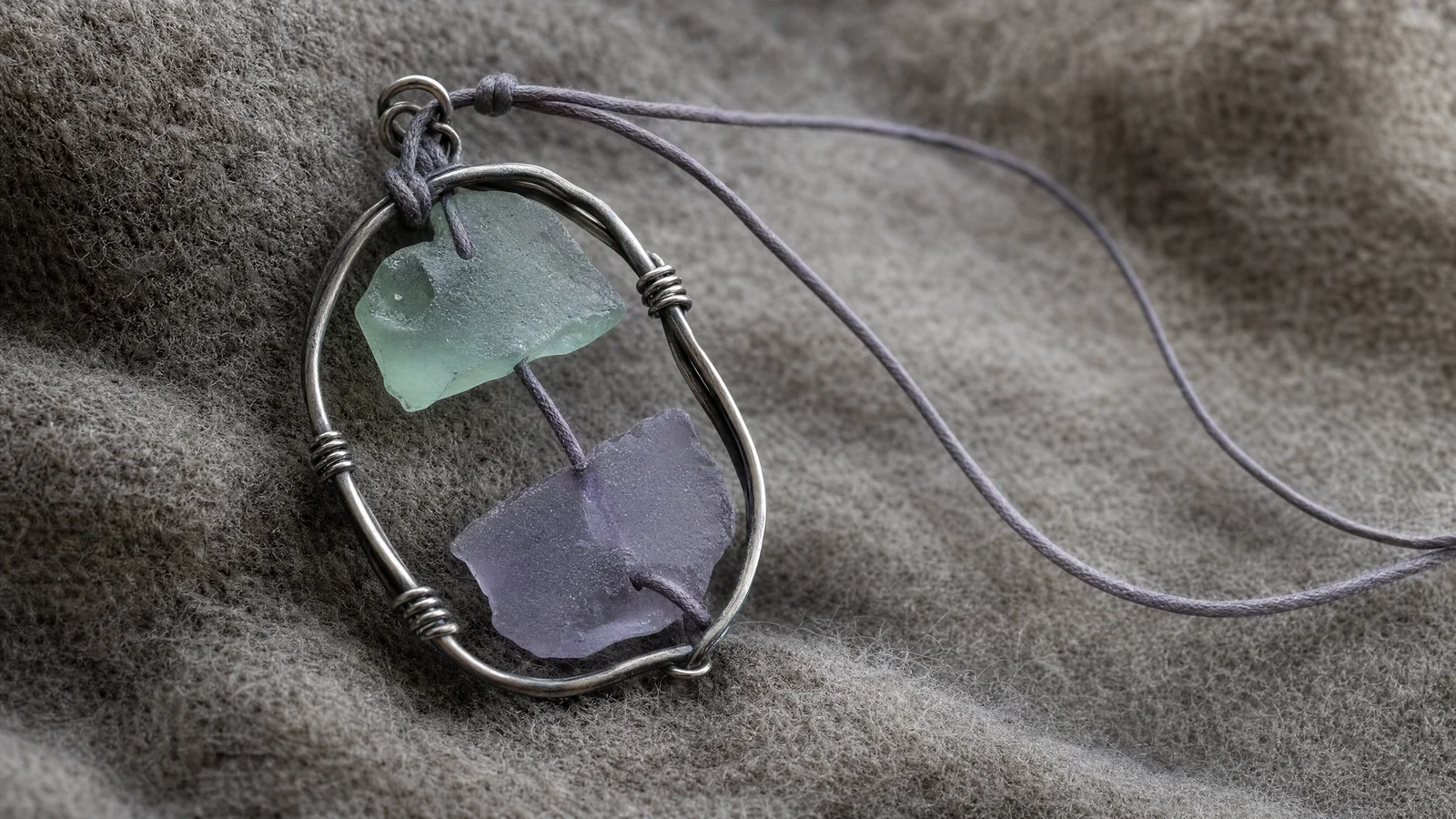
Dreams like this are worth writing down.
After a few months of entries, a pattern usually becomes visible — clustered around a season, an anniversary, a particular kind of situation. Once you see that pattern, the same dream tends to shake you less the next time it appears.
Dream Talisman has a recording feature for the day's dream and how you felt afterward. It isn't an app that interprets your dream for you — it's built to help you write it down before it fades.
Record today’s dream in Dream Talisman
References
- "Dreams" — Encyclopedia of Korean Culture · The folk-belief dream-interpretation list (relationship and object entries), the dream passage in Jeong Cheol's "Sok Miin Gok," Yi Ik's "Monggamnon"
- "Sok Miin Gok" — Encyclopedia of Korean Culture · By Jeong Cheol, circa 1585. The quoted passage is rendered here in modern English adaptation
- General research on recurring dreams following bereavement and the end of relationships
- General research in modern sleep and dream psychology