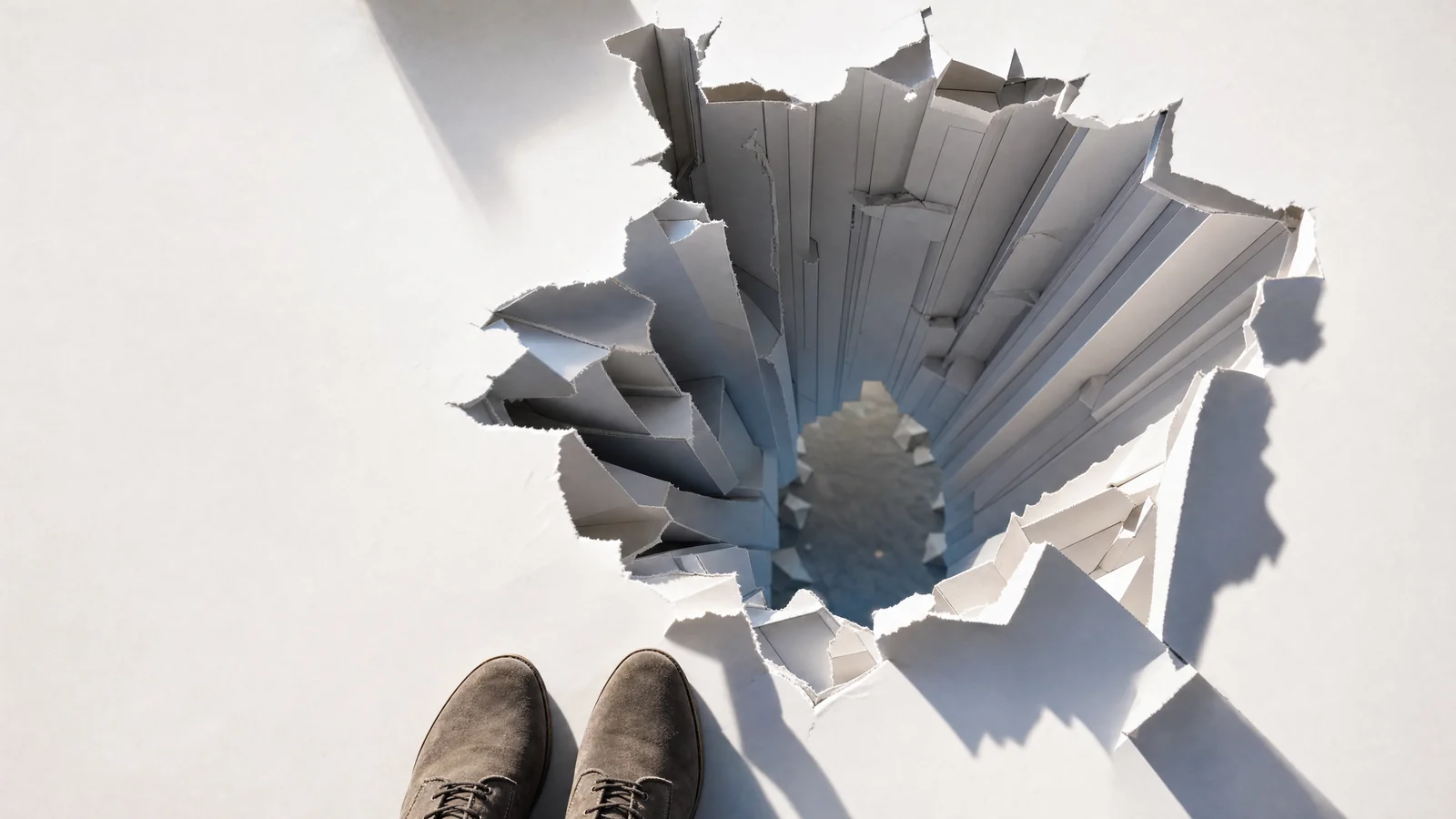
Falling dreams are different from every other dream in one specific way.
The body reacts first. With most dreams, you wake up and only afterward realize, oh, that was frightening. This one runs in the opposite order. Your leg jerks, your eyes snap open, your heart is already racing — and only then do you register: oh, that was a falling dream.
And most of the time, you wake up before you hit the ground.
This sensation has a name, and an explanation. That comes before any interpretation.
Lumi
"Where did you fall from?
A building, a cliff, or just open air with nothing around?
And one more thing. Did you hit the ground?"
Table of contents
That Jolt Right as You're Falling AsleepWhat the Old Records Cared About Wasn't the HeightFalling From a Tall BuildingFalling From a Cliff or a LedgeFalling From a TreeFalling From a Mountain, and Tumbling Down StairsDid You Hit the Ground?Told HonestlyFrequently Asked QuestionsThat Jolt Right as You're Falling Asleep
There's a reason the falling sensation feels so vivid.
Right as you're drifting off, your body sometimes jerks suddenly. This is called a hypnic jerk. A muscle contracts abruptly, producing the sensation of missing a step, and the jolt itself is often what wakes you up.
It's extremely common. Most people experience it, and it isn't a medical condition. It's said to happen more often when you're tired, when you've had a lot of caffeine, or when you're sleeping somewhere uncomfortable.
The order matters here. It may not be that a falling dream causes the body to jerk — it may be that the jerk comes first, and the brain builds a falling scene around it. The brain is attaching a narrative to a sudden physical sensation.
This kind of explanation isn't new. Yi Ik, a late-Joseon-era scholar of the Silhak (Practical Learning) school, wrote in his essay "Monggamnon" ("On the Sensations Behind Dreams") that someone who falls asleep hearing drums will dream of soldiers, and someone who falls asleep hearing recitation will dream of books. The observation that outside stimuli become dream content is three hundred years old.
So if you're having falling dreams often, this is worth checking before you go looking in any dream-interpretation guide:
- Have you been short on sleep lately
- Are you drinking caffeine late in the day
- Is your sleeping arrangement uncomfortable
What the Old Records Cared About Wasn't the Height
The entry on dreams in the Encyclopedia of Korean Culture (a major reference work on Korean history and culture) organizes folk-belief dream-interpretation rules by category. Two entries touch on falling scenarios specifically.
- Climbing a tree and having a branch break was seen unfavorably
- Climbing a mountain and having the mountain collapse was said to bring misfortune
Set these two side by side, and a pattern emerges.
Both are structured around going up, and then having the ground beneath you give way. The condition isn't falling itself — it's that what you were standing on collapsed.
That's a meaningfully different claim. Being high up wasn't treated as a problem on its own, and neither was coming back down. The problem was the support structure.
In the same list, climbing a mountain by itself wasn't read unfavorably, and dreaming of growing wings on your body was read very favorably. If height itself were the ill omen, these entries couldn't coexist the way they do.
So there's no basis in the record for calling a fall from a height inauspicious just because it was a fall. What the old standard actually tracked was whether something underneath you gave way.
And one more thing: these records aren't prophecy — they're a record of how people of that era made sense of the world. The encyclopedia itself notes, after laying out its dream-interpretation list, that these readings emerged naturally from many people's experience rather than from any consistent theoretical foundation.
Falling From a Tall Building
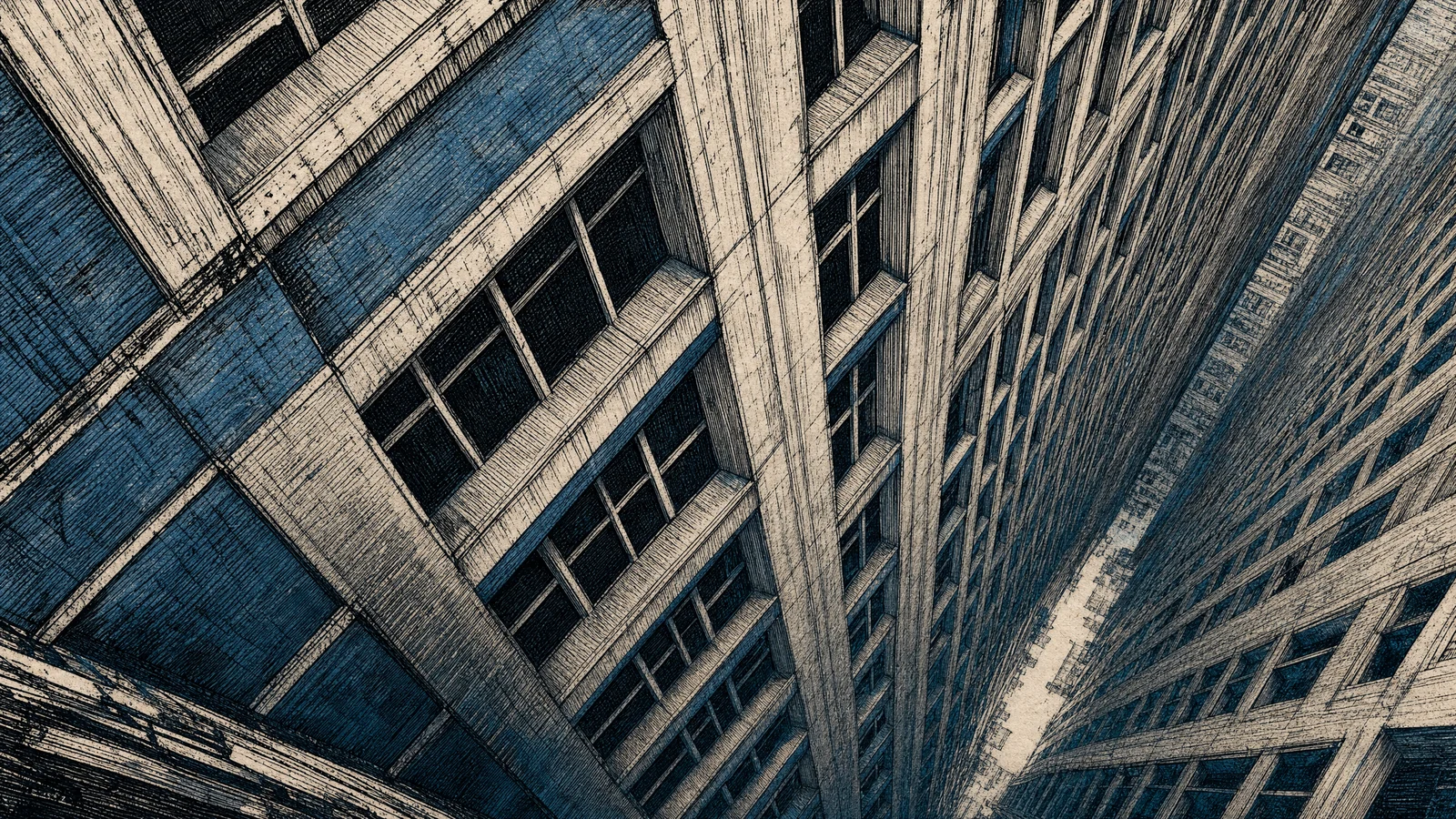
This is the most commonly reported scene today. Naturally, the old records have nothing on it — there were no tall buildings back then.
From a modern psychological perspective, what sets a building apart from a tree or a cliff is that it's something you built. It isn't a natural landform — it's something constructed.
So this scene is often read in connection with something you've built over time — a long-running job, relationship, or plan — with the fall representing losing your footing within it.
The fork here is how you fell.
- Did you miss a step
- Did a railing give way
- Were you pushed
- Did you just fall while looking out a window, with no clear cause
If you apply the old records' logic directly, the second option stands out — the case where whatever you were standing on gave way.
A falling elevator belongs to the same family, but with one difference: you're trapped inside it as it falls. There's an added sense of being unable to get out or grab hold of anything.
Falling From a Cliff or a Ledge
Unlike the building scene, this one is a very old image.
From a modern psychological perspective, a cliff represents a boundary. This is where the ground ends and nothing follows. Where a building represents something built up, a cliff represents a point where things simply stop.
What tends to matter most here is what happened right before the fall.
- Were you standing at the edge looking down
- Did the ground vanish while you were walking
- Did you jump
The third is a different dream entirely. That's not falling — that's choosing. Whether you felt fear or relief in that moment is the useful piece of information.
It's often said that cliff-falling dreams appear before a major decision, but that's a modern reading, not something confirmed by the old records.
Lumi
"Did the fall feel like it took a really long time?
It was probably only a few seconds in real time.
Time just runs strangely in dreams."
Falling From a Tree
As mentioned above, this is the one case with an actual entry in the old records. Climbing a tree and having a branch break underneath you was seen unfavorably.
But look at the condition again. The break is the condition — not climbing the tree, and not coming down from it.
From a modern psychological perspective, a tree represents something that grows, something that took a long time to become what it is. A branch breaking beneath you connects, in some readings, to the feeling of something you'd long relied on suddenly giving way.
Monkeys don't appear in the same list, but anyone familiar with the saying "even monkeys fall out of trees" may find that expression feeding into the imagery. That saying is covered separately in our guide to monkey dreams.
Falling From a Mountain, and Tumbling Down Stairs
The Mountain
In the old records, mountains appear in two directions: climbing a mountain, and a mountain collapsing. Climbing wasn't read unfavorably; collapsing was read as ill fortune.
From a modern psychological perspective, a mountain represents scale — something large, old, and assumed to be permanent. A scene where it collapses reads as a sense that some assumption you relied on has broken down.
The act of climbing a mountain in a dream is covered separately in our own guide to mountain-climbing dreams.
The Stairs
Lower in height, but different in one key way: it's continuous. You're not falling all at once — you're tumbling, step by step.
From a modern psychological perspective, some readings treat this as an image of gradually losing control — one misstep leading into the next. It's sometimes explained as appearing during a period when small mistakes are piling up rather than one big incident happening at once.
The staircase image itself is covered separately in our guide to stair dreams.
Did You Hit the Ground?
This is the single most informative question you can ask about this dream.
You Woke Up Before Landing
The most common version. This often overlaps with the hypnic jerk described earlier.
From a modern psychological perspective, a dream that cuts off before any resolution is often explained as an image of something unresolved. But with falling dreams specifically, the likelihood that a physical jolt is what woke you makes it harder to assign the same kind of meaning as other dreams.
The claim that dying happens if you hit the ground in a falling dream has no basis. It's a widely repeated idea, but its origin can't be traced. Plenty of people have dreamed of hitting the ground and woken up perfectly fine.
You Fell All the Way Down
You hit the ground, or hit it without pain, or simply kept falling and falling.
From a modern psychological perspective, some readings treat this as more resolved, oddly enough — you've seen the worst-case outcome through to the end.
Someone Caught You, or You Landed Safely
Rare, but it happens. There's also a version where you rise like a bird instead — but that's no longer a falling dream; it's crossed over into a flying dream.
The Fall Never Ended
An endless descent. From a modern psychological perspective, this reads less like falling and more like an image of something ongoing — a state that won't resolve.
If this dream keeps recurring, it's worth writing down the intervals between occurrences. Our general guide to recurring dreams covers this further.
Told Honestly
Lumi
"Search for falling dreams and you'll find claims about losing money or losing status.
I couldn't find a basis for any of that.
What's actually in the record is 'if a branch breaks' and 'if a mountain collapses' — and that's a different claim entirely."
Traditional dream interpretation and modern psychology rely on different kinds of evidence.
What's confirmed in the old records goes only as far as this: a scene where whatever you were standing on gave way was read unfavorably. No entry treats height or falling itself as an ill omen.
And that record isn't prophecy. The encyclopedia itself states that these readings weren't built on any consistent theoretical foundation. Even the Samguk Yusa (Memorabilia of the Three Kingdoms) preserves a case where the very same dream was read in opposite directions depending on who was interpreting it.
A few things should be said plainly.
A falling dream is not a premonition. There's no evidence it foretells an actual accident or fall.
No verified connection exists between falling dreams and lottery numbers, either. Dreams involving money are covered separately in our guide to dreams about finding money.
The claim that hitting the ground means death also has no basis.
And this dream is extremely common. It's one of the most frequently reported dreams across cultures worldwide. It isn't happening only to you.
Frequently Asked Questions
Is a falling dream a bad omen? What the old records actually flagged wasn't height — it was a scene where whatever you were standing on gave way. There's no basis for calling a fall inauspicious just because it happened.
Why do I jerk awake right as I'm falling asleep? It's called a hypnic jerk. It's very common and not a medical condition. It's said to relate to fatigue, caffeine, and uncomfortable sleeping conditions.
Does hitting the ground in a falling dream mean I'll die? No. There's no basis for that claim. Plenty of people dream of hitting the ground and wake up completely fine.
Is falling from a building different from falling off a cliff? Modern interpretation treats them differently — a building is something built, a cliff is a boundary that was already there. The old records don't make this distinction, though.
I have falling dreams often. Writing down the interval between occurrences, along with what else was happening, tends to make a pattern legible later. It often lines up with periods of insufficient sleep.
I keep forgetting my dreams. Dreams start fading about 90 seconds after waking. Instead of getting up right away, lying still for a moment often brings back more fragments.
Sleep tends to be a little rough the night after a falling dream. Your body was startled once already, so that's to be expected.
If you have something to do today, just do it as planned. The dream doesn't forecast anything.
If there's one thing worth checking, it's whether you've been getting enough sleep lately. This dream tends to reflect your physical condition fairly honestly. Skipping the afternoon coffee and going to bed an hour earlier will do more for you than any interpretation.

The same dream leaves a different color for everyone.
Dream Talisman looks at the dream scene you record together with your day stem (ilgan) in the Five Elements system, and turns it into a color and phone wallpaper for the day. It is less an app that interprets your dream for you than one that lets you carry today's dream with you for the rest of the day.
Curious what color the scene you just read about will come out as?
Record today’s dream in Dream Talisman
References
- "Dreams" — Encyclopedia of Korean Culture · The folk-belief dream-interpretation list (natural landscape and plant entries), Yi Ik's "Monggamnon," the dream-interpretation case from the account of King Wonseong in the Samguk Yusa
- General sleep-medicine material on the hypnic jerk
- General cross-cultural research on typical dreams
- General research in modern sleep and dream psychology