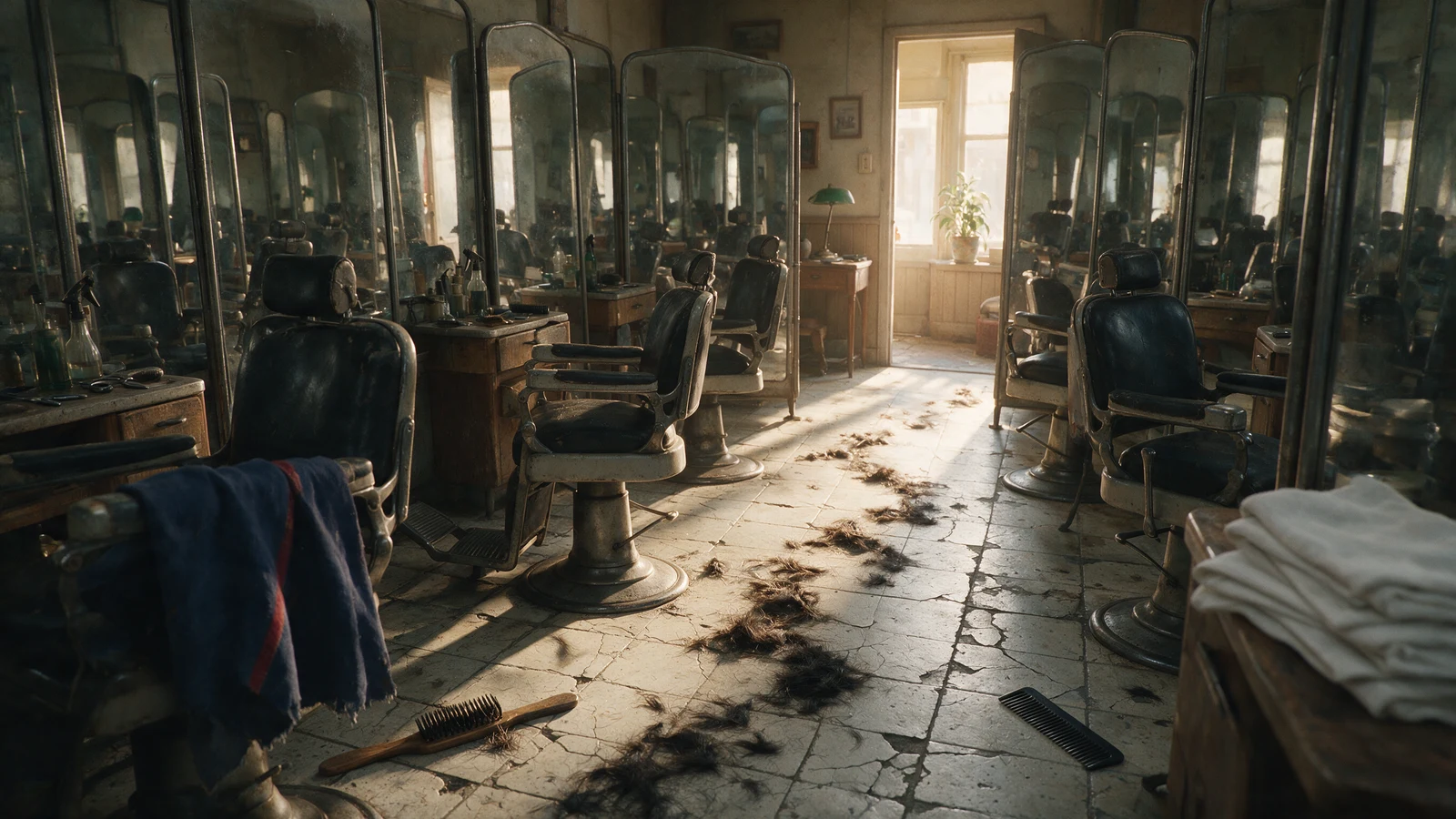
You probably checked the mirror.
Hair dreams tend to end that way. You're startled by hair that's suddenly shorter, or you find a fistful of cut hair in your hand, or you're watching it fall to the floor. Then you wake up and touch your own hair.
After that comes the search. Most people wonder the same thing. Does it matter whether I cut it myself or someone else did?
Lumi
"I had a feeling you'd ask that first.
But the old entries are a little deflating here. Both are recorded as inauspicious.
So what was read as good? That comes a bit later."
Table of contents
Cutting It and Losing It Were Both Bad OmensWhat Was Recorded as Auspicious Was the Opposite of LossThe Korean Catalog Has No Hair Entry. It Has a Tooth EntryThe Dream of Cutting It YourselfThe Dream of Someone Else Cutting ItThe Dream of Hair Falling OutThe Dream of Loose, Disheveled HairThe Most Honest AnswerFrequently Asked QuestionsCutting It and Losing It Were Both Bad Omens
The old Chinese dream manual Zhougong Jie Meng (the Duke of Zhou's dream manual) has quite a few entries on hair. And every entry where hair diminishes reads dark.
- Cutting or shaving off your hair means misfortune for the household
- Going bald and shedding hair are entirely inauspicious
- Hair and beard falling out on their own bring worry for one's descendants
All three entries point the same direction. Cutting it yourself and losing it on its own are recorded separately, but the conclusion doesn't split between them.
So the claim that "whether you cut it yourself or it was cut" decides good or bad fortune isn't something the old texts support. Some modern dream-reading sites say this, but the basis lies elsewhere.
The real dividing line was somewhere else entirely.
What Was Recorded as Auspicious Was the Opposite of Loss
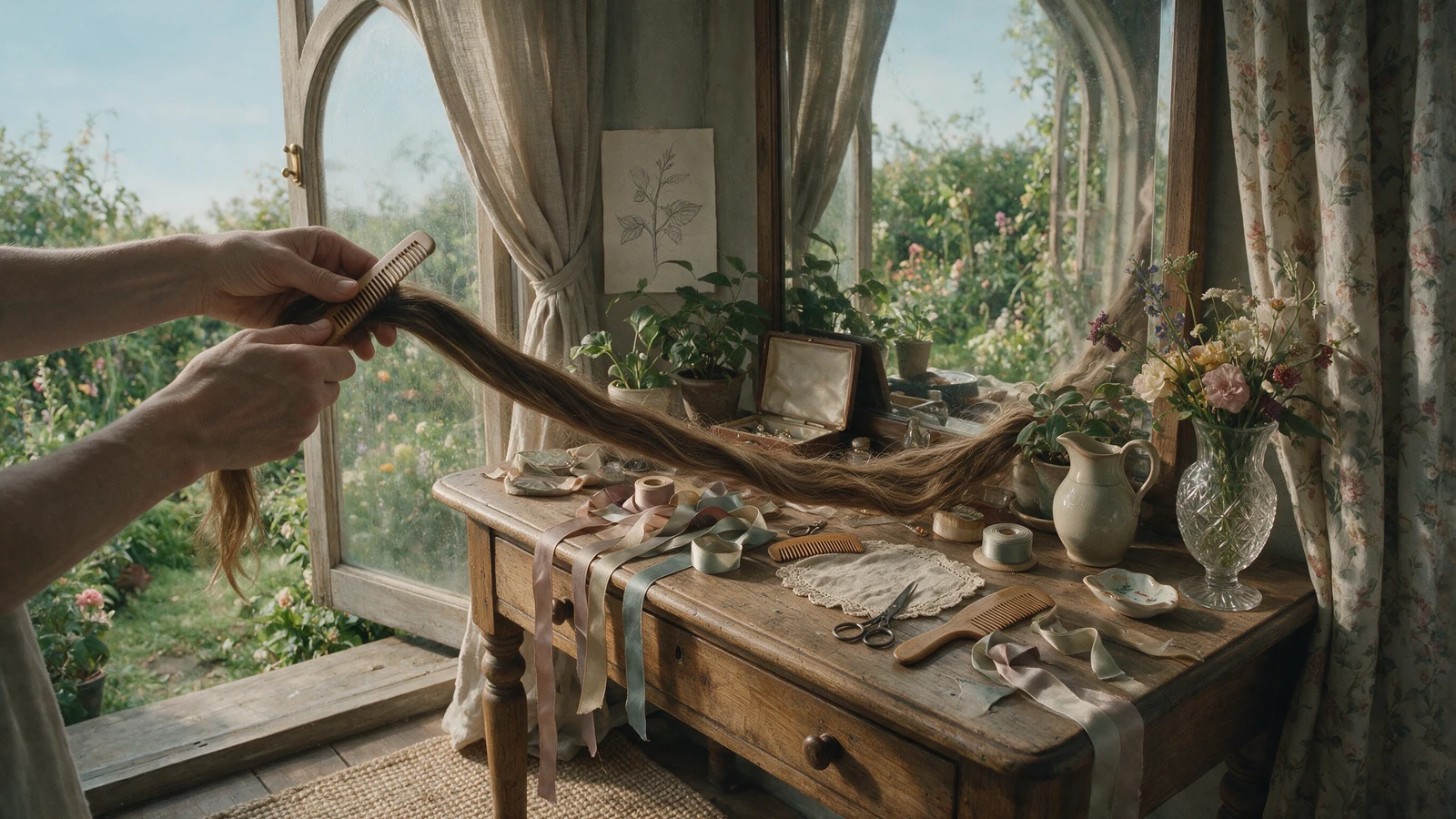
Looking at the favorable entries in the same list reveals the actual rule.
- Combing your hair and washing your face dissolves every worry
- Hair and beard growing back means long life
- Eyebrows and hair lying neat and even bring an official post
- White hair means long life and great fortune
Every one of these is about hair that hasn't diminished. Combed, regrown, neat, or gray — all still there.
Put together, the axis looks like this.
| Diminished | Inauspicious |
|---|---|
| Groomed | Auspicious |
| Regrown | Greatly auspicious |
This treats hair as something that should stay attached to the body. Grooming it was fine. Losing it was the problem.
Even gray hair is recorded as auspicious — not welcome news by today's standards, but back then it was evidence of a long life.
A modern psychology view also focuses on the loss itself. A scene where something falls away from the body is often read as connected to a sense of losing something. This is symbolic interpretation, though, not a verified prediction.
The Korean Catalog Has No Hair Entry. It Has a Tooth Entry
The "Dreams" entry of the Encyclopedia of Korean Culture (a major reference work on Korean history and culture) organizes folk dream-interpretation methods into eight categories with examples. In the body category, lying sick brings a promotion, going naked brings good fortune, bathing means changing jobs, and breaking into a sweat is inauspicious.
There's no hair entry. Instead there's this: a tooth falling out brings misfortune to an elder in the family.
In the slot where something falling from the body might belong, a tooth stands in for hair. And the conclusion points the same direction as the Chinese hair entries. Falling out is inauspicious.
We've covered a tooth falling out separately in our teeth falling out dream guide, not yet available in English. If you searched for a haircut dream and landed here, that guide might actually be the better fit.
The Dream of Cutting It Yourself
Lumi
"How did it feel afterward?
Relieved, or did you think 'oh no, what did I just do'?
The old entries don't go this far, but in a modern reading, this is exactly where the split happens."
Maybe it was at a salon, maybe you picked up the scissors yourself, maybe you cut it off for no clear reason.
In traditional interpretation, this falls where we just saw — cutting or shaving falls on the side of household misfortune. Part of this likely traces to how different cutting one's hair was in that era. In a society where keeping the body whole was the norm, shaving one's hair usually signaled something out of the ordinary.
A modern psychology view often reads this from the opposite direction. Cutting your own hair is treated as the image of cutting something off. Some readings connect it to wanting to be done with something.
The dividing line here is how you felt afterward.
- Did you feel relieved
- Did you feel a pang of regret
- Did you feel nothing at all
If relief remained, that leans toward resolution rather than loss. If regret remained, there may be a decision you haven't made yet.
We won't manufacture a good-or-bad reading from the emotion that the old records never made. But whatever feeling stayed with you after waking is information in its own right.
The Dream of Someone Else Cutting It
This covers someone cutting your hair without your say, or it getting cut despite you telling them not to.
Let's be honest here. We couldn't confirm a separate entry in the original text for someone else cutting your hair. There's an entry for cutting, but it doesn't split by who did the cutting.
So claims like "if someone else cuts it, you'll be betrayed" aren't backed by the old records.
A modern psychology view sometimes reads something happening to your own body that you couldn't stop as a matter of agency. If you remember who did the cutting, that's worth noting too.
That doesn't mean the person in the dream is actually likely to do that, though. A figure in a dream is usually an image assembled from your own memory.
The Dream of Hair Falling Out
No scissors, no cutting — it just comes away in your hand or falls out in clumps. This is the type that leaves the most unease after waking.
In traditional interpretation, this leans inauspicious. Going bald and shedding hair are recorded as entirely inauspicious, and hair falling out on its own is connected to worry over one's descendants.
A modern psychology view often connects a scene of something falling from the body with a sense of being worn down. There's an account that this type of dream increases during periods of genuine exhaustion.
One more thing worth noting. If you're actually losing a noticeable amount of hair these days, that may well be what entered the dream. Yi Ik (이익, a late-Joseon scholar of the Silhak, or Practical Learning, movement), wrote in his essay Monggamnon that what you see and hear during the day becomes the content of dreams. The observation that what touches the body during sleep shapes a dream is an old one.
A dream doesn't predict hair loss. The order may run the other way. If it worries you, that's a matter for a doctor, not for dream interpretation.
The Dream of Loose, Disheveled Hair
In traditional interpretation, there are several relevant entries. Baring and letting your hair down means someone is plotting something, and hair covering your face means legal trouble is coming. There's also a separate entry: if a married woman lets her hair down, it means she harbors private affection for someone.
That last entry shows the era's view plainly. The same scene reaches a different conclusion depending on whether a woman dreamed it. We saw a similar note earlier in our blood dream guide, where the same scene was read differently depending on whether a warrior dreamed it.
Old dream interpretation didn't attach a single answer to a single scene — and status and gender were part of the conditions that shaped the answer.
A modern psychology view sometimes reads an unkempt state as an image of exposure — something once hidden now visible.
The Most Honest Answer
Lumi
"You've probably seen the claim that a haircut dream means cutting off something bad in your life.
The old entries say the opposite. Cutting it brings household misfortune.
The only thing recorded as good was combing it."
Traditional dream interpretation and modern psychology rely on different kinds of evidence. On this topic, the two point in almost opposite directions.
What's confirmed in the old records is that diminishing hair was read as inauspicious, while grooming or regrowing it was read as auspicious. That isn't a prophecy — it's how people of that era read the world, shaped by a norm that valued keeping the body whole.
The encyclopedia itself notes, after laying out its list of dream-reading methods, that such interpretations formed naturally from many people's experiences rather than from a consistent theoretical basis.
A few points should be made clearly.
A formula like "cutting it yourself is good, someone else cutting it is bad" isn't confirmed in the old texts. There's an entry for cutting, but it isn't split by who did it.
A hair dream doesn't predict hair loss or a health problem. If you're actually losing hair, that's a separate matter from the dream.
It doesn't mean something bad is about to happen to anyone, either. The old entries recording household misfortune reflect how that era read the world.
There's no verified connection between a haircut dream and lottery numbers.
Frequently Asked Questions
Is a haircut dream a bad omen? The old entries lean inauspicious. But that reflects an era that valued keeping the body whole, and modern readings often treat it as an act of cutting something off.
Does it matter whether I cut it myself or someone else did? The original text doesn't divide it that way. Modern readings sometimes split it along the lines of agency, but there's no traditional basis for that.
My hair fell out in clumps. The old entries lean inauspicious. But if you're actually losing hair these days, that sensation may have carried into the dream.
I cut it short and felt relieved. That feeling is the information. It runs opposite to the old records, but the feeling that stays with you after waking is worth reading on its own.
I dreamed of washing or combing my hair. This is one of the rare favorable entries. Combing your hair and washing your face is recorded as dissolving every worry.
My hair turned white. The old entries read this as long life — the opposite of how we'd take it today.
Hair dreams stick with you because you can touch the result. Checking it the moment you wake makes the memory sharper.
Three things worth writing down today:
- Whether the hair diminished or was groomed
- Who did it — you, someone else, or did it happen on its own
- How you felt when you woke up
Track it for a few weeks and a pattern tends to appear. Dreams about something falling from the body cluster during periods of exhaustion.
If a mirror stood out in the dream, our mirror dream guide, not yet available in English, is worth a look too.
A dream that leaves you unsettled loses some of its grip once you write it down.
It keeps growing while it's still in your head, but on paper it's two or three lines.
Dream Talisman looks at the dream scene you record together with your day stem (ilgan) in the Five Elements system, and creates a color and phone wallpaper for the day. It's less an app that interprets your dream for you than one that helps you write it down before it fades.
Record today’s dream in Dream Talisman
References
- "Dreams" — Encyclopedia of Korean Culture · Folk dream-reading tool catalog (body entries), Yi Ik's Monggamnon, the two traditional attitudes toward dream interpretation
- Zhougong Jie Meng — Wikisource text · Hair and beard-related entries. This is a Chinese dream-interpretation tradition with a different textual lineage from Korean folk records
- General research in modern sleep and dream psychology