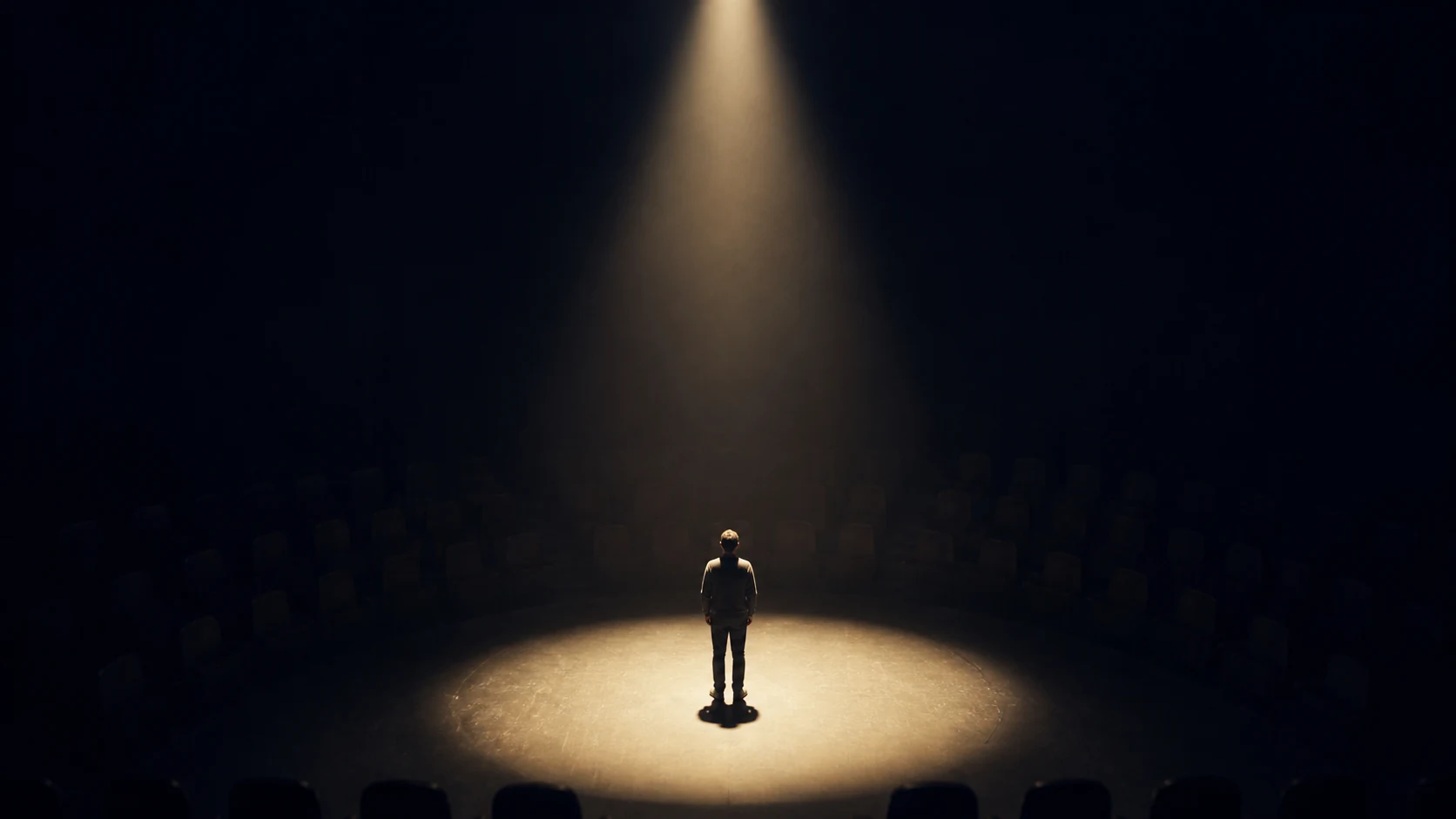
Your face was probably still burning when you woke up.
You were standing in front of people, and you knew something was wrong. You weren't wearing clothes, or your clothes were somehow off, or you froze mid-sentence, or you were up there completely unprepared. And everyone was watching.
It wouldn't be strange if you pulled the covers over your head for a while after waking. This dream stays in the body.
And yet old Korean records file this dream under the favorable column.
Lumi
"The folk records actually say this: being naked means something good is coming.
I'm serious. It's the exact opposite of how it feels today.
Why would that be?"
Table of contents
Korea's Own Record Has This EntryBut "in Front of People" Is Missing From the Old ListModern Research Has an Entry for ItWhen No One Was Actually WatchingA Dream Where Your Clothes Were OffIf It Was a Presentation or an ExamA Dream Where You Made a Mistake or FellIf Someone You Knew Was ThereThe Most Honest AnswerFrequently Asked QuestionsKorea's Own Record Has This Entry
The Dreams entry of the Encyclopedia of Korean Culture (a major reference work on Korean history and culture) sorts its folk dream-interpretation examples into eight categories. Under the body category, it states:
Being naked means something good is coming.
Looking at the other examples in the same body category shows a pattern.
- Lying sick in bed means rising to a high government post
- Bathing means changing jobs
- Losing a tooth means misfortune for an elder in the family
- Breaking out in sweat is unfavorable
Being sick turns into an official post. Being naked turns into good news.
The encyclopedia sums up this pattern on its own: dream interpretation followed two distinct attitudes — reading dreams as symbols, and reading dreams as the reverse of reality. A shameful scene flipping into something favorable falls into that second category.
It's the same grammar we saw in our death dream guide, where a coffin arriving is read as a sign things are going well.
So by the old record alone, this dream isn't an inauspicious one.
But "in Front of People" Is Missing From the Old List
This is the important part.
The folk entry only records the state of being naked. It never says whether anyone was watching.
The Chinese dream-manual tradition shows a similar pattern. The Zhougong Jie Meng (Duke of Zhou dream manual tradition) family of texts has a huge number of entries on clothing and headwear, but most of them concern what you were wearing, not who saw you. New clothes are good; losing an official's cap means being forced out of a position.
There's also a separate category for being wronged by others — and this one is unexpected.
- Being looked down on by someone brings wealth
- Being struck by someone brings strength
- Trading insults with someone is favorable
Even being humiliated in front of others lands on the favorable side. It's the same list covered in our stranger dream guide, not yet available in English.
So in the old records, being seen was never treated as the problem.
That's exactly why this dream feels so distressing today. What we're actually experiencing isn't the state of being unclothed — it's the state of being watched. And that sensation doesn't appear anywhere in the old catalog.
Modern Research Has an Entry for It
There's a standard scale used to survey typical dream themes: a 55-item questionnaire called the TDQ. It includes this scene split into two separate items.
- Being inappropriately dressed
- Being nude
Being unclothed and being dressed wrong are tracked as separate items. That means dream researchers consider these common enough scenes to count individually.
Both items were surveyed in a study of 1,181 Canadian university students, and both rank among the better-known items on the list of typical dreams.
There's Korean survey data too. A study of 500 Korean adults found that women reported more dreams involving loss of control, oppression, or catastrophe — the category this dream belongs to.
So this dream isn't happening because it's a special signal. It's an extremely common scene, and it's surveyed as its own item across multiple countries.
When No One Was Actually Watching
There's one strange thing about this dream.
Most of the time, nobody is actually watching.
People are around, but they aren't looking at you, or they don't notice, or they walk right past as if nothing's happening. And yet you're still embarrassed — sometimes even more so.
This might be the real core of the dream. The embarrassment isn't coming from someone's gaze. It's coming from inside you.
Read in a modern light, what matters here is where that gaze is actually located.
- Were people looking at you?
- Were you embarrassed even though no one was looking?
- Were you hiding, afraid of being discovered?
If the second option is what stuck with you, this isn't really about other people's eyes at all. It's closer to how you're currently seeing yourself.
This is a symbolic reading, though, not a verified prediction — that much should be clear.
A Dream Where Your Clothes Were Off
Lumi
"Not completely naked — something more awkward, right?
Pajamas, one shoe missing, or clothes that just didn't fit the moment.
This actually comes up more often than the fully-naked version. It even gets its own item on the survey scale."
Not naked, but dressed wrong for the situation. There's likely a reason the standard scale tracks this as a separate item.
Traditional interpretation has a huge number of clothing entries. The Zhougong Jie Meng tradition states that new clothes are favorable, that clothes suddenly tearing means a spouse's wandering affections, and that losing an official's cap means being forced from a position.
In the old catalog, clothing was an object that represented rank and status. So a scene where clothing goes wrong was a scene where your position had gone wrong.
Read in a modern light, a dream about mismatched clothing carries a slightly different feel from a naked dream. Being unclothed means having nothing at all, while dressed-wrong means being not quite ready.
If the clothing itself is what stuck with you, it's worth writing down what it actually was — pajamas, a school uniform, or something you used to wear long ago.
If It Was a Presentation or an Exam
You were standing in front of people, but the words wouldn't come out, or you hadn't prepared, or you had no idea what you were supposed to do.
Traditional interpretation has no direct entry for this. The encyclopedia's body category includes illness and bathing, but nothing about giving a presentation. There's no way it could.
Modern research has several relevant items, though. The standard scale includes both trying repeatedly without success and being unable to speak as separate entries. In the Korean survey, women reported more dreams about studying.
If it was an exam setting, see our exam dream guide.
If losing your voice was the stronger sensation, that's covered in our voiceless dream guide, not yet available in English. If your eyes were open but your body wouldn't move, that could be sleep paralysis instead.
A Dream Where You Made a Mistake or Fell
Not a clothing problem, but doing something wrong — tripping, spilling something, saying something you shouldn't have.
In traditional interpretation, falling-related entries land on the unfavorable side. One passage states that climbing a mountain and falling means losing your position, and another states that getting your clothes muddy brings disgrace to your body.
That last phrase stands out. Disgrace to your body. It shows the old catalog did have an entry touching on shame — but that one concerns getting dirty, not being seen.
Read in a modern light, a mistake dream differs from the scenes above in one key way. Being naked or dressed wrong is a state, while making a mistake is an action.
That's why people often remember exactly what the mistake was, and it usually overlaps with something currently on their mind.
That said, the dream isn't warning you that you'll actually make that mistake. It isn't a predictive dream.
If Someone You Knew Was There
Someone you recognized was in that crowd, or a specific person was watching you.
Read in a modern light, who that person actually was isn't information about them. A figure appearing in a dream isn't the real person — it's an image assembled from your own memory.
So it doesn't mean that person actually sees you that way. There's no need to feel awkward around them after waking.
If there's anything worth reading into it, it's this: why that particular person showed up there. It may be worth asking what you've wanted to look like in front of them lately.
The Most Honest Answer
Lumi
"Search for this dream and you'll find claims that it's a bad-omen dream.
Korean folk records actually say being naked means something good is coming.
That's not a prophecy either, of course — it's a record of how people back then chose to read it."
Traditional dream interpretation and modern research draw on different kinds of evidence.
What the old records confirm is that being naked was read favorably, and being humiliated by others was placed on the favorable side too. But the condition of "people were watching" never appears anywhere on that list.
What modern research confirms is that being nude and being inappropriately dressed are both formal items on standard dream-theme scales — meaning this is an extremely common scene.
The encyclopedia itself states, after laying out its list of interpretive methods, that these readings formed naturally out of many people's lived experience, not from any consistent theoretical foundation.
A few points should be made clearly.
This dream doesn't predict an actual embarrassing event. It's no reason to postpone a presentation or a gathering.
The claim that it means "you're hiding an embarrassing secret" isn't confirmed either. It's simply a widely circulated interpretation.
It doesn't mean the person who saw you in the dream actually sees you that way in real life.
There's no verified connection between this dream and lottery numbers, either.
Frequently Asked Questions
Is a naked dream a bad-omen dream? Korean folk records state that being naked means something good is coming. Modern research treats it as common enough to earn its own item on standard dream-theme scales.
No one was actually looking, but I was still embarrassed. This is a very common form of the dream. The embarrassment often comes from inside rather than from anyone's gaze.
My clothes were wrong. This is common enough to be surveyed as a separate item from full nudity. In the old catalog, clothing represented a person's status and position.
Someone I know was watching. That isn't information about them. A figure in a dream is an image assembled from memory.
I couldn't get the words out in front of everyone. That belongs to a different category. It's worth reading alongside our voiceless dream guide.
I have a presentation coming up and I'm anxious about it. This dream doesn't predict failure. If you do have something coming up, though, that tension may simply have worked its way into the dream.
The reason this dream lingers is that the feeling behind it was real. The scene fades, but the embarrassment doesn't disappear as easily.
So if you felt strange for a while after waking, that isn't strange at all.
One more thing worth remembering: people in earlier eras didn't read this scene as a bad sign. The condition of being watched simply never made it onto their list — and as a result, being naked ended up filed under good news.
Today's task comes down to three lines.
- Were people watching? — or were you embarrassed even without an audience
- What was wrong? — being unclothed, dressed wrong, or a mistake
- Is there someone lately you've wanted to look good in front of?
That third line isn't dream journaling, but for this particular dream, it's the most useful one of the three.
Nobody wants to write down an embarrassing dream. You'd have to relive it.
But writing it down actually shrinks it. In your head it can feel like the whole world saw — put into words, it's two sentences.
Dream Talisman looks at the dream scene you record together with your day stem (ilgan) in the Five Elements system, and creates a color and phone wallpaper for the day. It's less an app that interprets your dream for you than one that gets you to write it down before it fades.
→ Record your dream in Dream Talisman
References
- Dreams — Encyclopedia of Korean Culture · The folk dream-interpretation catalog's body-category entry "being naked means something good is coming"; the two traditional attitudes toward dream reading
- Nielsen, T. A. et al. (2003), "The Typical Dreams of Canadian University Students," Dreaming 13(4) · The "inappropriately dressed" and "nude" items among 55 surveyed dream themes
- A Study of Typical Dream Experiences Among Koreans · A survey of 500 Korean adults; frequency of the loss-of-control and oppression category among women
- Original Zhougong Jie Meng text — Wikisource · Passages on headwear, clothing, and being wronged by others. A Chinese traditional dream-interpretation text with a different lineage from Korean folk records
- General research in modern sleep and dream psychology