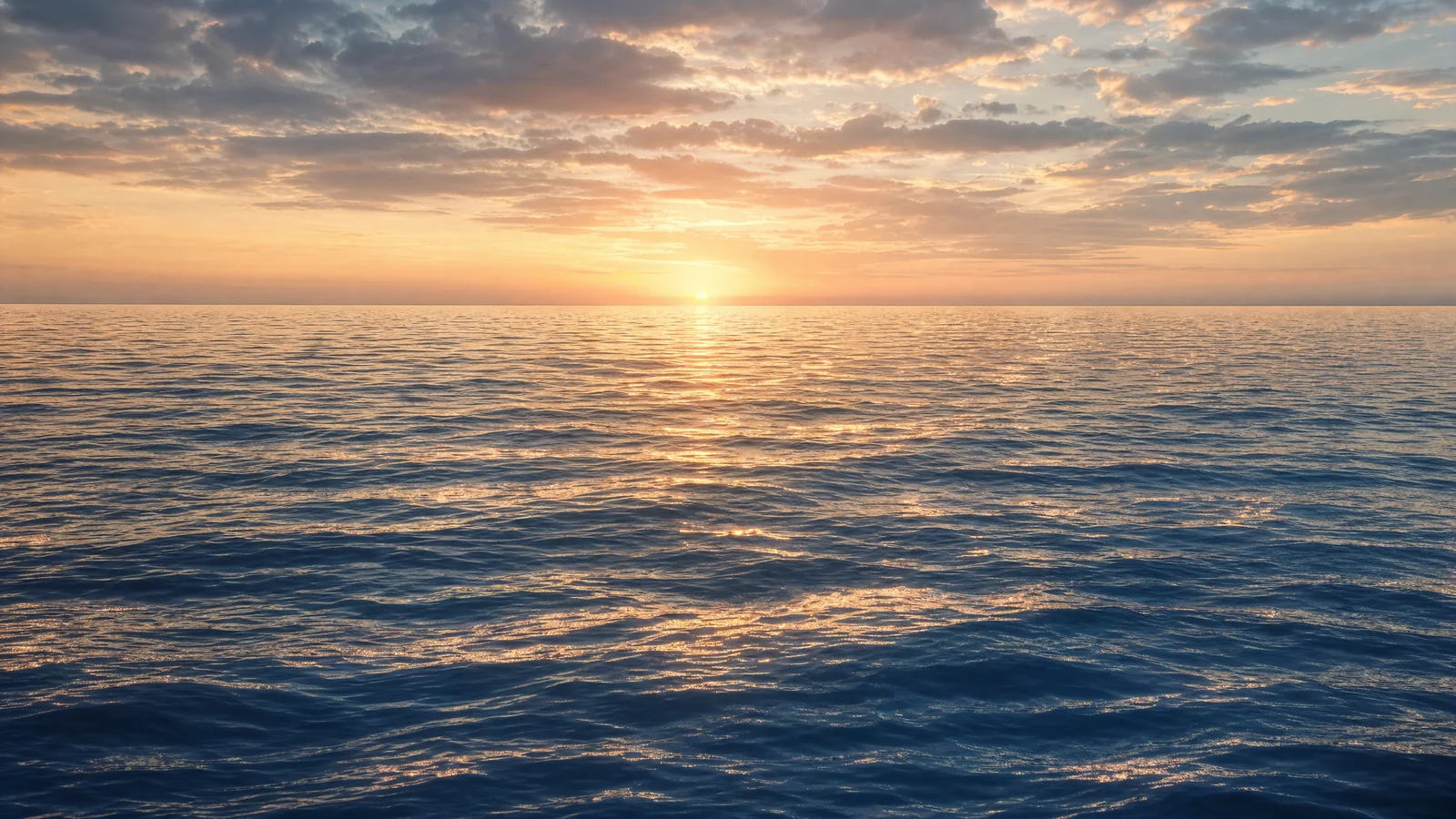
Sea dreams tend to stay with you longer than most.
That holds whether the dream was frightening or beautiful. Many people say the color or the sound comes back to them days later. Most other dreams fade by morning, but the sea usually doesn't.
And when people search for this dream, they tend to ask the same question: was a calm sea good, and a rough one bad?
Old records didn't divide water that way. They used a different measure entirely.
Lumi
"Was that sea calm, or was it angry?
Actually, there's a question that comes before that one.
People back then looked at water and asked how much of it there was first."
Table of contents
Old Records Judged Water by VolumeBut the Sea Is Always FullThe Dream That Was Bought and SoldA Calm SeaAn Angry Sea, a Wave That Crashed Over YouDrowning in the Sea, Swimming in the SeaYou Only Watched the SeaYou Went Under the SurfaceYou Were on a BoatThe Color of the Water, the Tide Coming In and OutThe Most Honest AnswerFrequently Asked QuestionsOld Records Judged Water by Volume
Gathering the water-related lines from the folk dream-reading catalog in the "Dreams" entry of the Encyclopedia of Korean Culture (a major reference work on Korean history and culture) points in one clear direction.
- When water overflows, a marriage is coming
- When a spring dries up, wealth will shrink
- Bathing means changing jobs and recovering from illness
Line up the first two entries, and the rule becomes clear.
Rising water is good. Water drying up is bad.
The measure isn't clarity but volume. That makes sense once you consider what water meant in a farming society: enough water made the harvest, and a dry season ruined it. That instinct carried directly into dream interpretation.
The third entry belongs to the same family. Bathing is an act of using water on the body, and it comes paired with the idea of washing something away.
But the Sea Is Always Full
This is where the old measure runs into a wall.
The sea never rises and never dries up. It stays roughly the same, and nothing you do changes that. It also isn't tied to daily life the way a well or a spring is.
So the sea sits at the point where the logic of water dreams runs out. Since it can't be read by volume, something else has to carry the interpretation.
What varies with the sea is its condition — calm or raging — and where you were standing in relation to it.
This isn't an entry from the old catalog; it's a modern way of reading the scene. Still, the instinct behind how people related to the sea itself is old. Fishing villages carried on rituals such as byeolsingut and yongwangje, ceremonies honoring the Dragon King of the sea, for one clear reason: the sea was something people couldn't control.
It was something to appease, not something to manage.
The Dream That Was Bought and Sold
There's one especially famous record involving a water dream.
A woman climbed to a high place, urinated, and the water filled the entire country. According to the Samguk Yusa (Memorabilia of the Three Kingdoms, a 13th-century compilation of early Korean history and legend), Bohui, the older sister of the general Kim Yu-sin, had this dream, and her younger sister Munhui bought the dream from her, later marrying Kim Chun-chu and becoming queen.
A similar story appears in the Goryeosa (History of Goryeo).
Two things stand out here.
First, water filling up read as a sign of rising to greatness. That lines up with the entry we saw earlier — overflowing water bringing a marriage. Rising water sits on the favorable side.
Second, a dream was bought and sold. That sounds strange to modern ears, but it means people believed a dream could carry real value.
For anyone who had a sea dream and came here searching, this story offers one takeaway. People of that era didn't read a dream of a great expanse of water as a bad thing.
A Calm Sea

This is the version that stays in memory the longest — and one of the few sea dreams that leaves you feeling good after waking.
In traditional interpretation, no entry addresses this scene specifically. Still, as covered above, a scene of full, rising water read favorably.
In modern psychology, a calm sea is generally read as an image of a stable state. But there's a split worth noting here.
- Did it feel peaceful
- Or did the stillness itself feel unsettling
The second reaction shows up more often than you'd expect. There are stretches of life where nothing happening feels uncomfortable — waiting on a result, or sensing that something is about to start without any sign of it yet.
The feeling is half the interpretation. The same scene can be two entirely different dreams depending on it.
An Angry Sea, a Wave That Crashed Over You
Lumi
"Did you see the wave coming, or had it already hit you?
Those are genuinely different dreams.
One is about something approaching. The other is about something that already arrived."
In traditional interpretation, overflowing water on its own wasn't read as inauspicious. But a scale beyond what a person could handle, like a flood, was sometimes read differently — we cover flooding separately in our flood dream guide.
In modern psychology, waves are often explained as an image of emotion — arriving, hitting, then receding, and never finishing in a single pass.
There are three variations worth separating here.
You watched it approach from a distance — it hasn't arrived yet. You're anticipating it. Whether you ran or stood still is the useful detail.
It hit you — it has already arrived. Whether you were swept away, held your ground, or fell and got back up matters.
Waves kept coming, one after another — this isn't a single event but an ongoing state.
If you woke up feeling drained, that third version is the likely one.
Drowning in the Sea, Swimming in the Sea
You Were Drowning
In modern psychology, a drowning dream is typically read as an image of losing control. But drowning in the sea differs from drowning elsewhere in one respect: there's no bottom.
A river or a pool has something to touch eventually, but the sea doesn't. Some readings connect this dream to the sensation of having nowhere to plant your feet.
There's a further split here too — did you sink, float, or come back up? Drowning dreams in general are covered in our water dream guide, not yet available in English.
You Were Swimming
This is the opposite of drowning. You're in the water by your own will.
In modern psychology, this is sometimes read as an image of adapting or acting with agency. Same water, different posture toward it.
Whether you swam far out, stayed near shore, and whether it felt difficult or easy — all of that is useful detail.
You Swam to Safety
This is the version with the clearest ending. There was a threat, and you got out of it.
If you woke up feeling relieved, that feeling is worth writing down. A frightening dream with a good ending isn't especially common.
You Only Watched the Sea
This gets reported more often than you'd expect. Nothing happened — you simply watched.
In modern psychology, this scene reads as an image of distance. You're outside the water, watching rather than immersed in it.
What varies here is direction.
- Did you want to go in
- Did you not want to go in
- Did you feel nothing either way
Whether you were alone matters too. Standing alone watching the sea is often read as a scene of processing or resolve — some say it shows up before a major decision, though that's a modern reading rather than something confirmed by record.
You Went Under the Surface
This is a scene of going down rather than staying on the surface.
In modern psychology, being underwater is frequently treated as an image of the unconscious, especially in Jungian-influenced readings. This is a theory, though, not something adopted as-is in empirical research.
What actually varies in this scene comes down to breathing.
- Did you feel suffocated, unable to breathe
- Did you breathe normally without any trouble
The second version isn't rare in dreams. Quite a few people report breathing normally underwater, and that reads less like a threat scene and more like an exploration scene.
If you remember what you saw down there, that's the most informative part of this dream.
You Were on a Boat
You're on the water, but not touching it directly.
In traditional interpretation, no entry specifically addressing boats has been confirmed.
In modern psychology, a boat is read as an image of being equipped with a tool, different from being in the water with nothing between you and it. But a boat isn't part of your own body, so it can always be lost.
Three details vary here: whether you were rowing, whether someone else was steering, and whether the boat was rocking.
We noted in our cow dream and horse dream guides that who's holding the reins is the turning point in those scenes. A boat follows the same structure. The real question is who was setting the direction.
The Color of the Water, the Tide Coming In and Out
Clear, Murky, or Black
The color of the water is often the first question that comes up in other water dreams too. But the sea naturally changes color with depth, so it carries less information than other bodies of water.
In modern psychology, remembering a color clearly is itself informative. Color is usually blurry in most dreams. If the water was unusually black or unusually blue, that's worth writing down.
The Water Had Receded
In traditional interpretation, this direction stands out. As noted earlier, one entry states that a spring drying up means wealth will shrink. A scene of shrinking water wasn't read favorably.
A scene of a tidal flat exposed by low tide belongs to that same family, though no record applies it directly to the sea, so that's as far as this connection goes.
In modern psychology, a sea with the water pulled back reads as an image of exposure — a floor that's usually hidden becomes visible. Whether that felt welcome or unsettling is the split.
The Water Was Rushing In
This is the opposite direction, and it reads favorably by the old measure.
But if the speed of the incoming water felt frightening, that's better read through the wave scenes above.
The Most Honest Answer
Lumi
"Search 'sea dream' and you'll find claims about wealth luck and big opportunities.
What's actually on record is two lines: 'overflowing water means a marriage,' and 'a drying spring means shrinking wealth.'
There's no sea entry at all."
Traditional dream interpretation and modern psychology rely on different kinds of evidence.
What's confirmed from old records goes only as far as this: water rising read as good, and water drying up read as bad. No entry in the dream-reading catalog addresses the sea specifically.
The encyclopedia itself notes, after laying out its list of dream-reading methods, that such interpretations formed naturally from many people's experiences rather than from a consistent theoretical basis. The Samguk Yusa even preserves cases where the same dream was read in opposite directions depending on who was interpreting it.
A few points should be made clearly.
A sea dream isn't a prophetic dream. There's no evidence it predicts a trip or an accident.
There's no verified connection between a sea dream and lottery numbers. Dreams related to money are covered in our money dream guide.
There's no evidence that a sea taemong (a conception dream believed to foretell a pregnancy) means the baby will be a boy. As covered in our pregnancy dream guide, a taemong can't reveal a baby's sex.
There's no evidence that a wave crashing over you predicts a disaster. If you recently saw related news or footage, that's a far more likely source of the imagery.
Frequently Asked Questions
Is a sea dream an auspicious dream? There's no dream-catalog entry for the sea, so nothing can be stated with certainty. Still, a scene of full water read favorably in old records.
Is a calm sea good and a rough sea bad? The old measure was volume, not calmness. There's no basis for calling rough water inauspicious on its own. Where you were and how you felt carry far more information.
The water was extremely clear. Remembering a color that clearly is itself unusual and worth noting. Still, the sea naturally changes color, so color carries less weight here than in other water dreams.
I was drowning in the sea but wasn't scared. That's informative too. The feeling is half the interpretation. If you weren't afraid, it may not have been a threat scene at all.
I keep having sea dreams. Writing down how often they recur and what else was happening around each one tends to reveal a pattern later. If you're planning a trip or recently visited the sea, that's a likely influence.
I keep forgetting my dreams. Recall starts fading about 90 seconds after waking. Staying still for a moment instead of getting up right away tends to bring back more fragments.
The mood of a sea dream tends to linger, whether it was pleasant or frightening.
There's nothing specific you need to do today. If anything, it's worth checking whether your emotions have been up and down lately, especially if the dream involved waves that kept coming.
And if it's been a while since you've actually seen the sea, going is not a bad idea either. That's a more reliable fix than any dream interpretation.
The same sea dream leaves a different color with different people.
Dream Talisman looks at the dream scene you record together with your day stem (ilgan) in the Five Elements system, and creates a color and phone wallpaper for the day. It's less an app that interprets your dream for you than one that lets you carry today's dream with you for the day.
Curious what color that sea you just read about would turn into?
→ Record your dream in Dream Talisman
References
- "Dreams" — Encyclopedia of Korean Culture · the folk dream-reading tool catalog (house, body, and other item entries), the legend of Munhui buying her sister's dream, and the Samguk Yusa account of King Wonseong's dream interpretation
- "Fishing Villages" — Encyclopedia of Korean Culture · folk beliefs and rituals of fishing communities
- General research in modern sleep and dream psychology