
You probably ran with everything you had.
But you didn't go anywhere. Your legs moved, but you stayed in place; your feet stuck to the floor; or it felt like wading through water. If something was behind you, it got even more frightening.
Some of you probably woke up with sore legs.
Plenty of symbolic interpretations circulate about this dream, but there's something to look at first. Something is actually happening in your body.
Lumi
"You were trying to run in the dream, right?
At that moment, your actual legs... had no strength in them at all.
There's a stretch of sleep where your muscles just go slack.
It's not strange that you didn't move. It makes sense that you didn't."
Table of contents
During REM Sleep, Your Muscles Go SlackThis Scene Is a Standard Survey ItemThe Way It Failed to MoveIf Something Was Behind YouThe Old List Has No Entry for ThisWhat's Worth Checking on the Body's EndDid You End Up RunningTold HonestlyFrequently Asked QuestionsDuring REM Sleep, Your Muscles Go Slack
The stage of sleep where most dreaming happens is called REM sleep. One of its defining features is that muscle tension nearly disappears.
Aside from your eyes and breathing muscles, your body ends up almost entirely still. If your body actually moved along with running or fighting in a dream, that would be dangerous — so this stage effectively locks the body down as a safeguard.
So when you're straining to run in a dream, your actual legs have no strength going into them at that moment.
This can't be used to conclude, flatly, that "this is why you dream about not being able to run." How dream imagery actually gets constructed is more complicated than that, and this muscle slackness is present on nights you don't have this dream, too.
Still, one thing can be said: the condition for a sensation of your body not cooperating is already in place.
If consciousness surfaces before this muscle relaxation has fully lifted, that's sleep paralysis. If your eyes were open but your body wouldn't move, that's the more likely fit.
This Scene Is a Standard Survey Item
There's a scale for surveying typical dream themes — a 55-item questionnaire called the TDQ — and several of its items relate directly to this.
- Being unable to move because you're restrained
- Being unable to breathe, as if choking
- Being half-awake in bed, paralyzed
- Trying something again and again
Researchers grouped these items together and analyzed them under a category called inhibition. The scene of running without moving forward falls within this category.
There's Korean survey data on this too. A study of 500 Korean adults found that falling dreams and chase dreams were the most commonly experienced dreams among Koreans surveyed. The scene of being unable to run usually appears together with being chased.
So this dream doesn't show up because it's a special signal. It's common enough to be surveyed as a standard item across multiple countries.
The Way It Failed to Move

If there's anything actually worth reading in this dream, it's here. Not moving forward is the constant — the way it was blocked is what varies from person to person.
Your Legs Don't Move at All
You push, and there's simply no response. Your legs feel like they belong to someone else.
This is the most common form. It's also the closest in sensation to the muscle relaxation of REM sleep described above.
You're Moving, but Staying in Place
Your legs are working hard. But the scenery doesn't change.
Read in modern terms, this has a different texture from the previous one. It isn't that you can't move — it's an image of effort that isn't paying off.
Heavy, Like Wading Through Water
Every step meets resistance. Your feet sink into a bog, or the ground itself seems to stretch.
Your Feet Are Stuck to the Floor
They're stuck fast, like glue, and won't come free. Sometimes your shoes come off instead.
Your Legs Won't Take Any Strength
Your knees buckle, or you try to run and collapse instead.
Moving in Slow Motion
The world shifts into slow motion. Everything else is at normal speed, and only you are slow.
Lumi
"One of those six sounded familiar, didn't it?
They're all different scenes.
Not moving at all, moving but staying in place, and moving in slow motion — those are completely different things."
If Something Was Behind You
More than half the time, this dream shows up together with being chased.
In the Korean survey mentioned above, chase dreams were among the most commonly reported. The same holds across data from other countries.
Modern research offers one hypothesis for this pairing: that dreaming functions as a rehearsal for threatening situations. It's frequently cited to explain why snakes, chases, and falling show up across cultures regardless of background.
But it's a hypothesis, and it's actively debated in the field. It isn't settled fact.
And even accepting this hypothesis, it doesn't explain the "can't run" part well. If it's meant to rehearse threat response, running away successfully should be the advantage — but in practice, you can't run.
If being chased was the stronger element for you, we cover that in our chase dreams guide.
The Old List Has No Entry for This
Crossing over to tradition, the record turns up empty.
Neither the eight-category folk-belief list in the entry on dreams in the Encyclopedia of Korean Culture (a major reference work on Korean history and culture), nor the classical Chinese dream manuals, contain any confirmed entry dealing with running without moving forward.
There are adjacent entries, though. The old lists consistently tracked, for roads, whether you could go or not.
- If you're traveling along a road, all manner of things open up and you obtain what you seek
- If the road reaches a dead end, it is inauspicious
- If a cart moves well, all manner of things go smoothly
- If a cart won't move, you will fail to achieve what you seek
That last line is the closest match. But it's about a cart, not about your own legs.
The road side of this is covered in our guide to being-lost dreams, and the vehicle side in our guide to car-accident dreams.
We won't invent an entry that doesn't exist to fill the gap. This dream has to be read through the modern lens instead.
What's Worth Checking on the Body's End
This dream stays closer to the body than most others do. So there are a few things worth checking.
Sleep Posture
If you slept face-down, or with a limb pinned under you, that sensation may have carried into the dream. Research surveying the relationship between sleep posture and dream themes has reported certain postures showing up alongside themes like being trapped or restricted in movement. It's a cross-sectional survey, though, so causation hasn't been established.
The State of Your Legs
If you walked a long distance or overexerted yourself physically that day, that fatigue may have carried over. Yi Ik, a late-Joseon-era scholar of the Silhak (Practical Learning) school, wrote in his essay "Monggamnon" (On the Sensations Behind Dreams) that whatever touches the body during sleep becomes part of the dream.
Sleep Quality
Lighter sleep means more frequent waking during REM. That means dreams like this get remembered more often. It may not be that you're having more of these dreams — it may be that you're remembering more of them.
If Your Legs Are Actually Uncomfortable
If you experience an itching or an urge to move your legs when you lie down to sleep, that isn't about the dream anymore. Some people's legs move periodically during sleep as well. If this happens frequently and you're struggling with daytime sleepiness as a result, it's worth getting a sleep consultation.
Did You End Up Running
Surprisingly often, yes — either it suddenly released after a long stretch of not moving, or you never ran but got away some other way.
Read in modern terms, what forks here is less the ending and more what you actually did.
- Did you keep trying to run
- Did you find another way — hiding, crawling, turning back
- Did you give up
If the second one is what stayed with you, that's a fairly different dream. The condition — not being able to run — was the same, but your response wasn't.
The third one isn't a bad thing either. Giving up inside a dream is more common than you might think.
The principle that emotion is half the interpretation applies here too. Whether you felt frustrated, afraid, or almost absurd is the real information. That said, we won't manufacture a fortune-telling reading out of that difference that the old record never contained.
If this dream keeps recurring, it's worth writing down the intervals. We cover that in our guide to recurring dreams.
Told Honestly
Lumi
"Search 'can't run dream' and you'll get flooded with claims that it means you're stuck somewhere in life.
No basis for that.
What's confirmed is that your muscles are genuinely slack during sleep.
Isn't that a lot more interesting?"
Tradition and modern research rely on different kinds of evidence, and for this particular topic, tradition has almost nothing to offer.
Confirmed. Muscle tension nearly disappears during REM sleep. Being restrained or unable to move is a formal item on standard dream-theme scales, analyzed under the category of inhibition. In a Korean adult survey, chase dreams were among the most commonly reported.
Not confirmed. It hasn't been established that muscle relaxation is the cause of this dream. No entry addressing this scene exists in the old lists. There's no basis for this dream forecasting anything real.
The encyclopedia itself notes, after laying out its dream-interpretation list, that these readings emerged naturally out of many people's experience rather than from any consistent theoretical foundation.
Let's be clear about a few things.
This dream doesn't mean your work isn't progressing. It's simply a widely repeated interpretation.
It isn't a sign that something is wrong with your legs, either. If your legs are genuinely uncomfortable, that's something to look at separately from the dream.
Not being able to run doesn't mean you're someone who can't cope with things. Under this bodily condition, most people can't run.
No verified connection exists between this dream and lottery numbers, either.
Frequently Asked Questions
Is a can't-run dream a bad-omen dream? There's no entry for this in the old record, so there's no basis for calling it good or bad luck. In modern research, it turns up as a common scene.
Why won't my legs move? There's a stretch of sleep where muscle tension nearly disappears. But it hasn't been confirmed as the actual cause of this specific dream.
My eyes were open but my body wouldn't move. That's a different category. Look into sleep paralysis first.
I was being chased and couldn't run. That's the most common combination. Chase dreams are among the most commonly reported in Korean adult surveys.
My legs were sore when I woke up. Daytime fatigue or sleep posture may have carried over. If your legs are frequently uncomfortable, it's worth checking that separately from the dream.
This keeps happening. Write down the interval between occurrences and what was going on around each one — it reads more clearly later. It often overlaps with periods of lighter sleep.
What makes this dream so exhausting is that you kept straining the whole time you were asleep. Nothing actually moved, but in your head, it was a full sprint.
But look again, and in this dream, most people keep trying to run all the way through. Giving up and just standing there is actually the rare outcome.
Today, there are three lines worth writing down.
- How it failed to move — not moving at all, staying in place, or feeling heavy
- What was behind you
- What posture you slept in last night
The third one isn't dream content, but for this particular dream, it turns out to be surprisingly useful.
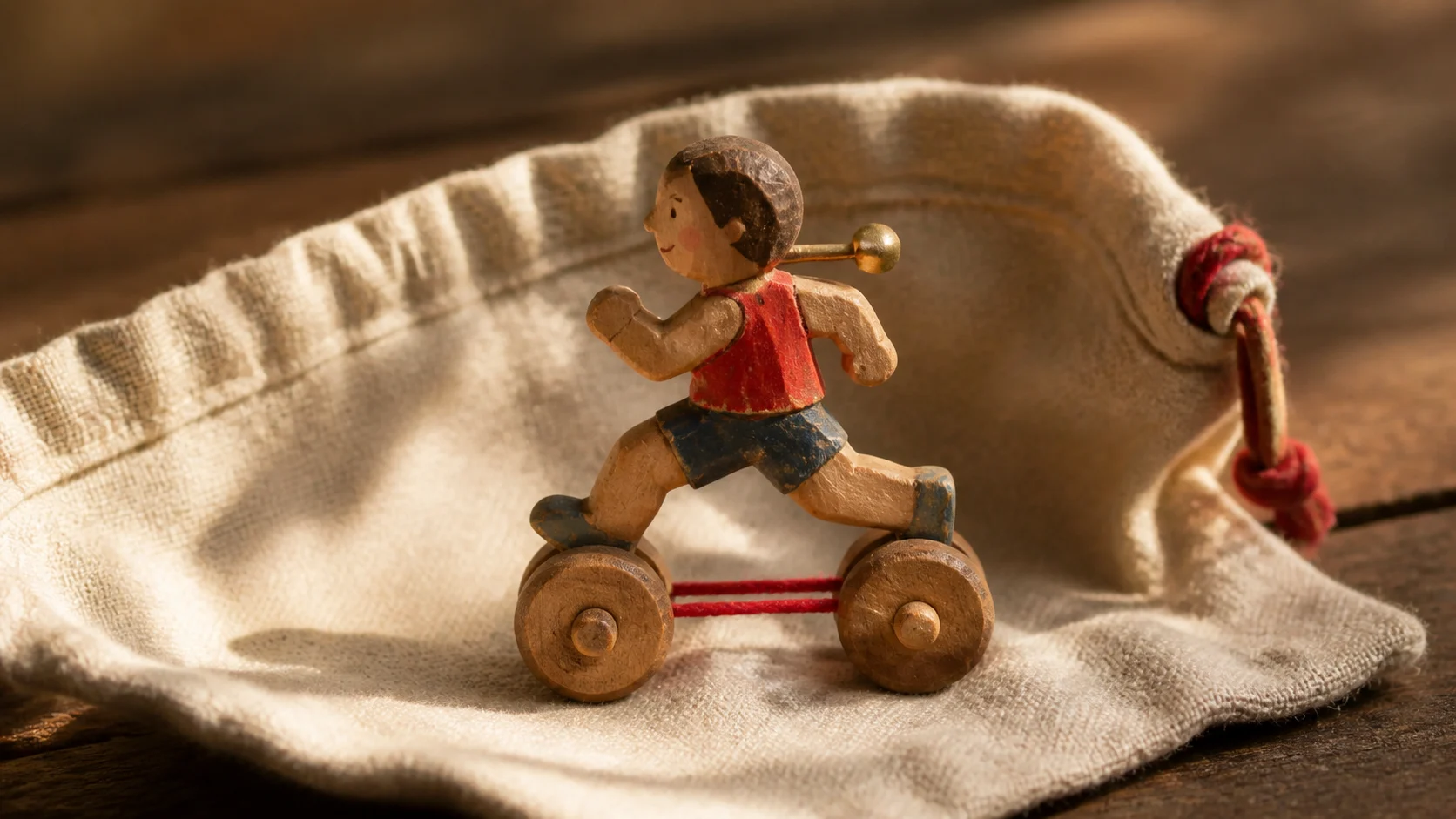
A dream you experienced through your body settles once you write it down.
While it's still in your head, that frustration lingers, but once it's a couple of written sentences, it's usually that short.
Dream Talisman looks at the dream scene you record together with your day stem (ilgan) in the Five Elements system, and turns it into a color and phone wallpaper for the day. It is less an app that interprets your dream for you than one that lets you write it down before it fades.
Record today’s dream in Dream Talisman
References
- Nielsen, T. A. et al. (2003), "The Typical Dreams of Canadian University Students," Dreaming 13(4) · Analysis of the restraint, choking, paralysis, and repeated-attempt items among 55 dream themes, grouped under the inhibition category
- Study on typical dream experiences among Koreans · Reported frequency of falling and chase dreams among 500 adult respondents
- General research on REM-sleep muscle atonia · Not a confirmed mechanism for the cause of this dream
- Survey research on the relationship between sleep posture and dream themes · Cross-sectional; causation not established
- Research related to the threat-simulation hypothesis · Actively debated in the field, not settled
- "Dreams" — Encyclopedia of Korean Culture · The eight-category folk-belief dream-interpretation list (no matching entry), Yi Ik's "Monggamnon"
- Zhougong Jie Meng geography and career-related entries (original edition) · Passages on roads and carts moving or stalling. Widely circulated passages as commonly quoted; no primary-edition cross-check was performed. A classical Chinese dream-interpretation text, in a separate lineage from the Korean folk record
- General research in modern sleep and dream psychology