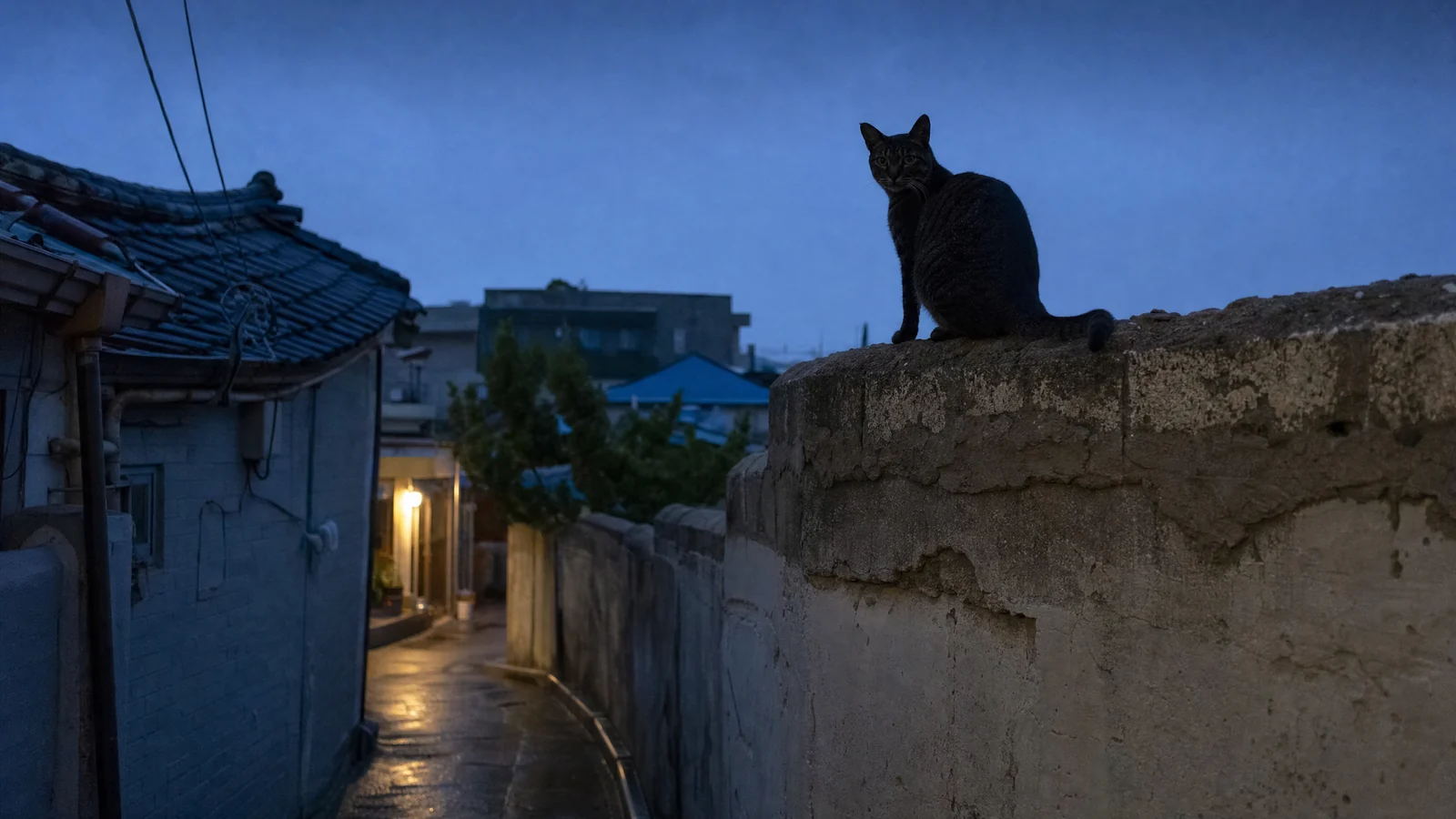
Cat dreams sit in an odd spot.
They're not frightening the way a snake dream can be, and not warm the way a dog dream tends to be. The cat was just there, looked at you, and went somewhere. And yet, oddly, it stays with you after you wake.
That in-between quality isn't an accident. The cat has occupied an ambiguous position in the record, too.
Lumi
"Did that cat come to you? Or did it just look at you?
Oh — did it scratch you, by any chance?
Those are three different dreams. And the third one is the one with the most to talk about."
Table of contents
Missing From the Zodiac, Present in an Older SystemIn the Dream-Interpretation List, the Cat Is Only a Supporting CharacterCat Paintings Were Wishes for Long LifeThe Cat That Approached YouThe Cat That Scratched or BitThe Cat That Just WatchedThe Black CatKittens, and Several Cats at OnceThe Crying CatThe Dream of Your Own CatTold HonestlyFrequently Asked QuestionsMissing From the Zodiac, Present in an Older System
The cat is not one of the twelve zodiac animals: rat, ox, tiger, rabbit, dragon, snake, horse, goat, monkey, rooster, dog, pig. There's no slot for a cat.
A widely known folktale explains this by saying the rat tricked the cat out of its place in line. It's a fun story, but it's folklore, not a documented record.
Look elsewhere, though, and the cat does appear.
According to the entry on the thirty-six beasts in the Encyclopedia of Korean Culture (a major reference work on Korean history and culture), each of the twelve zodiac animals is further divided into three, producing thirty-six beasts in total. The very first slot, ja (子), reads like this:
Ja holds the cat at its start, the rat in its middle, and the bat at its end
The cat is there. And it comes before the rat.
In the folktale, the cat gets edged out by the rat's trick. In this older classification, the cat actually precedes the rat. Our article on rat dreams noted that ja-si, the first two-hour period of the day, is a yin-yang hour, sitting at the border between the day just ending and the one about to begin — and the cat occupies the very opening of that slot.
It's not strange that cat dreams feel ambiguous. The cat has always occupied an ambiguous position.
In the Dream-Interpretation List, the Cat Is Only a Supporting Character
The folk-belief dream-interpretation list in the dream entry of the Encyclopedia of Korean Culture includes the dragon, the snake, the crane, the parrot, the tiger, the swallow, the rat, and the pig in its animal category.
The cat has no entry of its own. But it appears once, in passing.
If a rat is caught and eaten by a cat, you will make money.
We covered this line in our article on rat dreams. It doesn't mean the rat itself brings wealth — it means wealth arrives once the rat is gone — which runs opposite to the popular assumption.
Notice the cat's role here. The cat is the one that removes the rat. It handles the thing that was draining the storehouse.
The cat has no entry of its own, but in the one place it does appear, it stands on the protective side.
Cat Paintings Were Wishes for Long Life
Outside the documented record, the cat was treated rather well.
Cats show up often in Joseon-era paintings, and there's a reason. In Chinese characters, the word for cat, 猫 (myo), sounds the same as 耄 (mo), meaning a person of seventy. So a painting of a cat became a wish for long life.
Cats were often painted together with butterflies for the same reason: 蝶 (jeop), butterfly, sounds like 耋 (jil), meaning a person of eighty. A cat with a butterfly meant a wish for a long life spanning from seventy to eighty.
Kim Hong-do and other painters of the era left works in this tradition.
So the notion that a cat is an ill omen has no basis in Korean tradition. If anything, the cat was the animal people painted to wish someone a long life.
The Cat That Approached You
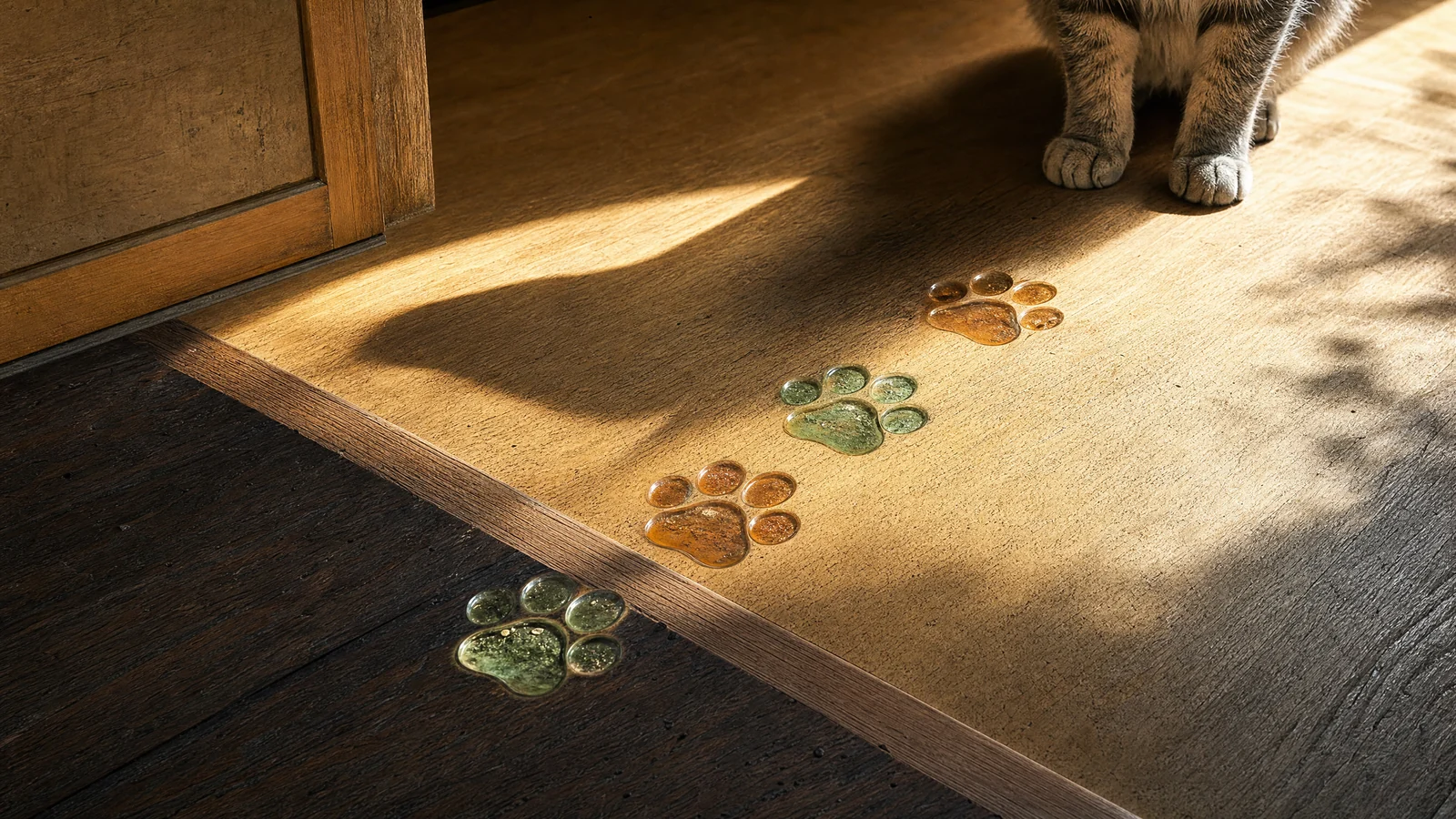
This is the most fondly remembered scene in cat dreams. Anyone who knows cats already understands why it matters.
A cat doesn't come to just anyone.
In traditional interpretation, an animal coming into your embrace was generally read as an image of something arriving. This grammar repeats across our guides to snake dreams and pig dreams. There's no separate entry confirmed for cats, but the scene of an animal approaching, on its own, was read favorably in old dream interpretation.
From a modern psychological perspective, a wary animal choosing to approach on its own reads to some as an image of trust or acceptance — a picture of the other party lowering its guard.
What matters is how you reacted: did you touch it, avoid it, or just let it be?
If it climbed onto your lap or rubbed against you, that's an even more decisive scene of contact.
The Cat That Scratched or Bit
Lumi
"Did it scratch you? Did you bleed?
...If you remember whether it hurt, write that down too.
Remembering pain inside a dream is rarer than you'd think."
In traditional interpretation, there's a grammar of reading an animal attack as "something entering the body" — the bite scene in our guide to snake dreams follows this pattern. No confirmed entry exists for cats specifically, though.
From a modern psychological perspective, being scratched by a cat feels different from other animals for one reason: size.
Being attacked by a tiger is overwhelming by nature; a cat is not. It's the image of being hurt by something much smaller than you.
So this scene tends to be read alongside something you underestimated — a matter you brushed off as minor, a person you weren't paying attention to. The image tends to surface when a problem develops in exactly that blind spot.
One more thing: cats generally don't attack first. More often, a scratch comes from trying to touch one. If you remember what you were doing right before it happened, that's useful information.
The Cat That Just Watched
This is, surprisingly, one of the most frequently reported scenes. Nothing happens, and yet it lingers.
From a modern psychological perspective, this reads as an image of being observed. The cat neither approaches nor flees — it just watches.
What matters here is the feeling:
- Did it feel uncomfortable
- Did it feel neutral
- Did it feel like the cat was trying to say something
If the first, it may be a period when you're preoccupied with how others see you these days. This overlaps with the mimicking scene in our guide to monkey dreams.
If the eye contact itself is what stayed with you, note that too — dreams rarely preserve eyes with that much clarity.
The Black Cat
Let's correct something here.
The idea that a black cat is a bad omen is not part of Korean tradition.
It comes from Western folklore. Medieval Europe linked black cats to witches, and that idea spread through modern popular culture from there.
In older Korean records, it's actually hard to find any trace of dark colors being read as ill omens. Our guide to snake dreams doesn't treat a black snake as inauspicious either, and the cow in our cow-dream article is classified as an animal of pure yin. Dark and quiet was, more often than not, exactly where something belonged.
From a modern psychological perspective, too, the fork in the road isn't color but emotion. The same black cat is a different dream depending on whether it felt frightening or striking.
If you searched out of worry after a black-cat dream, that worry most likely traces back to a movie or a cartoon, not to old Korean dream interpretation.
Kittens, and Several Cats at Once
Kittens
A young animal carries an entirely different feel from an adult one. It shifts away from caution or threat and toward care.
From a modern psychological perspective, this scene is sometimes read as an image of something that needs protecting — something newly started, or something not yet settled.
How many there were, whether a mother was present, and whether they were crying are the details worth noting.
Several Cats
From a modern psychological perspective, a group of cats differs from a swarm of rats in our rat-dream article. Where rats swarm together, cats tend to appear each on its own — it isn't a herd animal. The scene is often several cats nearby that pay no attention to one another.
There's a reading that this surfaces during periods when you're surrounded by people yet feel disconnected from them.
The Crying Cat
Our guide to rooster dreams noted that every bird entry in the old dream lists is conditioned on sound. Sound has always been an old, reliable marker.
A cat's cry is a special case even within that pattern. People have long said it resembles a baby's cry, and there's an actual explanation for why: it sits close to the frequency range that most reliably grabs human attention.
From a modern psychological perspective, this scene reads as an image of need — a sound saying that something is required.
Whether it came from outside, from inside the room, or from somewhere unclear is the fork here. It's also possible you actually heard a cat outside while asleep. Yi Ik (이익), a late-Joseon-era scholar of the Silhak (Practical Learning) school, wrote in his essay "Monggamnon" (On the Sensations Behind Dreams) that a sound heard while sleeping becomes part of the dream.
The Dream of Your Own Cat
This case doesn't belong to symbolic dream interpretation.
Our article on dog dreams makes the same point. When an animal you actually live with appears in a dream, it isn't an old symbol at work — it's your present relationship with that animal.
- It was sick
- It went missing
- It didn't recognize you
- It left and didn't come back
Dreams like this aren't something to look up in a dream dictionary. They're closer to a daytime worry resurfacing at night.
And if your cat actually seemed unwell recently, checking on the animal comes before checking any dream interpretation.
The Dream of a Cat You've Lost
This is neither a premonition nor an omen. It's a scene built out of missing someone.
Research on dreams after bereavement has found that most people describe these dreams as comforting, and this holds for pets as well. We cover this in more depth in our separate guide to dreams about the deceased.
Told Honestly
Lumi
"Search cat dreams and you'll find talk about women, betrayal, that sort of thing.
I couldn't find any of that.
The only cat in the actual record is the one catching the rat."
Traditional dream interpretation and modern psychology rely on different kinds of evidence.
In the old record, the cat has no entry of its own and appears exactly once, as a supporting character in the rat's entry. In that one appearance, the cat stood on the protective side.
The encyclopedia itself notes, after listing out its dream-interpretation methods, that these readings emerged naturally from many people's experiences rather than from any consistent theoretical foundation. A case survives in the Samguk Yusa (Memorabilia of the Three Kingdoms) where the very same dream was read in opposite directions depending on who interpreted it.
A few things should be made clear.
The idea that black cats are a bad omen is not part of Korean tradition. It came from the West.
There is no confirmed basis for the claim that cat dreams mean betrayal or relate to women. It's widely repeated, but untraceable to any source.
No verified connection exists between cat dreams and lottery numbers, either. Dreams involving money are covered separately in our guide to dreams about finding money.
There's also no basis for claims about cat dreams as a taemong (conception dream). The idea that a taemong can reveal a baby's sex is addressed in our separate guide to taemong.
Frequently Asked Questions
Is a cat dream auspicious or inauspicious? There's no dedicated cat entry in the dream-interpretation list, so no firm answer exists. In the one place a cat does appear, though, it's on the side of catching the rat — the protective role.
I dreamed of a black cat. Is that a bad sign? Treating black cats as a bad omen is Western folklore. Older Korean records show little trace of dark colors being read as inauspicious.
A cat scratched me. This is an image of being hurt by something smaller than you. Some read it alongside something you underestimated. If you remember what you were doing right before it scratched you, note it down.
Why isn't the cat in the zodiac? A folktale about the rat tricking the cat out of its place is widely known. In the older thirty-six-beast classification, though, the cat holds the very first slot within ja (子).
My own cat appeared in the dream. That's not the territory of symbolic interpretation. Daytime worries often resurface at night.
I keep forgetting my dreams. Dreams start fading about 90 seconds after waking. Instead of getting up right away, lying still for a moment often brings back more fragments.
Cat dreams mostly don't resolve into anything. The cat arrived and left, or it watched and vanished.
There's nothing you need to do today. If you want one thing to try, consider whether there's something you've been brushing off as unimportant lately — especially if the dream involved being scratched.
And if you have a cat of your own, spend some time playing with it today. That will do more for you than any dream interpretation.
The same cat dream leaves a different color for everyone.
Dream Talisman looks at the dream scene you record together with your day stem (ilgan) in the Five Elements system, and turns it into a color and phone wallpaper for the day. It is less an app that interprets your dream for you than one that lets you carry today's dream with you for the rest of the day.
Curious what color that cat will come out as?
Record today’s dream in Dream Talisman
References
- "The Thirty-Six Beasts" — Encyclopedia of Korean Culture · Subdivision of ja (子) into thirty-six beasts and the cat's position in it
- "Dreams" — Encyclopedia of Korean Culture · The folk-belief dream-interpretation list, Yi Ik's "Monggamnon," the dream-interpretation case in the Samguk Yusa's account of King Wonseong
- General art-history material on the cat-and-butterfly (myojeopdo) painting tradition and longevity iconography in Joseon-era painting
- General research on dreams following bereavement
- General research in modern sleep and dream psychology