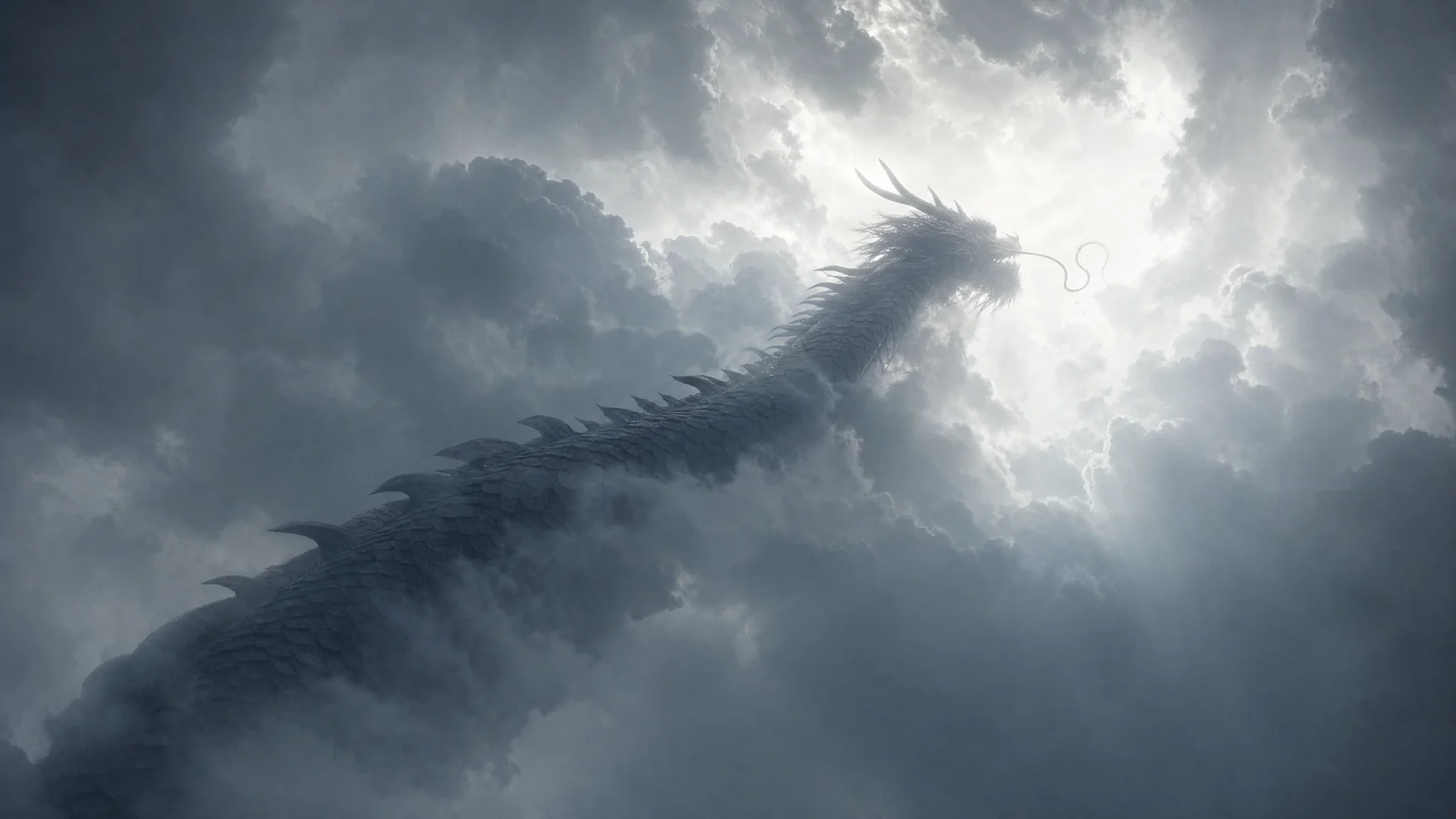
Most people who dream about a dragon already know one thing: this has to be a good dream.
So the reason they search is different from other dreams. Not out of fear, but to confirm just how good it is. And more often than not, "dragon dream lottery numbers" gets searched right alongside it.
The short answer first: it's confirmed in the record that the dragon dream is held in the highest regard. But there's a condition attached.
Lumi
"What was the dragon doing?
Was it climbing up toward the sky, or just... there?
This actually matters a lot. The line preserved in the record is exactly that specific."
Table of contents
The Dragon's Hour, and Its One ExceptionThe Recorded Condition Is "Ascending"The Ascending DragonThe Dream of Riding a DragonImugi, and the Dragon That Didn't AscendThe Wish-Fulfilling Jewel, Water, and ColorThe Dragon in a TaemongTold HonestlyFrequently Asked QuestionsThe Dragon's Hour, and Its One Exception
After the tiger and the rabbit — our separate guide covers rabbit dreams — comes the dragon in fifth place. Jin-si (辰時), the two-hour period from 7 to 9 in the morning.
According to the entry on the thirty-six beasts in the Encyclopedia of Korean Culture (a major reference work on Korean history and culture), jin is a yang hour and corresponds to earth in the Five Elements (Korea's traditional wood-fire-earth-metal-water system). Together with chuk, mi, and sul, it holds one of the four "corner" positions in the traditional zodiac clock.
But the dragon has one thing that sets it decisively apart from the other eleven animals.
It's an animal that doesn't actually exist.
The rat, the ox, the tiger, the rabbit — all of them are real. Of the twelve, the dragon is the only imagined being. So a dragon dream starts on a different level entirely. Every other animal dream is seeing again something you've seen before; a dragon dream is seeing something you've never seen at all.
This is where the finer thirty-six-part division of the zodiac hours gets interesting. The jin hour breaks down into dragon at its start, imugi (a serpent-like creature that failed to become a dragon) in its middle, and fish at its end.
The dragon sits above the imugi, and the imugi above the fish. The stages leading up to becoming a dragon sit stacked, side by side, within the very same slot. Jin-si is a time when what's finished and what's not yet finished coexist.
If what you saw in the dream was ambiguous — a dragon, a big snake, an imugi, you couldn't quite tell — that ambiguity is baked into the nature of this time slot itself.
The Recorded Condition Is "Ascending"
The dragon appears first among the animal entries in the folk-belief dream-interpretation list from the entry on dreams of the Encyclopedia of Korean Culture.
If a dragon ascends into the sky, you become a person of noble rank.
Look at the condition here. It's not simply seeing a dragon. Ascending is the condition.
The dragon was traditionally depicted not as a creature that starts out in the sky, but as one that lives in water and rises upward. So the act of "ascending" itself came to represent the moment a person's status changes. The expression deungyongmun (登龍門, "passing through the dragon gate") comes from the same image — a carp that swims up a waterfall becomes a dragon.
So what the record points to isn't the dragon as a being — it's the act of rising.
As noted in our separate guide to snake dreams, dream interpretation splits along verbs, not nouns. The dragon is where that principle shows up most clearly of all.
If you saw the dragon just staying there, not moving, it doesn't meet the recorded condition. That doesn't mean it's bad — it means the confirmed record simply doesn't cover that particular scene.
For what it's worth, the encyclopedia also records the belief itself — that dragon dreams are considered the best omen in Korea. That it was genuinely regarded this way is a documented fact.
The Ascending Dragon
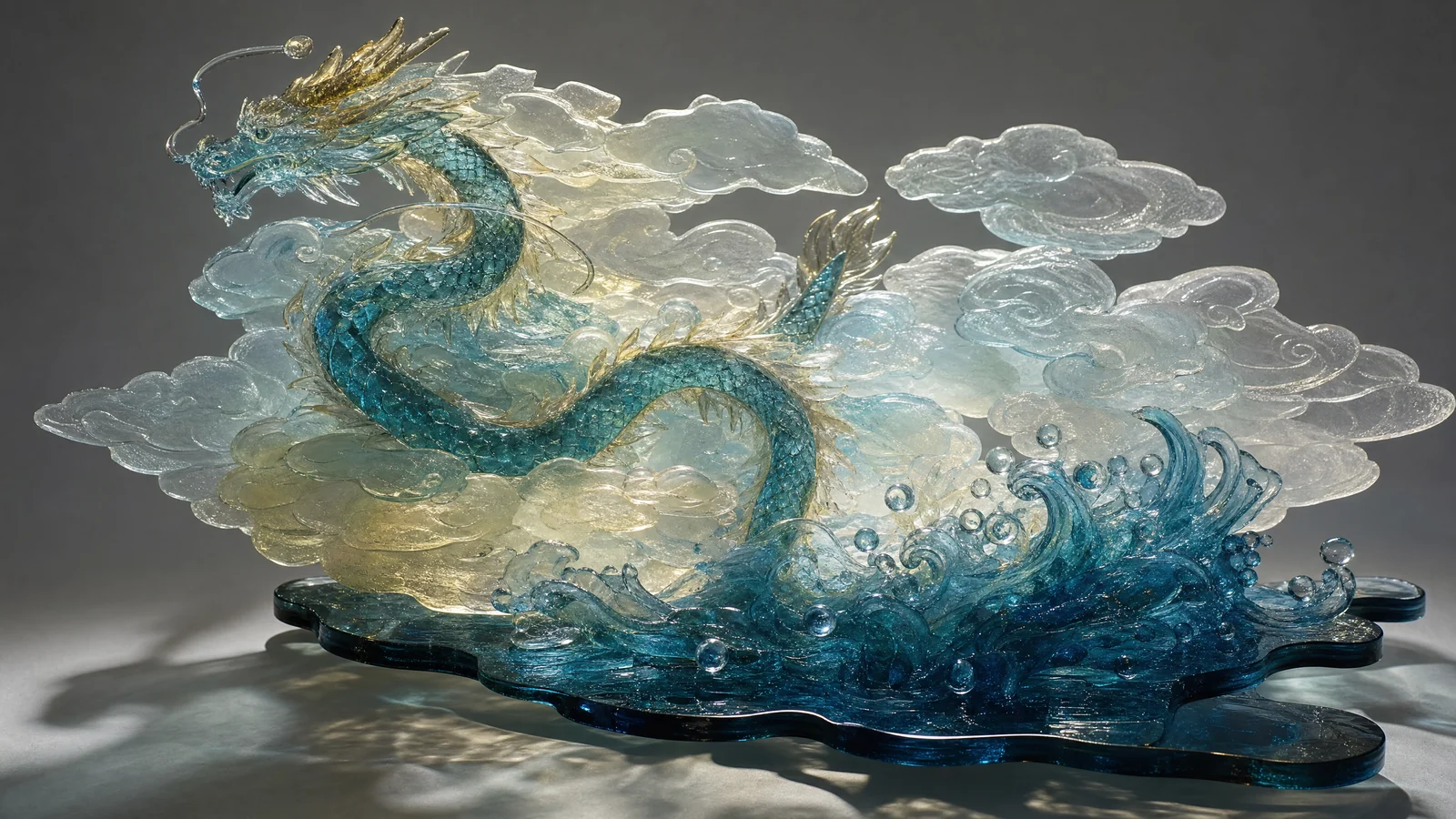
This is the most-searched scene, and it's exactly the one that meets the recorded condition.
The traditional reading is as stated above — becoming a person of noble rank. In modern terms, "noble rank" (gwi-in) doesn't mean meeting a good person — it's closer to your own status rising. In the old context, a gwi-in referred to someone holding a high government post.
From a modern psychological perspective, an image of ascension is sometimes read as connected to a sense of achievement or expansion. But there's a fork here worth noting: did you look up at the dragon, or did you rise together with it?
If you only watched it rise, that might be a picture of watching someone else's ascent — especially if a trace of envy or comparison was in the mix.
The Dream of Riding a Dragon
A rare scene, but one that stays vivid in memory.
The traditional reading doesn't have a confirmed entry specifically for this scene. Still, the image of riding an animal has, in several strands of dream-interpretation grammar, been read as a sign of holding the upper hand.
From a modern psychological perspective, this is close to the maximum expression of a sense of control — the feeling of piloting something far bigger than yourself. Our separate guide to cow dreams notes that who's holding the reins is the fork there; a dragon, by nature, has no reins to begin with.
So what matters most here is whether it felt like you might fall. If you were riding comfortably, that suggests you're currently handling something large. If you kept slipping, that suggests you're in the middle of feeling the scale of it.
Imugi, and the Dragon That Didn't Ascend
Lumi
"Couldn't tell if it was really a dragon?
That's genuinely common. And it's actually the dream with the most to talk about.
Even the old classification put the imugi right in that same slot."
A being that failed to become a dragon is called an imugi. Several stories describe one waiting a thousand years only to fail at the very end.
The traditional reading doesn't have a confirmed entry that interprets the imugi on its own. Still, it's on record that the imugi occupies the middle slot of the jin hour in the thirty-six-part division.
From a modern psychological perspective, this scene reads fairly clearly. Something that almost happened but didn't. Something that came so close and then stopped. There's a reading that connects this image to a period of waiting for the results of a promotion review, or the outcome of something long prepared for.
A dream of a dragon falling mid-ascent, or blocked by clouds, belongs to the same family.
Let's clear up one misunderstanding here. Seeing a dragon fall does not mean you will fail at something. No record or study supports that. What it may mean is that you're currently tense about something ahead of you. The dream isn't telling you the outcome — it's reflecting your current state.
The Wish-Fulfilling Jewel, Water, and Color
The Wish-Fulfilling Jewel
A dragon holding a jewel in its mouth, or reaching for one.
The traditional reading depicts the wish-fulfilling jewel (yeouiju) as a treasure that makes wishes come true. It isn't confirmed, though, as a separate dream-interpretation entry.
From a modern psychological perspective, this scene is read as a state of focus on a single goal. The fork is whether you obtained it, lost it, or simply watched it.
The Dragon That Rose from Water
The dragon is a being bound up with water — rising from a well, a river, or the sea is a commonly reported scene.
Water itself is covered separately in our guide to water dreams. Whether the water was clear or murky is a fork there too.
Yellow, Blue, and Black Dragons
Color-based readings show up often in modern dream interpretation, but they aren't confirmed as separate entries in the old dream-interpretation texts. The system that links the Five Elements to colors and directions is real, but treating that as a direct dream-color interpretation would need its own separate basis.
From a modern psychological perspective, the fact that a color stood out vividly is itself information. In most dreams, color is blurred.
The Dragon in a Taemong
The dragon is the most frequently cited figure in taemong (conception dreams), and classic novels often set up a protagonist as a dragon's child.
A line has to be drawn here, though.
A taemong cannot tell you whether you're pregnant or the sex of the baby. The idea that a dragon taemong means a son is widely repeated, but there's no basis for it. The everyday objects the encyclopedia cites as typical taemong material are things like peppers, strawberries, and pumpkins — food and household items. A dragon appearing in a taemong actually belongs more to the grammar of heroic legend.
And most taemong are, in fact, stories attached after the fact. After a child is born, that earlier dream gets reorganized into "that must have been the taemong." More detail is in our separate guide to taemong.
If you're reading this while hoping to conceive, whether a dragon showed up or not is a matter for your body, not your dreams.
Told Honestly
Lumi
"Since you had a dragon dream, I'll just say one thing.
Search right now and you'll get flooded with 'dragon dream lottery numbers.'
That's not in any old text, and it's not in any study. Someone just made it up."
No verified connection exists between dragon dreams and lottery numbers. There's no mention of numbers in either the traditional record or in psychological research. Playing for fun is everyone's own choice, but that isn't dream interpretation. Dreams involving money in general are covered in our separate guide to dreams about finding money.
Traditional dream interpretation and modern psychology rely on different kinds of evidence.
The encyclopedia itself notes, after laying out its dream-interpretation list, that these readings emerged naturally out of many people's experience rather than from any consistent theoretical foundation. Even the Samguk Yusa (Memorabilia of the Three Kingdoms) preserves a case where the very same dream was read in opposite directions depending on who was interpreting it: a dream King Wonseong had before taking the throne was first read as a sign of dismissal and imprisonment, then, when asked again, flipped into a sign that he would become king.
It's a fact that the dragon dream was held in the highest regard. But that's a record of how people of that era viewed it — not a claim that something actually happens when you have one. The moment those two ideas get mixed together, a historical record turns into a prophecy.
Frequently Asked Questions
Is a dragon dream always auspicious? What's confirmed in the record is limited to the scene of the dragon ascending into the sky. Simply seeing a dragon, on its own, doesn't meet that condition. That doesn't make it a bad dream — it just means the record doesn't cover that particular scene.
I couldn't tell if it was a dragon, a big snake, or an imugi. Not being sure isn't strange. Even the old classification placed the dragon, the imugi, and the fish together within the jin hour. Rather than trying to pin down the exact species, it helps more to remember whether it moved upward or downward.
The dragon just looked at me. That's a static scene — not ascending, not falling. It doesn't meet the recorded condition. Whether you felt overwhelmed or calm in that moment is the information worth keeping.
Can I play the lottery after a dragon dream? There's no connection. Playing is your own choice, but it has nothing to do with the dream.
I keep forgetting my dreams. Dreams start fading about 90 seconds after waking. Instead of getting up right away, lying still for a moment often brings back more fragments.
If you had a dragon dream, you're probably in a decent mood. Let that be. There's no reason a good mood shouldn't carry you into the day.
But if there's a decision you need to make today, base it on something other than the dream. If there's something you've been putting off, today's a fine day to move it forward by just one step.
The same dragon dream leaves a different color for everyone.
Dream Talisman looks at the dream scene you record together with your day stem (ilgan) in the Five Elements system, and turns it into a color and phone wallpaper for the day. It is less an app that interprets your dream for you than one that lets you carry today's dream with you for the rest of the day.
Curious what color that dragon you just read about will come out as?
Record today’s dream in Dream Talisman
References
- "Dreams" — Encyclopedia of Korean Culture · The folk-belief dream-interpretation list, perceptions of dragon dreams, the dream-interpretation case from the account of King Wonseong in the Samguk Yusa
- "The Thirty-Six Beasts" — Encyclopedia of Korean Culture · The logic of zodiac-hour assignment and its finer thirty-six-part division
- "The Twelve Zodiac Spirits" — Encyclopedia of Korean Culture
- General research in modern sleep and dream psychology