
You probably couldn't breathe.
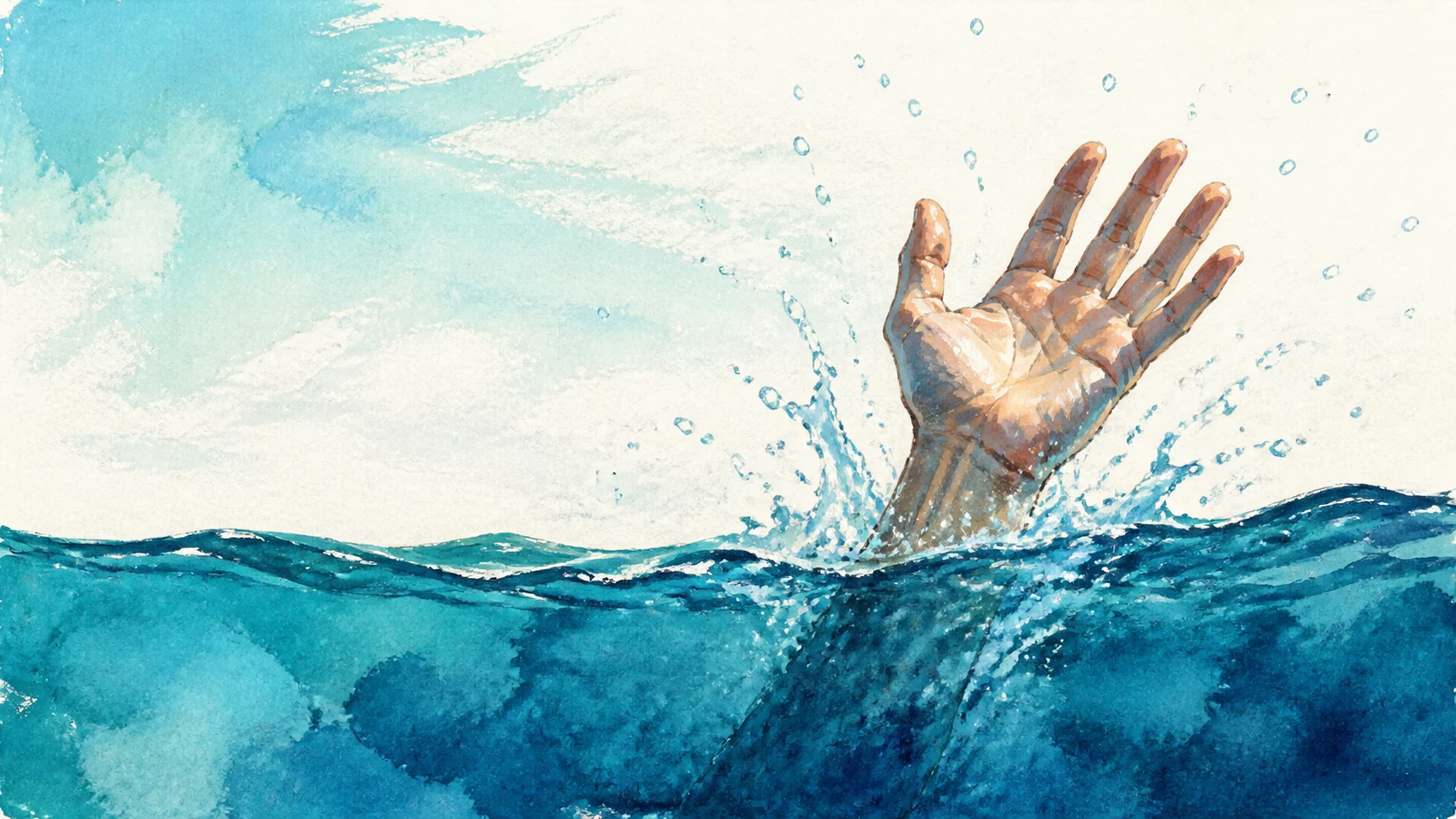
Your feet couldn't find the bottom, up and down got confused, water came into your mouth. And the moment you woke up, you probably took a huge breath. This is a dream that stays in the body.
So when people sit down to search, it's usually some version of: drowning dream, is this a bad-omen dream (hyungmong)?
Open an old dream manual and that entry is actually there. But you have to read the whole sentence. There's a condition attached.
Lumi
"So — did you get out?
Here's why that question matters.
What the old entry marks as inauspicious isn't falling in.
It's not getting back out.
Two extra words, and they're doing all the work."
Table of contents
What Was Recorded as Inauspicious Was 'Not Getting Out'The Same Grammar Shows Up in a Different EntryIf You Were in the Water and It Felt CalmHow Did You Get OutIf You Couldn't BreatheWhat the Water Was LikeThe Dream of Watching Someone Else DrownTold HonestlyFrequently Asked QuestionsWhat Was Recorded as Inauspicious Was 'Not Getting Out'
The classical Chinese dream manual known as the Zhougong Jie Meng (Duke of Zhou's Dream Interpretation — a dream-divination text with a long circulation history in China, distinct in lineage from Korean folk tradition) has a chapter devoted to water. A commonly circulated edition preserved on Chinese Wikisource contains this line:
If you fall into water on your own and cannot get out, it is inauspicious.
Falling in, on its own, reaches no conclusion. The conclusion is made by the second half — whether you got out.
And the line right before it reads:
If you are simply in the water on your own, it is greatly auspicious and beneficial.
Same water, and one line is a great omen while the other is inauspicious. What decides it isn't the water — it's whether you got out of it.
This is also evidence that the text didn't view water itself unfavorably. Look at the other water-related entries and the tone runs fairly bright.
- Walking on the surface of water is greatly auspicious.
- If a great body of water is clear, it is a great and prosperous sign.
- If a river or the sea overflows and rises, it is greatly auspicious and flourishing.
A flooding river read as a great omen — that's a long way from how the scene feels today.
Water more broadly is covered in our separate guides to water dreams and sea dreams.
The Same Grammar Shows Up in a Different Entry
There's another entry that shows this wasn't an isolated turn of phrase in the text.
A chapter on human waste contains this line:
Falling into a latrine is auspicious if you get out, and inauspicious if you don't.
The sentence structure matches the earlier one exactly. Falling in, on its own, is never judged — what decides it is whether you got out.
That means this text consistently judged "falling in" scenes by whether escape happened.
We've covered the latrine-related material separately in our guide to feces dreams.
So when you're piecing this dream back together, here's the order to work through:
- Did you get out?
- How did you get out — on your own, or did someone pull you out?
- What was the water like — clear, murky, moving?
The first question is where the old list drew its biggest line. And it's usually the part people remember.
If You Were in the Water and It Felt Calm
More common than you'd think. Sometimes you fall in and it isn't frightening — you can breathe, or you're just quietly sinking, unbothered.
Traditional interpretation views this quite favorably. As noted above, simply being in the water is recorded as greatly auspicious.
Being in the water, as a state on its own, wasn't treated as a problem.
Read in modern terms, a dream without much emotion attached isn't unusual. Dreams don't always pair a scene with a feeling. So there's no need to find it strange that you weren't afraid.
The idea that emotion is half the interpretation still holds here. If you were afraid, the fear is the information. If you felt calm, the calm is the information.
We won't manufacture a good-or-bad-omen reading out of that difference that isn't in the old record, though.
How Did You Get Out
Lumi
"Did you get yourself out, or did someone pull you out?
The old entry doesn't go that far — it only tracked whether you got out at all.
But by today's reading, that difference matters quite a bit."
Traditional interpretation has no confirmed entry covering rescue specifically. Only whether you got out is recorded, not who helped.
Read in modern terms, these are three different scenes.
If you swam out on your own, that's an image of handling something yourself. Whether you were thrashing or composed is a further fork.
If someone pulled you out, who that person was isn't really information about them — the figures who appear in dreams are images assembled from your own memory. What tends to stay with you is the sense that someone was there to take your hand.
If you woke up before getting out, the old entry marks that as inauspicious. But there's something worth noting here: this particular dream tends to end before it resolves, more often than not. No ending doesn't mean a bad ending.
A survey of 500 Korean adults found that event-driven scenes — falling, being chased — were the most commonly reported. Waking before a dangerous scene resolves is common.
If You Couldn't Breathe
This part deserves its own space.
The most frightening part of a drowning dream is usually the breathing, and that sensation is often what lingers after waking.
A standard scale used to survey typical dream themes includes being unable to breathe or being choked as a formal item — grouped together with the body being restrained and unable to move, and being half-awake and paralyzed in bed.
There's something worth checking here: were your eyes open?
If you could see the room, you knew you were awake, and yet your body wouldn't move and something felt like it was pressing on your chest — that isn't a dream to interpret. It may be sleep paralysis. It happens when consciousness surfaces before the muscle relaxation of REM sleep has fully released.
We cover that in more detail in our separate guide to dreams of losing your voice.
And it's also possible your breathing was genuinely restricted in real life — a stuffy nose, an awkward sleeping position, a blanket over your face. The observation that something touching the body during sleep can find its way into a dream goes back a long way; Yi Ik (이익), a late-Joseon-era scholar of the Silhak (Practical Learning) school, made the same point in his essay "Monggamnon" ("On the Sensations Behind Dreams").
If this kind of scene keeps recurring and you're exhausted beyond what a normal day should leave you, dream interpretation isn't the priority — a sleep consultation is.
What the Water Was Like
Traditional interpretation broke down the state of the water in fairly fine detail.
- If a great body of water is clear, it is a great and prosperous sign.
- If flowing water wraps around your body, there will be imprisonment and litigation.
- Walking on the surface of water is greatly auspicious.
- Standing on the surface of water brings misfortune.
The second line stands out. It sets aside a scene where water wraps around the body as its own case — not falling in, not being submerged, but being encircled.
If the lingering sensation is of water continuing to pull at you as you tried to get free, that's the entry it's closest to.
Read in modern terms, clear versus murky water is often read as a matter of visibility. Water you can't see through tends to feel scarier precisely because you can't see the situation.
The Dream of Watching Someone Else Drown
You weren't the one who fell in — someone else was. If it was a family member or a child, it can sit with you all day.
There's no evidence that this dream means something is going to happen to that person. It isn't a premonition.
Traditional interpretation has one heavier line worth mentioning: a scene of water in someone else's house with a child in it is recorded very inauspiciously. But that's a reading from that era, and it has never been shown to predict anything.
Read in modern terms, a dream of someone close to you in danger is generally read as a scene built out of worry about losing them — not real information, but emotion.
What forks here is where you stood in the scene.
- Did you jump in
- Did you reach out
- Did you just watch
If you were left watching, some readings connect that to a sense of responsibility — people in caretaking roles are said to report this kind of dream more often.
If you wake up wanting to reach out to that person, go ahead. But it's better to leave the dream out of it. It will only make them anxious — especially if a child was involved.
Told Honestly
Lumi
"Search 'drowning dream bad omen' and you'll get flooded with results saying it is.
The old entry has a condition attached: 'if you don't get out.'
Quote it without those two words, and it becomes a different sentence."
Traditional dream interpretation and modern research rely on different kinds of evidence.
What's confirmed in the old record goes this far: it wasn't falling in that mattered, but whether you got out — and simply being in the water, calmly, was actually read as a very good sign. And that isn't a prophecy — it's a record of how people of that era read the world.
The entry on dreams in the Encyclopedia of Korean Culture (a major reference work on Korean history and culture) doesn't include drowning among the examples in its eight-branch folk-belief dream-interpretation list. The encyclopedia itself notes, after laying out that list, that these readings emerged naturally from many people's experience rather than from any consistent theoretical foundation.
A few things are worth stating plainly.
A drowning dream doesn't predict an accident or death — not for you, and not for anyone else.
It isn't a reason to cancel plans to be near water, either. That said, the actual safety rules for being near water are worth following regardless of the dream.
The quote "falling into water is inauspicious" is only half the original sentence. The condition was part of the line.
No verified connection exists between drowning dreams and lottery numbers, either.
Frequently Asked Questions
Is a drowning dream inauspicious? The old entry marked not getting out as inauspicious, not falling in. Being calmly in the water was actually recorded as greatly auspicious.
I fell in, then got out. By the condition in the old text, that isn't the inauspicious version. A different entry in the same text follows the exact same structure: auspicious if you get out, inauspicious if you don't.
I woke up before getting out. Waking before a dangerous scene resolves is common. No ending doesn't mean a bad ending.
I couldn't breathe. Being unable to breathe is a formal item on standard dream-theme scales. But if your eyes were open while your body wouldn't move, that may point to sleep paralysis instead.
I dreamed my child was drowning. It isn't a premonition. It's more naturally read as a scene built out of worry. It's best not to pass the dream itself along.
The water was murky. The old entries favored clear water. In modern terms, this is sometimes connected to a sense of not being able to see a situation clearly.
The reason this dream lingers in the body is the breathing. Breath settles more slowly than sight does.
So if you felt dazed for a while after waking, that isn't unusual.
Today, there are three things worth writing down.
- Did you get out — this is where the old list drew its line
- If you did, how
- Was the water clear or murky
Start with the first line. Most of it will come back to you.
If falling was the stronger sensation, our separate guide to falling dreams may be the better fit; if you were being chased before you ended up in the water, our guide to chase dreams covers that ground.

A dream that stays in the body tends to settle once you write it down.
The feeling of not being able to breathe fits into a single line. Collect a few days of entries and it usually overlaps with periods of shallow sleep.
Dream Talisman looks at the dream scene you record together with your day stem (ilgan) in the Five Elements system, and turns it into a color and phone wallpaper for the day. It is less an app that interprets your dream for you than one that lets you write it down before it fades.
Record today’s dream in Dream Talisman
References
- Zhougong Jie Meng (Duke of Zhou's Dream Interpretation), commonly circulated edition — Chinese Wikisource · Passages on falling into water and human waste, from the water/fire and impurity chapters. A classical Chinese dream-interpretation text, distinct in lineage from Korean folk records
- "Dreams" — Encyclopedia of Korean Culture · The eight-branch folk-belief dream-interpretation list (no drowning entry), Yi Ik's "Monggamnon," general commentary on dream interpretation
- Nielsen, T. A., et al. (2003), "The Typical Dreams of Canadian University Students," Dreaming 13(4) · Choking, paralysis, and being bound analyzed as one category among 55 dream themes
- Study on typical dream experiences among Koreans · Reported frequency of event-driven dream scenes among 500 adults
- General research on sleep paralysis · A condition where REM-sleep muscle relaxation overlaps with waking consciousness
- General research in modern sleep and dream psychology