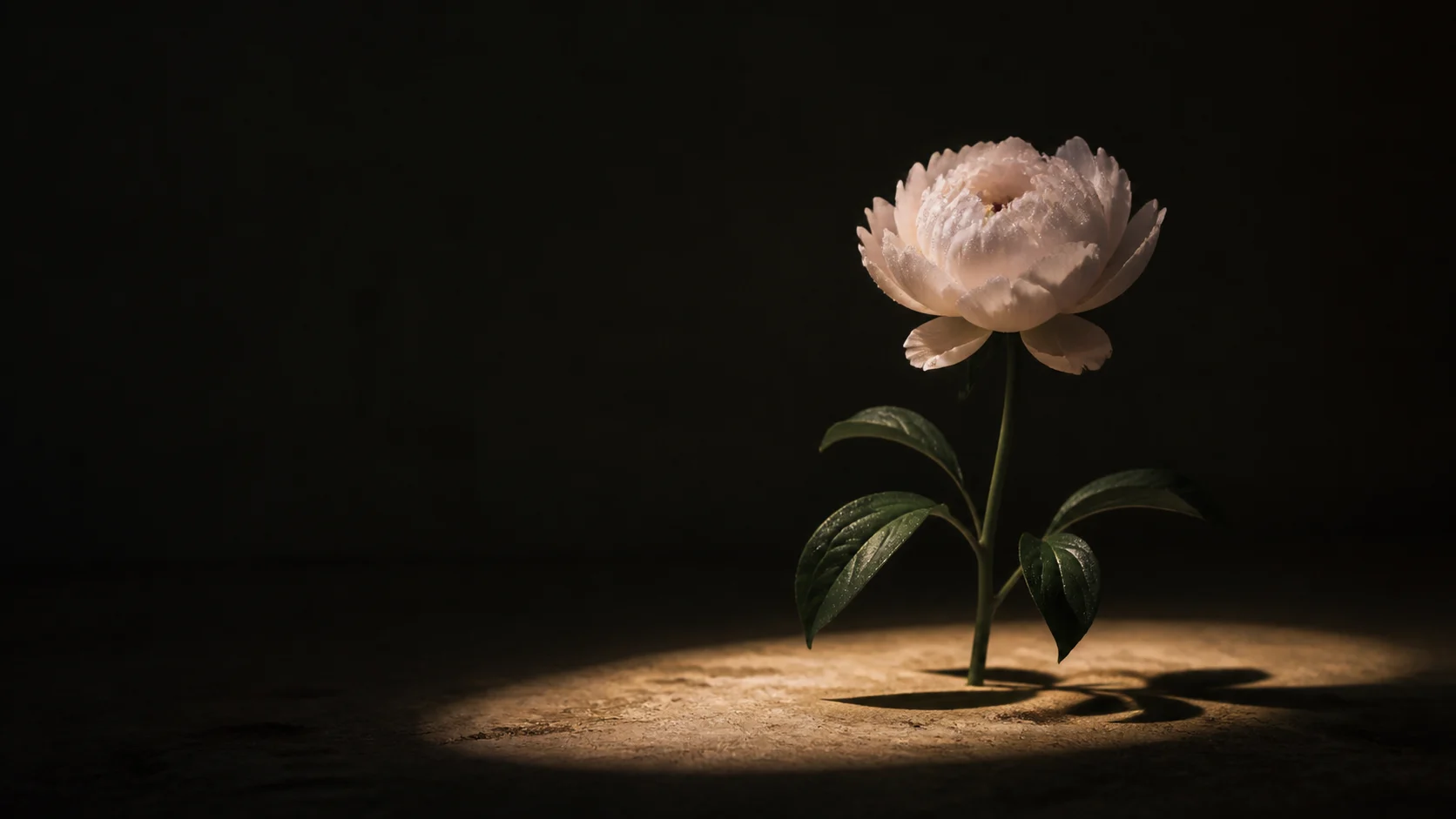
The color is probably what stayed with you.
Flower dreams tend to work that way. What happened matters less than what color it was. Maybe it was in full bloom, maybe it was wilted, or maybe someone handed it to you.
Search this dream and you'll mostly land on taemong (conception dream) content first. We'll get to that later.
Open the old records first, though, and there's a rather unexpected line. Here's what it says about flowers.
Lumi
"Sharing flowers with someone in a dream sounds nice, doesn't it?
But the old entry says: sharing flowers with another person means scattering apart.
Sharing became the same thing as splitting."
Table of contents
Sharing Meant Splitting ApartBut the Widely Circulated Manual Has No Flower Entry at AllIn Korean Records, Flowers Belong to TaemongWhat Kind of Flower Was ItWhy Does Color Stick With Flower Dreams?The Most Honest AnswerFrequently Asked QuestionsSharing Meant Splitting Apart
Gathering the flower-related lines passed down through Ming-Qing-era Chinese dream manuals reveals a clear pattern.
- Sharing flowers with another person means scattering apart
- When flowers held in your hand fall, illness follows
- If someone destroys a flower, disaster comes
- If flowers in the garden wilt, great misfortune follows
- Planting flowers is a sign of vitality; wealth will grow
Read them together, and a rule appears.
Planting is good. Sharing, wilting, and destroying are all bad.
The first line especially stands out. Splitting a bouquet with someone reads as a warm, friendly scene by today's standards, but the old catalog read the act of dividing itself as scattering.
A flower is a complete form in a single stem. So the moment it's split apart, the old texts treated it as an entirely different story.
One thing should be made clear, though. The line about a fallen flower in your hand leading to illness does exist, but there's no evidence this dream carries health information. That's simply how people of that era read the world.
But the Widely Circulated Manual Has No Flower Entry at All
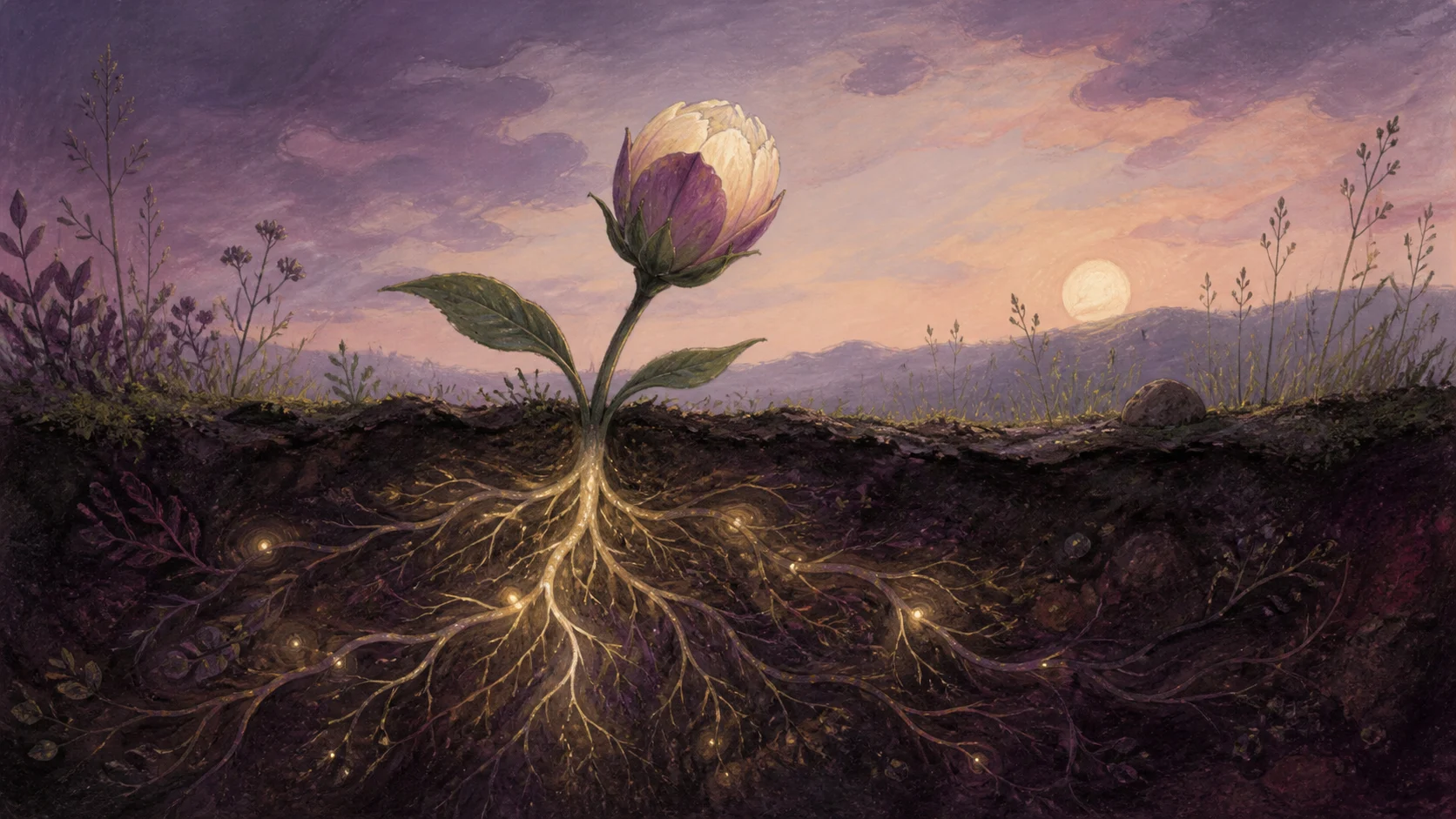
This is the strange part of the topic.
The commonly circulated edition of the Zhougong Jie Meng (the Duke of Zhou's dream manual, a family of traditional Chinese dream interpretation texts) organizes its entries into 27 chapters. The table of contents runs like this:
Heaven and Earth, Mountains and Trees, Body and Hair, Clothing and Shoes, Swords and Drums, Emperors, Houses, Doors and Wells, Gold, Silver and Silk, Mirrors and Hairpins, Boats and Carriages, Roads and Bridges, Marriage and Pregnancy, Food and Drink, Graves and Coffins, Documents and Brushes, Grief and Illness, Gods and Buddhas, Fighting, Prison, Fields and Grains, Water and Fire, Time and Bathing, Dragons and Snakes, Cattle and Horses, Turtles and Fish.
There's no flower chapter.
Trees are there. Grains are there. Fruit trees fall under the fields chapter. But flowers alone have no chapter of their own.
Opening the fields-and-grains chapter suggests why. Everything in it is about eating and planting. Ripe rice means prosperity, thriving grain means wealth, planting vegetables means a long life.
In that text's world, plants were sustenance — not something you looked at for pleasure.
The flower-related lines mentioned above come from a later collection of dream manuals. That later arrival can be read as a sign of how long it took flowers to earn a place of their own on the list.
Tree imagery is covered in our tree dream guide, and fruit imagery in our fruit dream guide, neither yet available in English.
In Korean Records, Flowers Belong to Taemong
The plant entries under folk dream-reading in the "Dreams" entry of the Encyclopedia of Korean Culture (a major reference work on Korean history and culture) don't include a flower entry either. What's there instead: trees, fruit trees, and mulberry trees.
Flowers show up instead in the taemong entry.
In a regional survey of taemong imagery sorted by the child's sex, flowers fall into the plant category associated with daughters, alongside young squash, green melons, cucumbers, and chestnut burrs.
The plant category associated with sons includes red peppers, walnuts, chestnuts, jujubes, and ginseng.
The encyclopedia also states the criteria used: large versus small, black versus white, yang versus yin, complete versus incomplete. The larger, riper, more finished items were read as sons; the smaller, less ripe, unfinished items were read as daughters.
A flower is the stage before it becomes fruit. That's why it landed in the incomplete category.
The encyclopedia also openly states that this classification arose from patriarchal social conditions and the old custom of valuing sons over daughters. And even that framework flipped from region to region — a jujube dream read as a son in Gyeonggi Province was read as a daughter in Gyeongsang Province.
As a historical record, it's worth reading. It isn't something to use for prediction.
A dream cannot tell you whether you're pregnant or what sex your child will be. Taemong stories are usually attached after the fact. Taemong in general is covered in our baby dream guide.
The same logic shows up in our moon dream guide, not yet available in English, where a full moon was read as a son and a half-moon as a daughter.
What Kind of Flower Was It
This dream branches into quite a few different scenes.
It Was in Full Bloom
A field of flowers, a tree covered in blossoms, or a single flower blooming unusually large.
In traditional interpretation, blooming is read favorably. One entry says that flowers blooming on a withered tree means one's descendants will flourish — the same entry covered in our tree dream guide.
Read in a modern light, a dream with vivid color is uncommon on its own. Writing down exactly which color it was tends to pay off later.
It Was Wilted
In traditional interpretation, this leans inauspicious. One entry states that when garden flowers wilt, great misfortune follows.
Still, this dream doesn't predict any actual event. The weight the old entries gave it reflects how people of that era read the world.
You Received a Flower
Someone handed it to you, or you received a bouquet.
An entry specifically about receiving a flower is hard to find in traditional interpretation. But across the catalog as a whole, receiving something is generally read favorably.
You Cut a Flower
In traditional interpretation, there's one unusual entry here. A later text records that cutting a pomegranate blossom is inauspicious, because the Korean and Chinese sound for "pomegranate" (ryu) echoes the sound for "staying" or "remaining" (ryu).
This is a reading based on wordplay, and that kind of logic shows up now and then in traditional interpretation. It isn't a rule to apply directly today.
A Flower in Your Hand Fell
This is a scene the old records treated with real weight. As noted above, though, it isn't health information.
You Shared It with Someone
This is the entry that gave the article its title. The old catalog read this as scattering apart.
You Planted a Flower
In traditional interpretation, this is read most favorably of all. One entry says it's a sign of vitality, and that wealth will grow from it.
That fits the broader pattern — entries about planting in a field tend to sit on the favorable side.
It Was a White Flower, or an Artificial One
Waking up uneasy because it reminded you of a funeral is common with this scene.
In traditional interpretation, there's no entry addressing artificial flowers. And as noted in our clothes dream guide, not yet available in English, the old catalog read even wearing mourning clothes as favorable. White wasn't automatically treated as inauspicious.
If the funeral imagery itself is what stayed with you, our funeral dream guide, not yet available in English, is the more relevant read.
Lumi
"One of these eight rang true, didn't it?
What the old catalog favored was planting.
Not cutting, not sharing, not wilting."
Why Does Color Stick With Flower Dreams?
This is worth a closer look.
Vivid color memory in dreams is less common than people assume. Flower dreams, though, seem unusually prone to it.
There's no data confirming exactly why. But one thing can be said. Unlike other dream subjects, a flower's color is essentially the object itself. A tree has its shape, a person has a face — take away the color from a flower, and not much is left.
That may be why this dream is so easy to record. Even with no event to describe, a single color word is enough.
There's no flower item on the standard scales used to survey typical dream themes, and no confirmed data measuring how often this dream occurs. So we can't say how common it actually is.
The Most Honest Answer
Lumi
"Search online and you'll find claims that a flower dream is always auspicious.
The widely circulated old catalog has no flower entry at all.
Later manuals do have one, and there, cutting and sharing were treated seriously."
Traditional dream interpretation and modern research rely on different kinds of evidence.
What's confirmed. The widely circulated 27-chapter Zhougong Jie Meng has no flower chapter. Later dream manuals do include flower entries, reading planting favorably and sharing or wilting unfavorably. In the Korean taemong catalog, flowers are classified among plants associated with daughters, on a criterion of complete versus incomplete.
What isn't confirmed. No data measures how often flower dreams occur. No standard dream-theme scale includes a flower item. There's no evidence a dream can reveal pregnancy or a child's sex.
The encyclopedia itself notes, after laying out its list of dream-reading methods, that such interpretations formed naturally from many people's experiences rather than from a consistent theoretical basis.
A few points should be made clearly.
A flower dream cannot reveal pregnancy or a child's sex. The old classification is a historical record, and the encyclopedia itself states what criteria it used.
A wilted-flower dream doesn't predict something bad.
A dream of a flower falling from your hand isn't health information, either.
There's no verified connection between flower dreams and lottery numbers.
Frequently Asked Questions
Is a flower dream auspicious? The widely circulated old catalog has no flower entry. Later manuals do, and there planting is read favorably while wilting or sharing is read unfavorably.
The flower was in full bloom. Blooming is read favorably. That said, it's a record, not a prediction.
The flower had wilted. The old entry treated this with real weight. Still, it doesn't predict any particular event.
Is a flower dream a taemong? Flowers do appear in the old taemong catalog. They're classified as daughter-associated, on a standard of "incomplete." A dream can't reveal a child's sex.
I received a flower. An entry specifically about receiving is hard to find. But the catalog as a whole tends to read receiving favorably.
It was a white flower, and it felt unsettling. There's no old entry addressing artificial or white flowers specifically. The old catalog even read mourning clothes as favorable.
I cut a flower. The entry about cutting is based on wordplay, so it isn't a rule to use as-is today.
Flower dreams linger because of their color. Even without an event, color stays.
That may be part of why flowers earned a place on the list so late. A catalog built around what to eat would naturally take time to make room for something meant simply to be looked at.
Three things worth writing down today:
- What color it was
- What state the flower was in — blooming, wilted, or cut
- What you did — did you look, receive, plant, or share
Just the first line is enough. This dream is half about color.
A dream that leaves only a color behind is the easiest to write down — one word does it.
Collect a few months of those words, and the color often tells you where your mind was during that stretch of time.
Dream Talisman looks at the dream scene you record together with your day stem (ilgan) in the Five Elements system, and creates a color and phone wallpaper for the day. It's less an app that interprets your dream for you than one that helps you write it down before it fades.
Curious how last night's color would turn out?
Record today’s dream in Dream Talisman
References
- Table of contents of the original 27-chapter Zhougong Jie Meng, and its "Fields, Grains, and Farming" chapter · Flowers are not included as an independent chapter. These are commonly quoted lines rather than a checked original edition. This is a Chinese dream-interpretation tradition with a different textual lineage from Korean folk records
- Flower-related entries passed down through the Menglin Xuanjie (夢林玄解) and Duanmeng Bishu (斷夢秘書) manual traditions · Lines on planting, sharing, wilting, and falling. Same caveat as above
- Taemong — Encyclopedia of Korean Culture · The plant-imagery classification by sex in taemong records, the complete-versus-incomplete logic, regional variation, and the social background of son preference
- "Dreams" — Encyclopedia of Korean Culture · The folk dream-reading plant catalog. No flower entry is confirmed
- Nielsen, T. A. et al. (2003), "The Typical Dreams of Canadian University Students," Dreaming 13(4) · No flower-related item appears among the 55 items
- General research in modern sleep and dream psychology