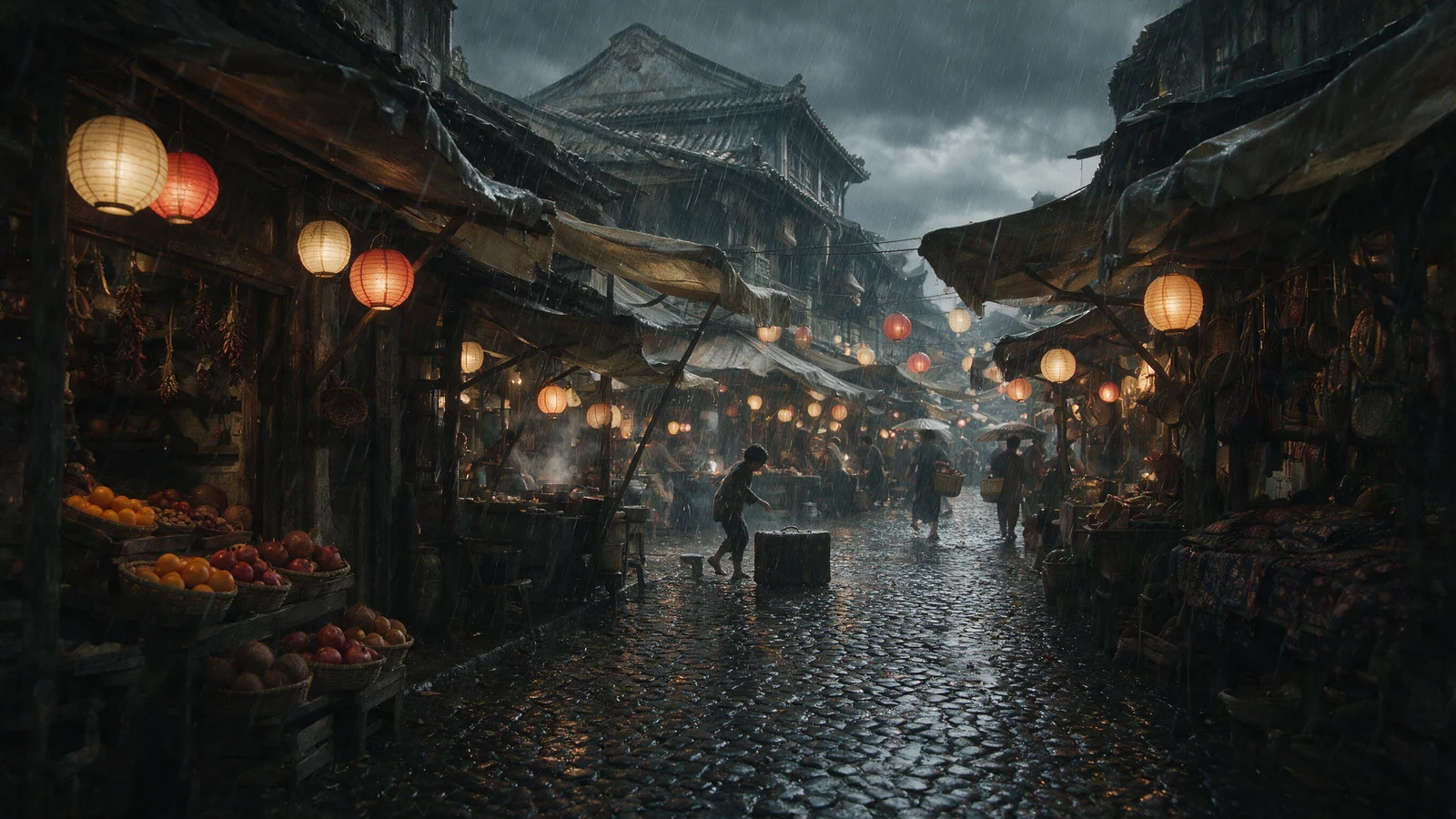
You probably didn't have an umbrella.
That's how rain dreams almost always go. A scene of casually walking under an open umbrella rarely comes up. You were just standing there getting soaked, or running for cover under an eave, or trying to get inside somewhere and the door wouldn't open.
And when you wake up, all that's left is the sensation of wet clothes.
Lumi
"Were you getting soaked, or were you taking shelter?
Whenever I ask this, people usually say 'I was getting soaked' with their face falling.
The old records are a bit deflating on this one, though. They call both of them favorable."
Table of contents
Both Getting Soaked and Taking Shelter Were Read as FavorableWhat Split the Reading Was What the Rain DidThe Old Texts Also Say It Depends on Who's DreamingKorean Records Have No Rain Entry — But They Do Have LightningThunder and LightningRain That Never Stops, a Dim and Endless DownpourWhat Was Your Feeling at the TimeThe Most Honest AnswerFrequently Asked QuestionsBoth Getting Soaked and Taking Shelter Were Read as Favorable
Gathering the rain-related entries from old dream manuals turns up a picture different from what you'd expect.
A passage in the Menglin Xuanjie (夢林玄解, a Ming-Qing era Chinese dream manual) family of records describes a dream of being drenched by heavy rain, and reads it as a sign of receiving grace and benefit. Scholars pass their exams, officials get promoted, merchants turn a profit, and someone caught up in a legal dispute meets a benefactor who takes their side.
So is taking shelter the unlucky version, then? No.
The same family of texts includes a separate entry for a dream of rushing to hide from a sudden downpour, and it's read as escaping hardship and heading toward good fortune. Someone seeking a reputation meets someone who helps them, a sick person meets a doctor, a matchmaker appears for a pending marriage, a traveler finds a companion for the road, and a standing dispute gets resolved.
Getting soaked brings grace; taking shelter avoids misfortune. Both land on the favorable side.
So the popular idea today that getting wet versus staying dry determines whether the dream is good or bad isn't backed by the old texts. So what actually determined the reading?
What Split the Reading Was What the Rain Did
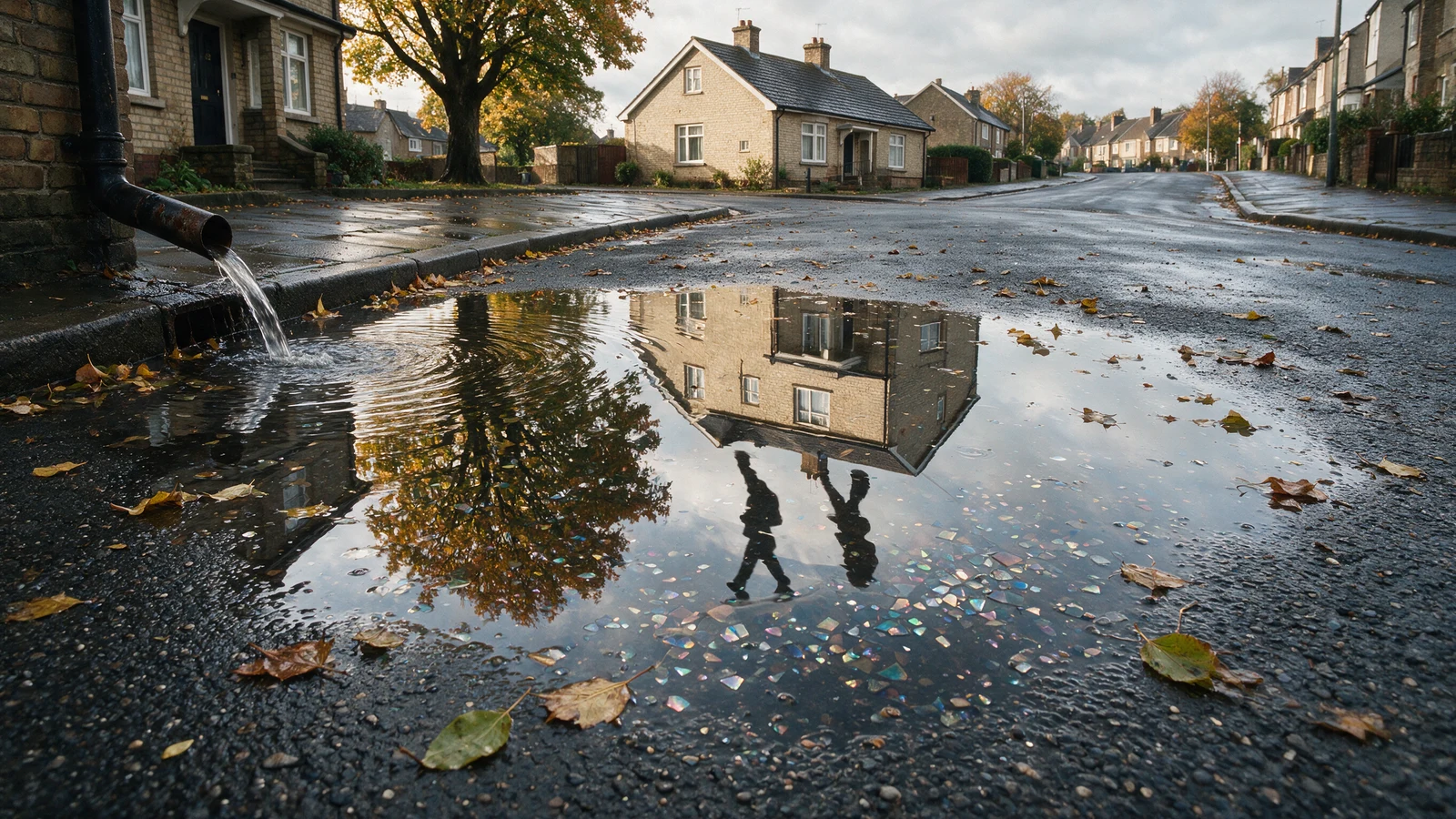
The same family of records includes a separate entry for rain that destroys a wall or a house. This one is unlucky — read as a sign the state is collapsing and the household is in decline.
Getting wet and destroying something were treated differently. The deciding factor wasn't whether the rain touched you — it was whether the rain tore something down.
Scenes of a house shaking or collapsing are covered in more depth in our house dream guide.
There's also a passage describing rain that simply pours down without letting up, read as a sign that yin energy is dominant and yang energy stands alone. What's being read there isn't excess itself — it's imbalance.
From a modern psychological perspective, a similar conclusion is reached from a different angle. What matters isn't the rain itself, but whether the rain changed the situation. Rain that simply fell is a different dream from rain that blocked a road, broke an appointment, or kept you from doing something.
The order for working through this dream is as follows.
- Did the rain block or destroy something?
- Where were you — inside it, or sheltered from it?
- What was your feeling at the time?
The Old Texts Also Say It Depends on Who's Dreaming
This part is genuinely interesting.
The entry that reads getting soaked by heavy rain favorably comes with a condition attached: someone about to travel and someone who is ill are treated differently. For these two, the text notes, the outcome swings sharply toward one extreme or the other — great fortune or great misfortune — so each case has to be considered separately.
Same scene, different conclusion, depending on the dreamer's circumstances.
This kind of qualifier turns up elsewhere too. As we saw in our blood dream guide, a dream of blood-stained clothing is generally read as a triumphant sign — except for a warrior, for whom the same text specifically warns it as something to dread before a coming battle.
Old dream interpretation didn't attach one fixed answer to one fixed scene. That's the sharpest contrast with how we search for meaning today.
Korean Records Have No Rain Entry — But They Do Have Lightning
The Dreams entry of the Encyclopedia of Korean Culture (a major reference work on Korean history and culture) sorts its folk dream-interpretation examples into eight categories.
Under natural objects, it states that grass growing in the middle of a field means unexpected money, that harvesting rice at night means a peaceful household, and that climbing a mountain and having it collapse brings misfortune.
There's no rain entry. It doesn't appear among any of the listed examples.
That's a little surprising, given this was an era when farming was everything. It's possible rain was simply too ordinary a part of daily life to be worth reading as an omen — or it may have just been left out of the small set of examples chosen for illustration.
Instead, there's this: being struck by lightning means unexpected money.
The Zhougong Jie Meng (Duke of Zhou dream manual tradition, Chinese) family of texts includes a similar passage, stating that being struck by lightning brings wealth and status. Both traditions say the same thing.
Being struck by lightning would kill a person in reality, yet both national records read it as wealth. This flips something unlucky into something favorable — a pattern the encyclopedia addresses directly, noting that dream interpretation followed two distinct attitudes: reading dreams as symbols, and reading dreams as the reverse of reality.
Thunder and Lightning
Lumi
"Did a thunderclap startle you awake?
The old entries say it means rising to an official post.
The louder it was, the better. That's the exact opposite of how we'd feel about it today."
Traditional interpretation turns unexpectedly bright here. The Zhougong Jie Meng tradition states that a rumbling clap of thunder means rising to office, that thunder rising from the ground means an ambition fulfilled, and that a flash of lightning across your body brings a joyful occasion.
Loud sound and bright light both seem to have been read as exposure — a scene of becoming known, overlapping with the image of a name spreading.
From a modern psychological perspective, sound is treated differently. A sudden, loud noise is generally read as an image of the shock itself — something that arrived without warning, something you weren't ready to face.
Sometimes an actual outside sound gets woven in, too. Yi Ik (이익), a late-Joseon Silhak scholar, wrote in his essay Monggamnon (몽감론) that hearing the sound of drums while asleep causes military scenes to appear in dreams. The observation that whatever touches the body during sleep gets woven into dreams goes back quite far.
If it was actually raining outside while you slept, that sound may have simply made its way into the dream as-is.
Rain That Never Stops, a Dim and Endless Downpour
Not a sudden shower, but rain that feels like it's been falling for days. The sky stays dark, and even inside the dream, you feel worn down.
Traditional interpretation reads this unfavorably. The Zhougong Jie Meng tradition states that when a gloomy rain falls and the sky stays dark, it means being trapped.
This differs from the heavy-rain entry covered earlier. A sudden downpour was grace; rain that never ends was confinement. The deciding factor wasn't intensity — it was duration.
From a modern psychological perspective, the same distinction applies: what matters is duration rather than intensity. One explanation holds that a single major event and a prolonged, ongoing state show up as different kinds of dreams.
And if your mood has been low for a while, that tends to bleed into the scene too. A research report found that dream content — misfortune, injury, anger — differed between groups with higher levels of waking anxiety and stress.
If dreams like this have continued for weeks and sleep has been difficult too, that may no longer be about the dream at all — it may have shifted into a matter of sleep and overall condition. Reduced sleep tends to bring on more of these heavier dreams.
What Was Your Feeling at the Time
Same rain, different residue.
- Did it feel refreshing?
- Did it feel cold and miserable?
- Did it feel like nothing at all?
If the first is what stayed with you, that lines up with the sense of grace the old records describe. Plenty of people report actually feeling relieved after a rain dream.
If it's the second, the information may lie less in the wet sensation and more in the feeling of being alone. Few people remember who else was present in a rain dream — but if you think back, it's usually no one.
The third is information too. A dream without an attached emotion isn't unusual. Dreams don't always pair a scene with a feeling.
The principle that emotion is half the interpretation holds here as well. Even so, a difference in feeling shouldn't be used to invent a verdict the old records never made.
The Most Honest Answer
Lumi
"Search 'rain dream' and you'll find plenty of pages calling it a bad-omen dream.
The old records call it a sign of receiving grace. They call taking shelter favorable too.
But that's not a prophecy either — it just reflects that rain meant farming to people back then."
Traditional dream interpretation and modern psychology draw on different kinds of evidence.
What the old records confirm is that both getting soaked and taking shelter were read favorably, while destruction and unending rain were read unfavorably. And that isn't prophecy — it's how people of that era read the world around them.
The encyclopedia itself states, after laying out its list of interpretive methods, that these readings formed naturally out of many people's lived experience, not from any consistent theoretical foundation.
A few points should be made clearly.
Getting soaked in a dream doesn't make it a bad dream. If anything, the old records lean favorable here.
A rain dream doesn't predict actual weather or a real event. If it was actually raining outside, that isn't precognition — that's a sound making its way into the dream.
There's no basis in the old texts for a formula like "wet is good, sheltered is bad." Some modern interpretations phrase it that way, but the reasoning comes from somewhere else.
There's no verified connection between rain dreams and lottery numbers, either.
Frequently Asked Questions
Is getting soaked in a dream a bad-omen dream? The old records describe it as a sign of receiving grace and benefit. There's a qualifier attached, though — someone about to travel and someone who is ill are treated as separate cases.
I ran to get out of the rain. That's also read favorably in the old texts, as escaping hardship and heading toward good fortune.
I didn't have an umbrella. There's no confirmed umbrella entry on the old lists. In modern terms, this is sometimes read as an image of facing a situation unprepared.
The rain wouldn't stop. The old entries treat this as a sign of being trapped. The deciding factor here was duration, not intensity.
There was thunder and lightning. The old entries read this favorably, connecting it to an official post or a joyful occasion.
It was actually raining outside while I slept. That happens often. The observation that a sound heard during sleep can weave itself into a dream goes back to the old records too.
The reason rain dreams stay with you in the body is that the sensation is so vivid. The feeling of being wet outlasts the visual memory.
Today's task comes down to three lines.
- Did the rain block or destroy something?
- Where were you — getting soaked, or sheltered?
- What was your feeling on waking?
Track it for a few weeks and a pattern tends to appear. Rain dreams generally cluster around periods when your mood has been low for a while.
If the dream involved rising water or being submerged rather than rain itself, our water dream guide, not yet available in English, covers that instead.
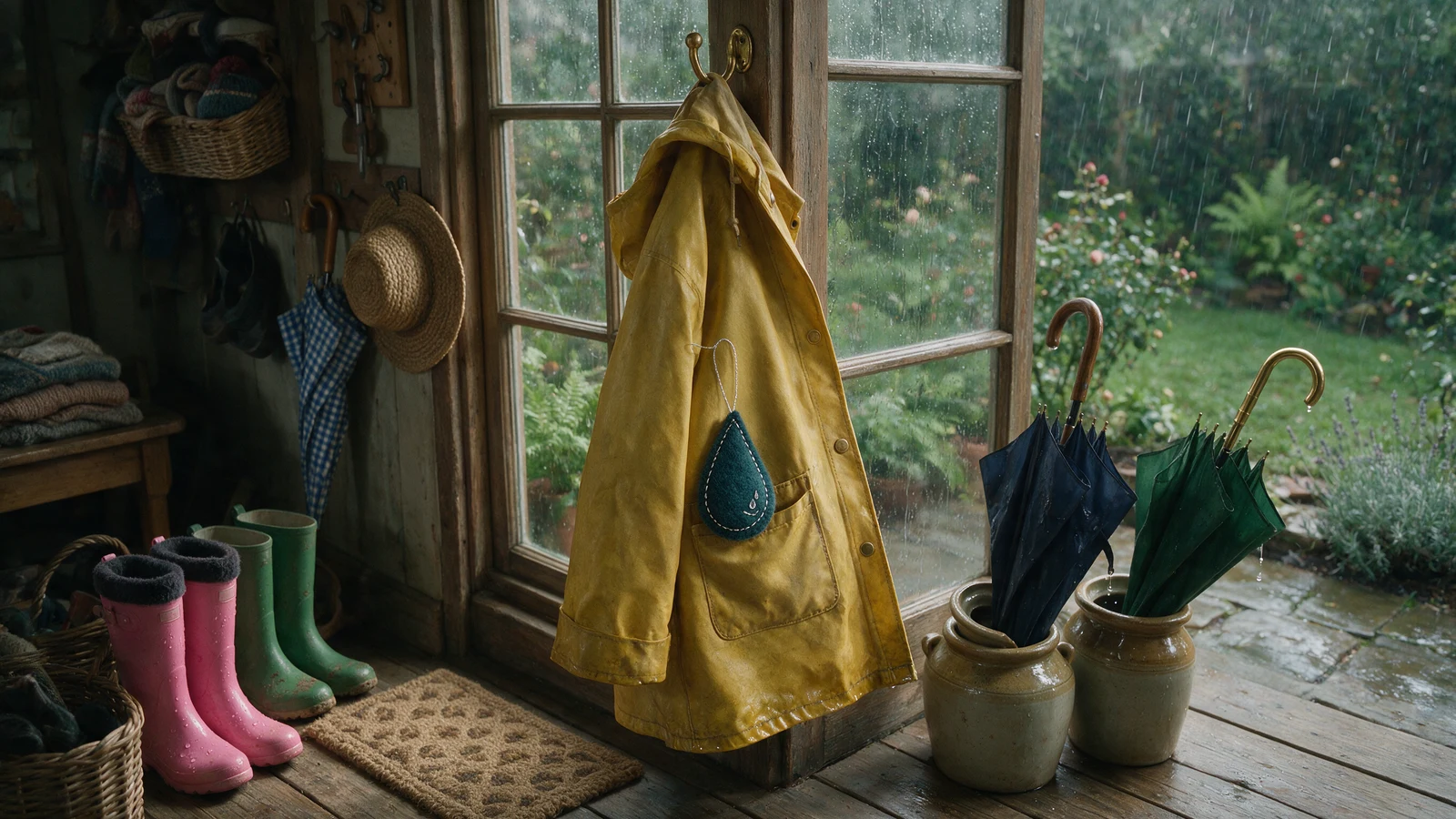
Some dreams leave only a wet feeling behind while the scene itself blurs.
When that happens, just write down the sensation. One word — refreshing or cold — is enough. Collect a few of those over several days, and they tend to overlap with how you were actually doing at the time.
Dream Talisman looks at the dream scene you record together with your day stem (ilgan) in the Five Elements system, and creates a color and phone wallpaper for the day. It's less an app that interprets your dream for you than one that gets you to write it down before it fades.
→ Record your dream in Dream Talisman
References
- Dreams — Encyclopedia of Korean Culture · The natural-object and miscellaneous sections of the folk dream-interpretation catalog; the two traditional attitudes toward dream reading; Yi Ik's essay Monggamnon
- Original Zhougong Jie Meng (Duke of Zhou dream manual tradition, Chinese), Heaven-Sun-Moon-Stars chapter · Passages on rain, thunder, lightning, and being struck by lightning. A translation of widely circulated passages, without cross-referencing an original edition. A Chinese traditional dream-interpretation text with a different lineage from Korean folk records
- Menglin Xuanjie (夢林玄解, Ming-Qing era Chinese dream manual), heavy-rain entries · Same caveats as above
- Study on dream content differences by waking anxiety and stress level
- General research in modern sleep and dream psychology