You probably can't remember what happened.
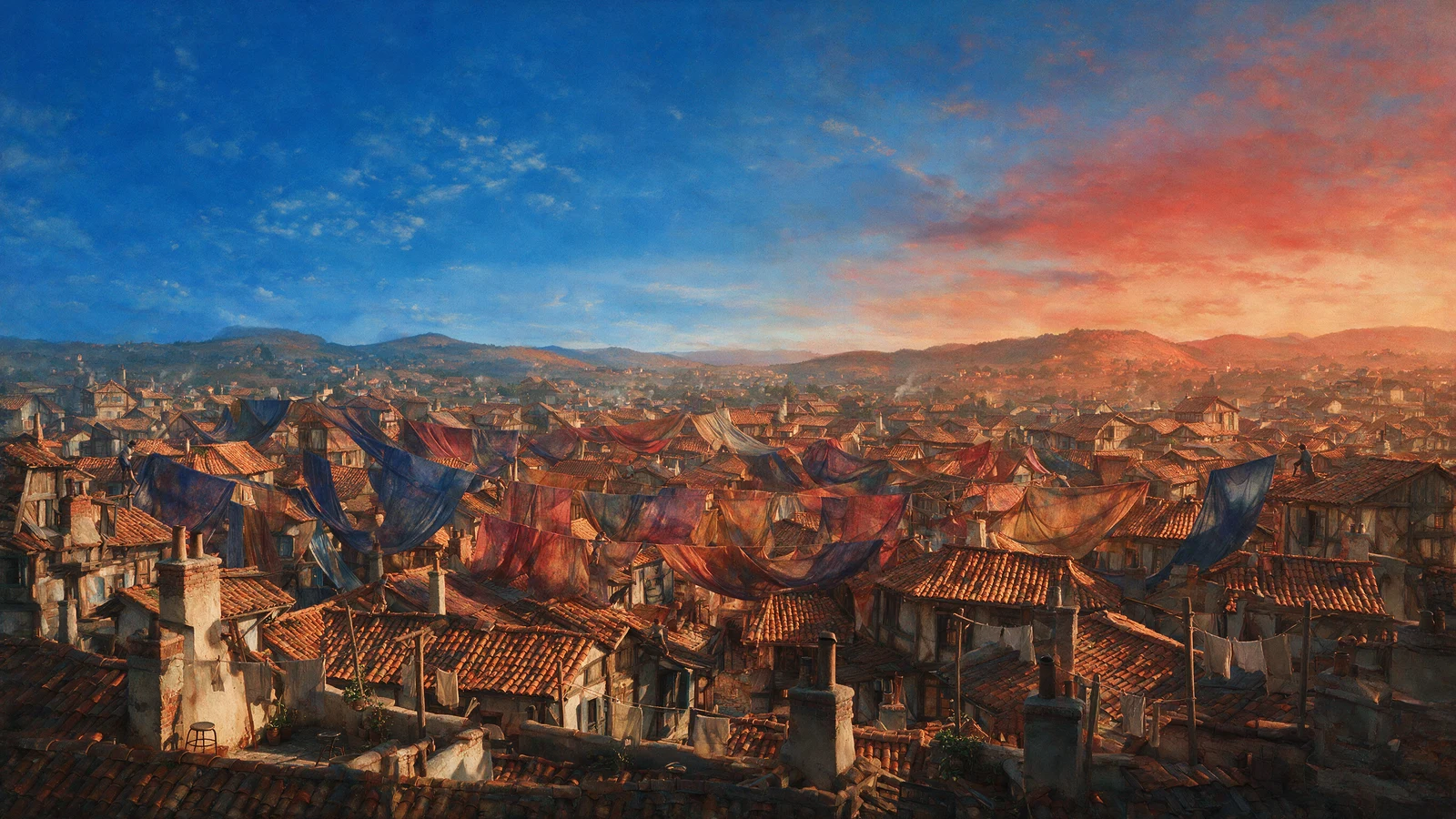
But you remember the sky. It was strangely red, unusually blue, or hung low with clouds. Sky dreams tend to stay with you this way — not as an event, but as an image.
That makes them hard to search for, too. "Sky dream" is the obvious term, but nothing actually happened in the sky itself.
Lumi
"Try remembering the color first.
That's exactly how old dream manuals treated the sky.
There isn't one entry with one answer attached to it.
They split it into clear, bright, red, or split open."
Table of contents
The Old Catalog Never Treated the Sky as One ThingA Red SkyA Clear Sky, Clouds PartingA Dark Sky, Low Hanging CloudsA Sky That Split OpenRising Into the SkyThe Same Line Sometimes Reverses Across EditionsThe Most Honest AnswerFrequently Asked QuestionsThe Old Catalog Never Treated the Sky as One Thing
The old Chinese dream manual Zhougong Jie Meng (the Duke of Zhou's dream manual, a family of traditional Chinese dream-interpretation texts) opens its very first chapter with the sky, grouping heaven and earth with the sun, moon, and stars. Within that chapter, the sky itself splits into several distinct states.
- When the sky clears and rain scatters, every worry disappears
- When the sky is bright, a wife will bear a noble son
- When the gates of heaven open, a noble patron will guide you
- When the gates of heaven turn red, great joy follows
- When the sky is about to brighten, your lifespan extends
- When the sky splits open, the nation faces division
- Lifting your face toward the sky brings great wealth and status
- When clouds clear and the sun appears, a superior's troubles disperse
- When clouds suddenly cover the sun, something hidden is happening
Korean records are far shorter by comparison. The folk dream-reading catalog in the "Dreams" entry of the Encyclopedia of Korean Culture (a major reference work on Korean history and culture) lists just one representative entry for the sky: rising into it means becoming a high official.
Scan the list, and a pattern appears. Not one entry asks about the sky itself. Clear, bright, red, split — every single condition describes a state.
And color accounts for roughly half of them.
A Red Sky
This is the most frequently searched color, and most people search for it expecting bad news.
It's easy to guess why waking up uneasy makes sense. A red sky is the visual grammar of disaster films — a fire, an explosion, something going wrong.
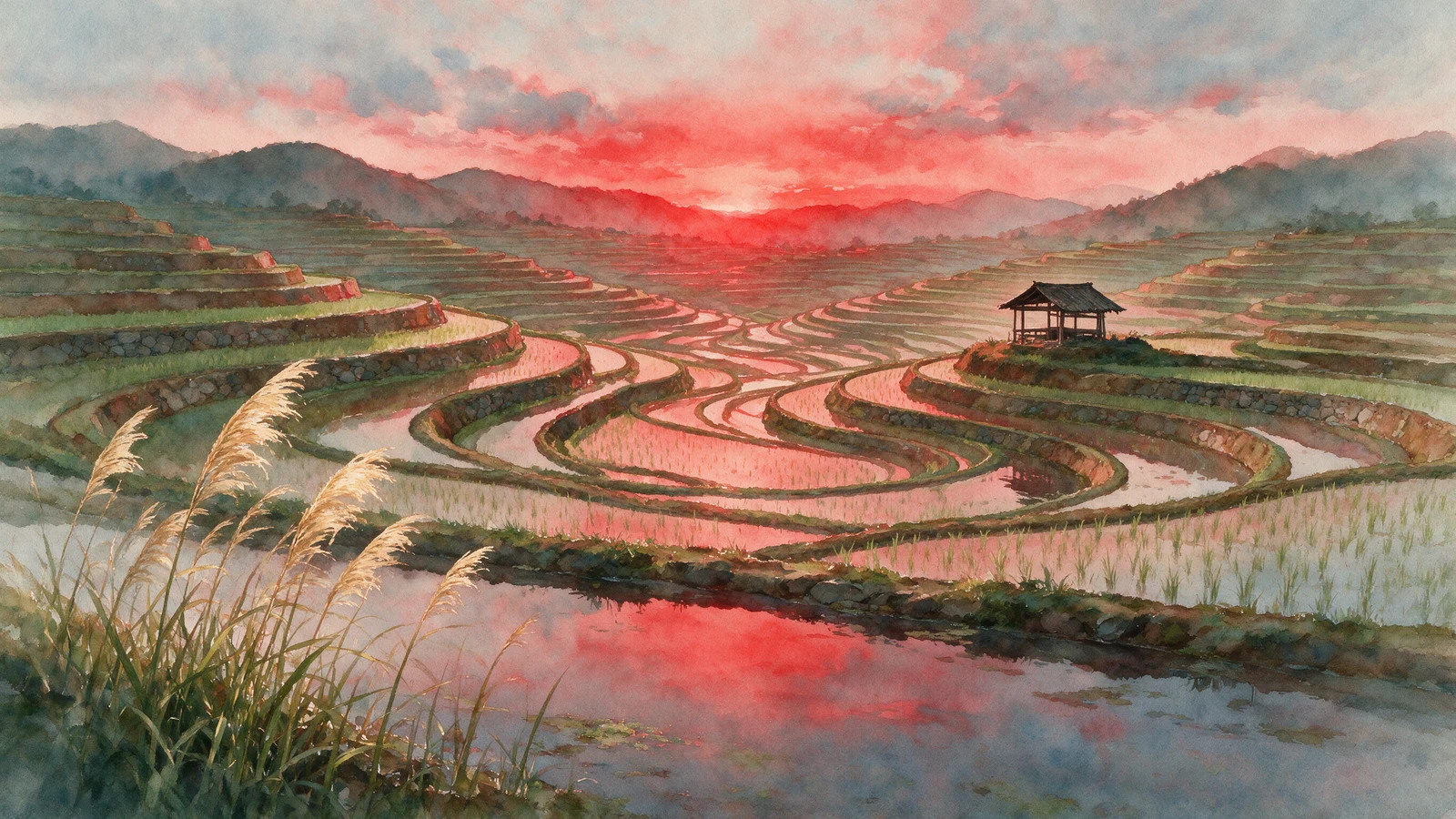
Traditional interpretation says the opposite. The Zhougong Jie Meng tradition states that when the gates of heaven turn red, great joy follows. Redness here wasn't read as fire or blood, but as the sky brightening.
That tracks, once you think about it. Before electric light, the sky only turned red twice a day — sunrise and sunset. Both were moments when something was beginning or ending, not moments of disaster.
In modern psychology, an intense color is generally read as a measure of emotional intensity rather than a specific emotion — an indicator of how strong the feeling was, not what it was.
What actually varies here is how you felt at the time.
- Was it beautiful
- Was it frightening
- Did it feel like something was starting
If the first feeling is what stayed with you, that lines up with the old record. If the second one did, it's worth looking at your current state first.
A Clear Sky, Clouds Parting
Traditional interpretation is remarkably consistent here. When the sky clears and rain scatters, worry disappears; when clouds clear and the sun appears, a superior's troubles disperse. Both lines say the same thing.
Clearing weather was read directly as a situation resolving itself.
In modern psychology, this is also relatively straightforward. A scene of the view opening up is often read as an image of a resolved state. Some say this kind of dream increases around the time a long-running issue finally ends.
One thing is worth flagging, though. Having a clear-sky dream doesn't make things resolve. The order runs the other way — the image tends to appear after things have already settled.
Rain itself is covered separately in our rain dream guide.
A Dark Sky, Low Hanging Clouds
Lumi
"Clouds covering the sun in a dream — know what the old entry says?
…'Something hidden is happening.'
It doesn't say bad. It only says covered.
That difference matters more than it sounds."
Traditional interpretation doesn't flatly call this inauspicious. The line about clouds suddenly covering the sun reads it as something hidden, not something wrong.
The old catalog drew a line between being obscured and being bad.
Modern psychology arrives at a similar place. A blocked view is usually read as an image of something not yet visible — a lack of information before a decision, or uncertainty about what someone else is really thinking.
Current stress or anxiety can factor in too. A study reports that people with higher waking anxiety and stress levels showed different dream content involving misfortune, injury, and anger. This isn't a claim that a dream predicts a specific event — more an observation that your current state bleeds into the imagery.
A Sky That Split Open
This is the scene that stays with people the longest after waking, and it's usually frightening.
Traditional interpretation takes an unusual turn here. The Zhougong Jie Meng tradition states that when the sky splits open, the nation faces division.
That reads strangely once you notice the pattern. Every other entry is personal — a promotion, a child, incoming wealth. This one suddenly jumps to the scale of a nation.
It suggests old dream interpretation wasn't only concerned with individual fortune. The sky wasn't seen as belonging to any one person, so a broken sky was read as something beyond the personal.
In modern psychology, a scene where the world itself falls apart is sometimes connected to a sense of foundational assumptions being shaken — the sense that something you took for granted may not hold. Some explanations link it to periods of major change or broken trust.
But let's be clear about this: there's no evidence this dream predicts a disaster or an accident. The old entry's concern for the nation reflects how people of that era read the world, and it has never been tested for predictive accuracy.
Rising Into the Sky
Traditional interpretation agrees across both lineages here. The Korean catalog states that rising into the sky means becoming a high official, and the Zhougong Jie Meng tradition includes lines stating that standing on a rooftop reaching toward heaven brings high office, and soaring into the sky is greatly auspicious.
Upward motion reads almost universally as favorable — likely overlapping directly with the image of rising status.
Modern psychology looks less at direction and more at sensation. What matters is whether the feeling of rising was comfortable, or unsettling because it felt uncontrolled.
The scene of soaring itself is covered more fully in our flying dream guide.
The Same Line Sometimes Reverses Across Editions
This needs to be said directly.
There's a passage about sky-light shining onto your body, and different editions reach opposite conclusions. One version says illness worsens; another says illness recovers. A single character's difference flips the entire reading.
This likely happened during copying and transmission, and it's difficult to confirm which version came first.
This isn't an isolated case, either. For that reason, this article doesn't pick one side and present it as settled. An old dream manual isn't a single fixed book — it's closer to a bundle repeatedly copied and added to over time.
The Most Honest Answer
Lumi
"Search 'red sky dream' and you'll find plenty of claims that it's a bad-omen dream.
The old entry says the opposite — great joy.
That's not a prophecy either, though. Back then, a red sky simply meant sunset."
Traditional dream interpretation and modern psychology rely on different kinds of evidence.
What's confirmed from old records goes this far: the sky was sorted by color and condition. And that reflects how people of that era read the world, not a prediction. The encyclopedia itself notes, after laying out its list of dream-reading methods, that such interpretations formed naturally from many people's experiences rather than from a consistent theoretical basis.
Add to that the edition problem covered above — the same line sometimes reverses depending on which copy you're reading.
A few points should be made clearly.
A red sky doesn't predict disaster. The old entry reads it as the joyful side, if anything.
A sky splitting open isn't a prophetic dream, either. It doesn't mean something is about to happen to you or the world.
A clear-sky dream doesn't make things resolve, either. The old entry's claim that worry disappears is a record, not a guarantee.
There's no verified connection between a sky dream and lottery numbers.
Frequently Asked Questions
Is a red-sky dream a bad-omen dream? The old entry says the opposite — the gates of heaven turning red bring great joy. Still, if you woke up frightened, that feeling itself is worth noting.
The sky was unusually blue. A clear sky reads favorably in the old entries, with worry disappearing. Modern readings often connect it to an already-resolved state.
The sky was thick with clouds. The old entry doesn't call this bad — it calls it "something hidden." That draws a line between being obscured and being bad.
The sky split open. This scene appears in the old catalog, recorded as a concern on the scale of a nation rather than an individual. It isn't a prophetic dream.
I rose up into the sky. Both Korean and Chinese records read this favorably. Still, whether the sensation felt comfortable or anxious matters more from a modern angle.
Only the sky stayed with me, and nothing else happened. That's not unusual. Some dreams leave only an image behind, with no event attached. In that case, color and brightness carry nearly all the information.
Sky dreams feel hard to pin down because there's no event to hold onto. With no story to grab, there seems to be nothing to interpret.
Yet old records built an entire set of entries on exactly that absence — using nothing but color, brightness, and whether the sky was split.
Three things worth writing down today:
- What color the sky was
- Whether it was bright or dark, or something was blocking it
- How you felt when you woke up
Collect a few weeks of these, and a pattern tends to appear. Sky dreams cluster around periods of waiting for something.

A dream where only color remains is the hardest kind to write down — with no event, there seems to be nothing to say.
But writing down just the color is enough. Collect a month's worth, and where your mind was during that stretch shows up in the colors themselves.
Dream Talisman looks at the dream scene you record together with your day stem (ilgan) in the Five Elements system, and creates a color and phone wallpaper for the day. It's less an app that interprets your dream for you than one that helps you write it down before it fades.
Record today’s dream in Dream Talisman
References
- "Dreams" — Encyclopedia of Korean Culture · the folk dream-reading tool catalog's nature entries, and the two attitudes toward dream interpretation
- Zhougong Jie Meng — "Heaven, Earth, Sun, Moon, and Stars" chapter · this reflects commonly circulated lines rather than a checked original edition, and the sky-light passage's conclusion reverses across editions. A Chinese dream-interpretation tradition with a different textual lineage from Korean folk records
- Study on differences in dream content by waking anxiety and stress level
- General research in modern sleep and dream psychology