
What people tend to remember about this dream comes down to one moment.
The doors closing.
A few more steps would have done it, but they didn't. Your hand was almost there, but it wasn't quite. And then you're just standing there, left behind.
Waking up from this one leaves an oddly deflated feeling. It's not a frightening dream, but the mood can linger all day.
There's one thing that sets this dream apart from other travel dreams. Let's start there.
Lumi
"It came down to a few seconds, didn't it?
Those few seconds are the whole dream.
And this is a completely different story from a driving dream."
Table of contents
This Dream Asks About Boarding, Not ControlNo Old Entry Exists — But the Pattern DoesThe Doors ClosedNo Ticket, or the Wrong OneMissing It Because of Your LuggageCouldn't Find the Station or StopBoarding the Wrong One, or Missing Your StopYou Boarded, But No One Else Was ThereWhen It Keeps RecurringThe Most Honest AnswerFrequently Asked QuestionsThis Dream Asks About Boarding, Not Control
In our driving dream guide, the key question was about control — whether the brakes worked, whether the wheel would turn.
Trains and buses work differently.
There's nothing for you to control. The route is fixed, the schedule is fixed, and the only thing you can do is either get on or not.
| The question it asks | |
|---|---|
| A car | Can you handle it? |
| A train or bus | Did you get on? |
That's why the anxiety in this dream leans less toward incompetence and more toward exclusion. You didn't fail to board because you weren't capable — you just didn't make it.
The narrow margin matters here especially. It isn't about skill, and it isn't about effort. Timing alone decided it.
No Old Entry Exists — But the Pattern Does
The folk dream-interpretation list in the Dreams entry of the Encyclopedia of Korean Culture (a major reference work on Korean history and culture) has no entry for trains or buses. There couldn't be one.
But the structure of missing a departure is an old theme in its own right.
Jeong Cheol's Sok Miin Gok (속미인곡, "Song of the Beautiful Woman," circa 1585), covered in our ex-lover dream guide, follows this shape. In it, the speaker meets someone dearly missed in a dream, tries to say what she'd meant to say, but breaks into tears before she can — and wakes to the sound of a rooster crowing.
It's the structure of meaning to do something and never quite managing it. And the interruption came from something almost trivial: a rooster's crow.
Four hundred years ago, people were already dreaming about missing something by mere seconds.
The Doors Closed
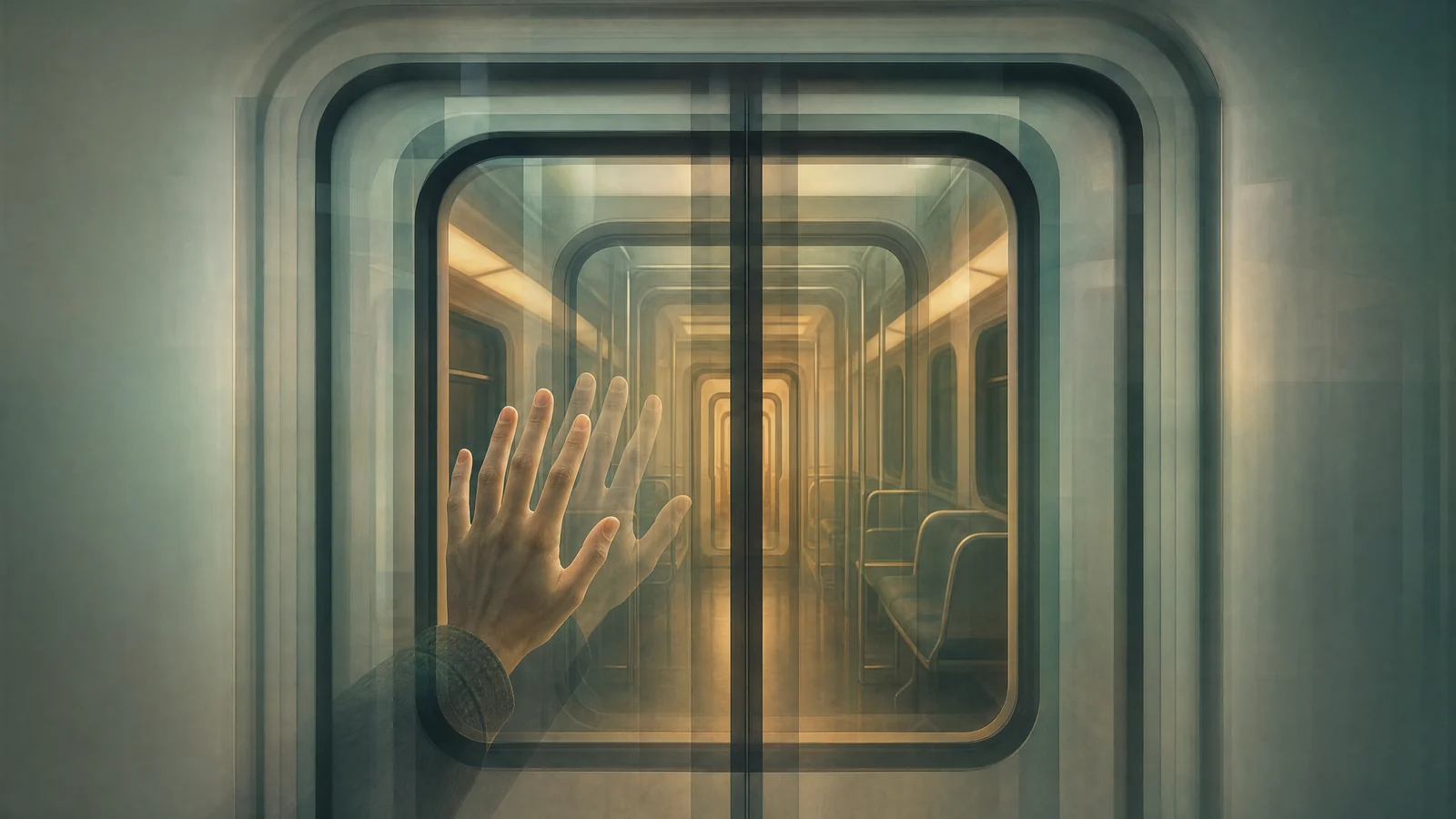
This is the most commonly reported scene by far.
From a modern psychological perspective, this scene is frequently read as an image of a closed opportunity. But there's something important here.
You saw it close.
If you hadn't seen it, you wouldn't have known. But you did. That's why this dream leans less toward loss and more toward a sense of just missing out.
What splits people here:
- Did you run and still not make it
- Did you not run at all
- Did you run, then give up
The second one shows up more often than you'd expect. And that's actually a different dream — because you could have boarded, and chose not to.
Whether you felt disappointed or relieved in that moment is the information worth noting. If it was relief, you may not have wanted to board in the first place.
No Ticket, or the Wrong One
This covers scenarios where you weren't qualified to board in the first place.
- You never bought a ticket, or lost it
- The ticket was for the wrong date or the wrong route
- You got stopped at the gate
From a modern psychological perspective, this differs from the closing-doors scene. It isn't a timing problem — it's a qualification problem.
This overlaps with the license-less driving scene in our driving dream guide and the general feeling behind our exam dream guide. It's the sensation of not being prepared, or of not belonging where you are.
Some accounts connect this to starting somewhere new — a feeling that everyone else already knows something you don't.
Missing It Because of Your Luggage
This covers a heavy bag, unfinished packing, or missing the departure while still gathering your things.
From a modern psychological perspective, this scene follows the structure of being held back by what you're carrying.
It connects to the packing scene in our travel dream guide, not yet available in English. There, preparation simply wasn't finished. Here, that same preparation is what trips you up.
Some accounts link this to periods when there's something you need to let go of but can't.
Couldn't Find the Station or Stop
This covers being blocked before you even reach the point of boarding.
- You couldn't find the platform
- The stairs kept going and never ended
- The signage was unreadable
- You were sure this was the right place, and it wasn't
From a modern psychological perspective, this is closer to our lost dream guide. You didn't miss anything — you never managed to arrive.
If the text was unreadable, that's also a common detail on its own. Text rarely stays fixed in dreams — it can even change every time you look at it. That instability is part of the basis for the reality-testing techniques covered in our lucid dreaming guide.
Boarding the Wrong One, or Missing Your Stop
Lumi
"You got on, but it was the wrong one?
That's more frustrating than not boarding at all.
But it's a completely different story."
Boarding the Wrong One
From a modern psychological perspective, this is the flip side of not boarding at all. You did get on — but you're headed somewhere you didn't mean to go.
This scene is often read as doubt about something you've already committed to. Movement is happening, but you're not confident it's headed the right way.
What matters here is whether you tried to get off, or just stayed on.
Overshooting Your Stop
You dozed off, lost track, or the doors just didn't open in time.
From a modern psychological perspective, this is an image of missing the moment you were supposed to stop. It carries a similar feeling to the brake-failure scene in our driving dream guide — just expressed differently.
Some accounts link this to missing the right time to quit something, or a sense of being carried along against your will.
You Boarded, But No One Else Was There
This covers sitting alone on an empty train or bus.
From a modern psychological perspective, this scene is sometimes read as boarding without confidence. No other passengers around can also mean there's no way to confirm you're in the right place.
The opposite case — being unable to board because of a crowd, or getting squeezed in — is a different story, closer to competition or pressure.
When It Keeps Recurring
This particular dream tends to repeat more than most. Some people report dreaming a version of it for years.
From a modern psychological perspective, a recurring dream is often more informative for its recurrence than its content.
This dream in particular tends to cluster around similar periods — before a deadline, while putting off a decision, or when something you're trying to start keeps not working out.
Writing down the interval between occurrences, along with what else was happening at the time, tends to become clearer in hindsight. More detail is available in our recurring dream guide, not yet available in English.
The Most Honest Answer
Lumi
"Search for this dream, and you'll find claims that it means missing an opportunity.
But there's no train entry in the old records at all.
What exists is only the structure of 'meaning to do something and not managing it' — and that's really a story about people today."
Traditional dream interpretation and modern psychology draw on different kinds of evidence.
There's no entry for trains or buses in the old dream-reading list. These records come from an era before either existed.
The encyclopedia itself states, after laying out its full list of interpretive methods, that these readings formed naturally out of many people's lived experience, not from any consistent theoretical foundation.
A few points are worth stating clearly.
This dream isn't prophetic. It doesn't mean you're actually going to miss an opportunity.
There's no reason to change your schedule because you had this dream before a trip or a business journey. If anything, the upcoming trip is more likely the source material for the dream, not a warning about it.
There's no confirmed connection between this dream and lottery numbers.
Frequently Asked Questions
Does missing a train in a dream mean missing an opportunity? There's no basis for that reading — no entry for this exists in the old records. Modern interpretations tend to read it as a sense of timing or qualification instead.
I had this dream right before a trip or a work trip. The upcoming trip is likely the source material for the dream. There's no reason to change your plans because of it.
I couldn't board because I didn't have a ticket. This points to a qualification issue rather than a timing issue. Some readings connect it to a feeling of not being fully prepared.
I missed my stop. This is an image of missing the moment you were supposed to stop — similar in feeling to a brake-failure scene in a driving dream.
I've had the same dream for years. This dream tends to recur more than most. Writing down the interval and the surrounding circumstances each time tends to reveal a pattern later.
I keep forgetting my dreams. Memory of a dream starts fading roughly 90 seconds after waking. Staying still for a moment instead of getting up right away often brings back more fragments.
This dream isn't frightening, but the bad mood from it tends to linger. That's because it feels like such a near miss.
There's nothing you need to do about it today. If anything, it's worth checking whether something in your life right now is failing by a matter of seconds.
And one more thing worth remembering: the next train usually does come. It just didn't, in the dream.

The same dream leaves a different color behind for different people.
Dream Talisman looks at the dream scene you record together with your day stem (ilgan) in the Five Elements system, and creates a color and phone wallpaper for the day. It's less an app that interprets your dream for you than one that lets you carry today's dream with you for the day.
Curious what color that scene you just read about would turn out to be?
→ Record your dream in Dream Talisman
References
- "Dreams" — Encyclopedia of Korean Culture · The folk dream-reading method list, the dream passage in Jeong Cheol's Sok Miin Gok
- Sok Miin Gok — Encyclopedia of Korean Culture · Jeong Cheol, circa 1585
- General research in modern sleep and dream psychology