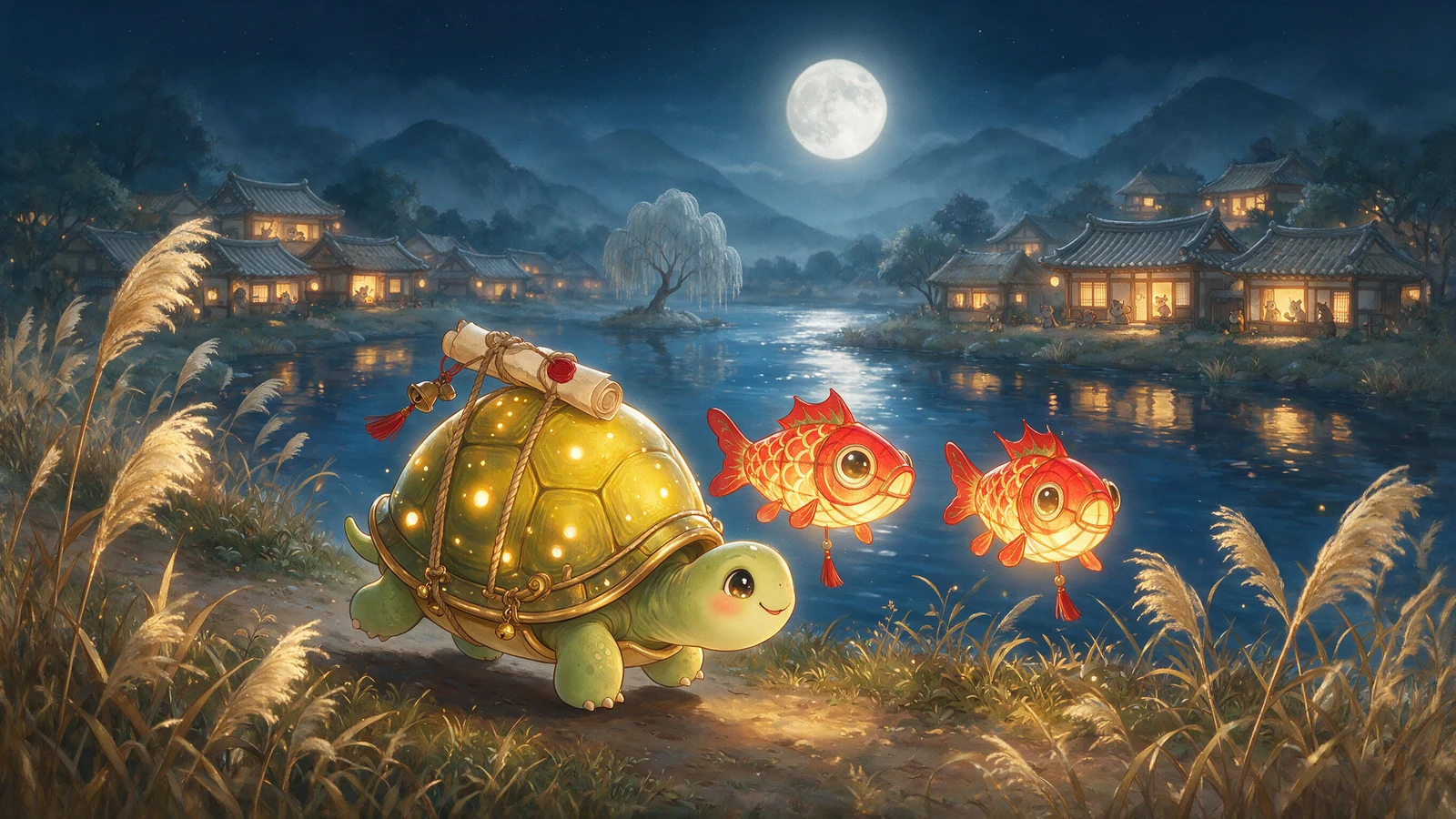
What stays with you from a turtle dream is its pace.
Nothing about it moves quickly. It approached slowly, or sat in the yard, or watched you from the water. That slow sensation tends to linger long after you wake.
Most people jump to the same thought first: a turtle has to be a good dream, right?
The old records tell a different story, though. Instead of good or bad, they recorded why the turtle came.
Table of contents
Yi Ik Wrote That the Turtle Comes to Plead Its CaseWhich Is Why Only the Harming Entry Carries So Much WeightA Conception Dream of Sparing a Turtle Survives in the RecordA Turtle Entered Your House or YardA Turtle in Water, or a Sea TurtleCatching a Turtle, or Riding on Its BackIf You Searched Here for a TaemongThe Most Honest AnswerFrequently Asked QuestionsYi Ik Wrote That the Turtle Comes to Plead Its Case
This comes from a passage Yi Ik (이익), a late-Joseon Silhak scholar, left in his essay Monggamnon (몽감론). The Dreams entry of the Encyclopedia of Korean Culture (a major reference work on Korean history and culture) introduces this passage directly.
He held that a dream forms when the dreamer's mind makes contact with something and a thought takes shape from it. Falling asleep to the sound of drums, he wrote, brings military scenes into the dream; falling asleep to the sound of reading brings scholarly scenes.
He then added this: when a turtle or a soft-shell turtle appears in a dream to plead its grievance, it's because a wronged energy has reached its peak and made contact with the sleeper's mind.
It's an unusual passage. Every other animal in these texts is recorded through luck or misfortune, but the turtle alone comes to say something — and specifically, to protest an injustice.
Lumi
"Sounds a little unsettling, doesn't it? But flip it around.
For people back then, a turtle was also something you killed and ate.
So when it shows up in a dream, that's the story it's actually telling."
Which Is Why Only the Harming Entry Carries So Much Weight
The Wikisource text of the Chinese Zhougong Jie Meng (Duke of Zhou dream manual tradition) has a long run of entries about harming animals. Their conclusions vary widely.
- Catching a chicken, goose, or duck is greatly auspicious
- Catching a cow or deer brings great wealth and status
- Catching a pig is greatly auspicious
- Catching a turtle brings a death in the family
Nearly everything else is favorable, but the turtle alone brings a death. Sheep and sparrows have some unlucky entries too, but in the middle of a list that otherwise runs on wealth and status, the turtle entry stands entirely apart in tone.
As we noted in our bird dream guide, this catalog generally divides animals into wild and domesticated. The turtle doesn't fit that division either — it occupies the strange position of something eaten that shouldn't be harmed.
The grievance Yi Ik described lines up with exactly this position.
A Conception Dream of Sparing a Turtle Survives in the Record
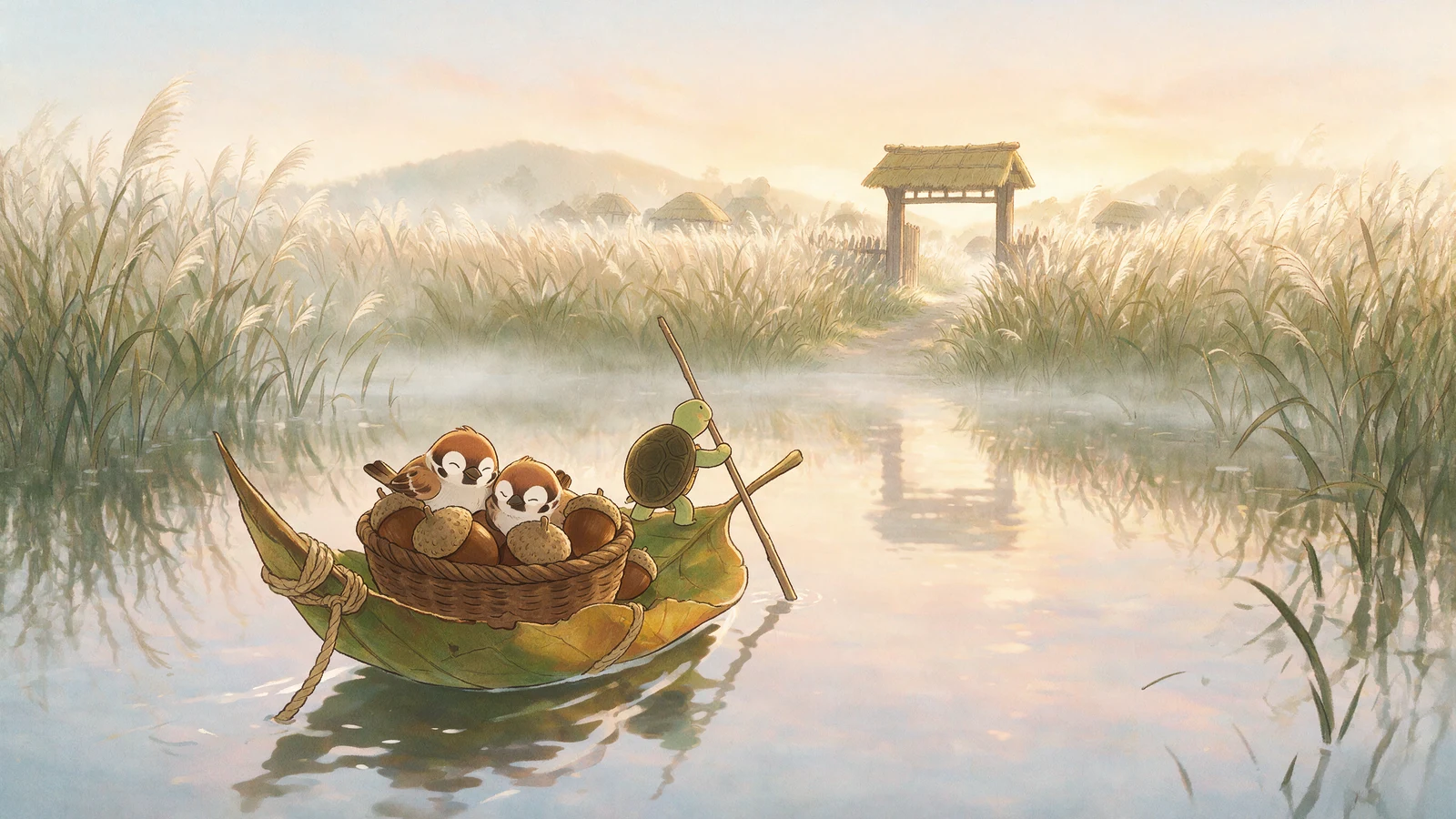
The encyclopedia's taemong entry records several documented conception-dream cases. One of them involves a turtle.
This comes from the Yi Won chapter of the Haedong Myeongsillok (a compiled record of notable Joseon officials). His father dreamed on his wedding night that someone was about to catch a soft-shell turtle to cook, so he spared it. A son was born afterward.
It wasn't the catching that became the conception dream — it was the sparing.
Set alongside the two records above, all three point in the same direction.
- Harming it brings a death in the family
- It comes to plead its grievance
- Sparing it brought a son
The turtle, it turns out, wasn't something to catch — it was something to treat with respect. It wasn't a good dream because it moved slowly; it was placed in the category of things you shouldn't handle carelessly.
A Turtle Entered Your House or Yard
Lumi
"So many people search for a turtle entering the house.
From here on, the old catalog gets thin.
So I won't make anything up — I'll only go as far as what's actually confirmed."
This is the most-searched version of the dream, and most people search it hoping for a wealth omen.
Traditional interpretation has no confirmed entry for a turtle entering the house. Modern dream-interpretation sites sometimes claim it brings wealth, but that's not backed by any of the records covered above.
The encyclopedia lists the dragon, the crane, and the tiger as examples of spiritually significant animals. The turtle isn't among them.
There's no point writing in an entry that doesn't exist, so this is as far as the traditional side goes.
Read in a modern light, something entering the house is usually read as an image of something crossing a boundary — what was outside has come in.
What matters here is the feeling that came with it.
- Did it feel welcome
- Did you feel unsure what to do with it
- Did you try to send it back out
The second one comes up surprisingly often. If something good arrived but felt like more than you could handle, that may overlap with something that's recently entered your life.
The broader scene of something entering a house is covered in more detail in our house dream guide.
A Turtle in Water, or a Sea Turtle
The turtle was in water — swimming away, or rising up from below the surface.
Traditional interpretation has no confirmed separate entry for a turtle in water either. Still, Yi Ik's habit of grouping turtles and soft-shell turtles together suggests the sense of them as water-dwelling creatures was clearly present.
Read in a modern light, something rising up from underwater is often read as an image of something that had been below the surface. It's a picture of something normally unseen coming up into view.
The turtle fits this logic especially well. It stays underwater, rises to breathe, then goes back down — never fully gone, never staying afloat for long.
If the water itself is what stayed with you, see our water dream guide, not yet available in English, alongside this one.
Catching a Turtle, or Riding on Its Back
You Caught It
Traditional interpretation leans heavy here, as covered above. The entry about harming a turtle is tied to a death in the family.
This is simply how that era read the scene, though. There's no evidence that this dream means something will happen to anyone.
If you woke up feeling uneasy, that unease itself is the information worth reading. The sensation left behind after harming something in a dream usually reads best on its own terms.
You Rode on Its Back
Traditional interpretation has no confirmed entry for this. The image of riding a turtle's back, though, has a long history in Korean folktales.
Read in a modern light, one interpretation reads being carried by something as a state of surrender — you're not steering; you're being carried along.
Whether it felt slow or comfortable makes a difference. If it felt frustrating, this may be less about surrender than about feeling stuck.
If You Searched Here for a Taemong
The encyclopedia's taemong entry organizes conception-dream images gathered from regional surveys by sex. The soft-shell turtle appears among the animal images associated with sons.
A soft-shell turtle dream is also listed among the images classified as auspicious, alongside dragon, pig, and carp dreams.
The Yi Won conception-dream record above belongs to this same family. What was decisive in that record, though, wasn't the turtle's appearance — it was the act of sparing it.
This is worth knowing as a historical record, but it isn't something to use as a prediction. The encyclopedia itself states that this sex-based classification stems from the old custom of male preference and the devaluation of daughters, and notes that the same image was sometimes read in opposite ways depending on the region.
No dream can reveal whether you're pregnant or your child's sex. Taemong stories are usually attached after the fact. Taemong dreams more broadly are covered in our baby dream guide.
The Most Honest Answer
Lumi
"Search 'turtle dream wealth' and you'll find plenty of claims.
I couldn't find that entry anywhere. What I did find was this.
Harming it brings a death in the family, it comes to plead its grievance, and sparing it brought a son.
This was never about wealth — it was about how you treated it."
Traditional dream interpretation and modern psychology draw on different kinds of evidence.
For the turtle, what's confirmed on the traditional side is that harming it was treated seriously, it was recorded as a creature that comes to plead its case, and sparing it survives as a conception-dream record. That's not a prediction — it's a record of how people in that era read the world.
The encyclopedia itself, after laying out its interpretation catalog, states plainly that these readings formed naturally out of many people's lived experience rather than from any consistent theoretical foundation.
A few points should be stated clearly.
No old record confirms that a turtle dream predicts wealth. Modern dream-interpretation sites sometimes claim it, but the basis lies elsewhere.
The explanation that the turtle is auspicious because it's slow and long-lived also isn't confirmed in the old texts. What the records actually attach to lies elsewhere.
Dreaming of harming a turtle doesn't mean something will happen to anyone. The old entry's weight reflects how that era read the scene.
A turtle dream can't reveal pregnancy or a child's sex.
There's no verified connection between turtle dreams and lottery numbers, either.
Frequently Asked Questions
Is a turtle dream an auspicious dream (a good-omen dream)? No entry clearly marks it as lucky or unlucky. What's confirmed is that harming it was treated seriously, and sparing it survives as a conception-dream record.
A turtle entered my house. No old entry addresses this. A modern reading treats it as an image of something outside coming in.
I caught or harmed a turtle. The old records treat this scene seriously. It doesn't mean anything will happen to anyone, though — if you woke up feeling uneasy, that feeling is the information worth reading.
I let a turtle go. The Haedong Myeongsillok records a conception dream of sparing a soft-shell turtle. This is the side the old records read favorably.
It was a sea turtle. No old entry distinguishes between species. It's more natural to read this through the lens of something rising up from water.
Is a soft-shell turtle the same thing? The old records frequently group turtles and soft-shell turtles together. Yi Ik listed them side by side, and the taemong catalog includes the soft-shell turtle specifically.
Turtle dreams linger because of their pace. Fast things brush past you; slow things stay in frame.
And that lingering presence is probably why people in earlier eras read the turtle as having come for a reason. It wasn't passing through — it was there.
Today's task comes down to three lines.
- Where the turtle was — in water, in the yard, or inside the house
- What you did — watched, caught, or released it
- How you felt on waking
Track it for a few weeks and a pattern tends to appear. Slow-paced dreams generally cluster around periods of waiting for something.
A slow-moving dream is easy to write down. Because the scene stays with you, the sentences come easily too.
Dream Talisman looks at the dream scene you record together with your day stem (ilgan) in the Five Elements system, and creates a color and phone wallpaper for the day. It's less an app that interprets your dream for you than one that gets you to write it down before it fades.
→ Record your dream in Dream Talisman
References
- Dreams — Encyclopedia of Korean Culture · The turtle/soft-shell-turtle passage from Yi Ik's essay Monggamnon, the animal-related branch of the folk-belief interpretation catalog, commentary on spiritually significant animals, and the two contrasting attitudes toward dream interpretation
- Taemong — Encyclopedia of Korean Culture · The soft-shell-turtle conception-dream record from the Yi Won chapter of the Haedong Myeongsillok, the sex-based and auspicious classifications of animal taemong images, and the social background of son preference
- Original Zhougong Jie Meng text — Wikisource · Turtle-related passages from the animal-harming entries. A Chinese traditional dream-interpretation text with a different lineage from Korean folk records
- General research in modern sleep and dream psychology