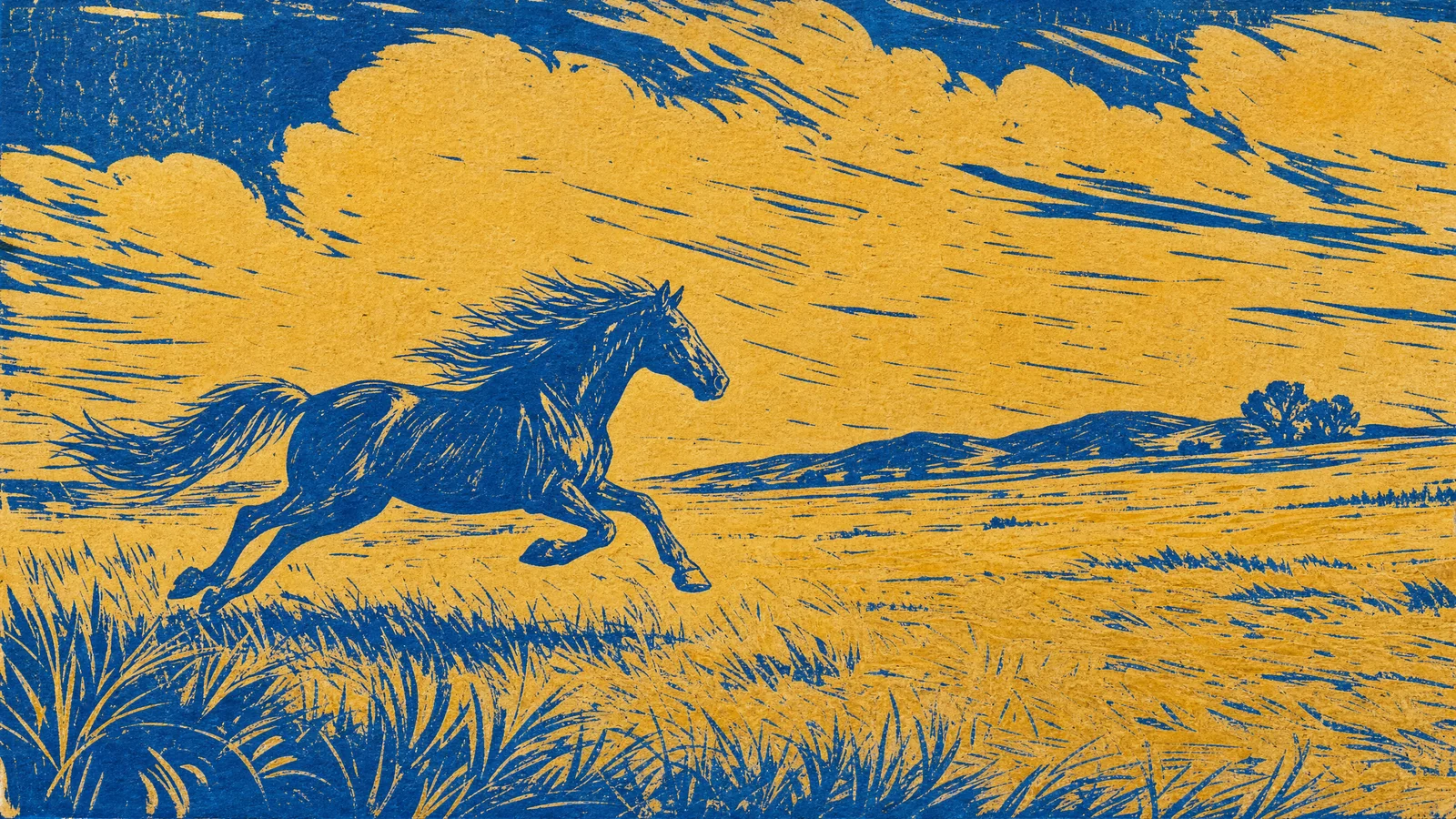
What stays with you from a horse dream isn't shape — it's speed.
You may not remember what the horse looked like, but the sense that something moved incredibly fast stays with you. And whether you were inside that speed or outside it makes for a completely different dream.
That difference is almost the entire key to reading a horse dream.
Lumi
"That horse — were you riding it?
Or were you watching it run?
That's the split. Color and size come after that."
Table of contents
The Hour of the Horse, and Its Pairing With the OxThere's No Horse Entry in the Catalog. It Lived Somewhere ElseThe Dream of Riding a HorseThe Dream of Falling Off, or a Bucking HorseThe Dream of Watching a Horse RunWhite Horses, Black Horses, and HerdsA Tethered Horse, a StableThe Most Honest AnswerFrequently Asked QuestionsThe Hour of the Horse, and Its Pairing With the Ox
In our cow dream guide, we covered why the ox holds the second position among the twelve zodiac animals — a record attributes this to its cloven hoof, marking it as pure yin (純陰).
The same record mentions the horse, too.
According to the "Thirty-Six Beasts" entry of the Encyclopedia of Korean Culture (a major reference work on Korean history and culture), the horse has an uncloven, single hoof, placing it as pure yang (純陽). For that reason it was assigned to the hour of the horse — the brightest stretch of the day, from 11 a.m. to 1 p.m. Its element is fire.
It pairs exactly with the ox. A cloven hoof is pure yin; a single hoof is pure yang. One sits at the dim hour before dawn, the other at the height of midday. They occupy opposite positions among the twelve.
The reasoning — that hoof shape determined yin and yang across the zodiac — looks strange by today's standards, but it has its own internal consistency. And this placement is part of why horse dreams tend to read as bright and fast.
The horse was simply assigned to that position from the start. Pure yang, fire, midday.
As a side note, when the twelve animals are further divided into three each, the hour of the horse breaks down into deer at its start, horse in its middle, and roe deer at its end. All three are long-legged and fast runners. If you weren't sure whether you saw a horse or a deer, that confusion is an old one too.
There's No Horse Entry in the Catalog. It Lived Somewhere Else
The "Dreams" entry of the Encyclopedia of Korean Culture organizes folk dream-interpretation methods by category. The animal category includes the dragon, snake, crane, parrot, tiger, swallow, rat, and pig.
There's no horse.
(Interestingly, the word "mal" does appear in that list — but as a homonym. One entry says that an ancestor appearing to offer food or speak (mal, meaning "words" in Korean) brings good fortune. Here "mal" means speech, not the animal. Searches for horse dreams sometimes turn this entry up by accident.)
The ox was also absent from the catalog, as we noted in our cow dream guide, but likely for a different reason. If the ox was too familiar to need symbolic treatment, the horse may have been too special for that same list — it belonged somewhere else instead.
The horse lived in myth.
In the founding legend of Park Hyeokgeose, a white horse appeared by a well, bowed, and vanished, leaving an egg behind. A horse also appears in the founding legend of Jumong of Goguryeo. The famous painting recovered from Cheonmachong ("Heavenly Horse Tomb") in Gyeongju depicts a horse as well. A horse turns up in nearly every founding story of a Korean kingdom.
And one more thing. A horse was painted on protective talismans.
Folk materials record talismans depicting a cheonma (天馬, heavenly horse) or sinma (神馬, divine horse), used to ward off misfortune and illness. In folk practice, people held rites for horses on the first Horse Day of the lunar new year, and placed red bean rice cakes in front of stables on the tenth lunar month's Horse Day to pray for the animals' health.
In other words, the horse wasn't an object of dream interpretation — it was an agent of protection. It stood on the side of guarding against misfortune rather than the side of an omen to be decoded.
That's likely why frightening interpretations of horse dreams are so rare.
The Dream of Riding a Horse
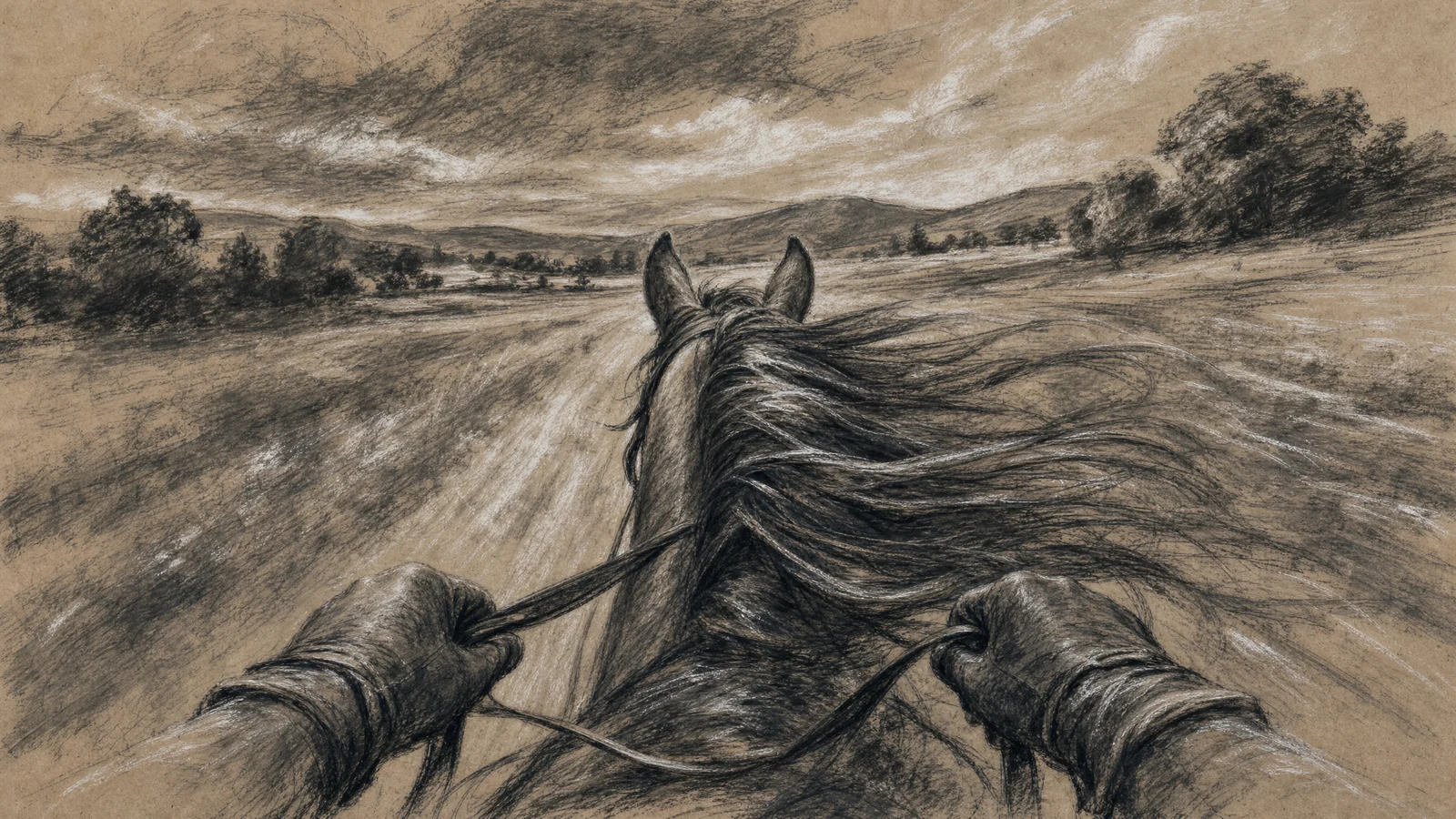
This is the scene that carries the most information in a horse dream.
In traditional interpretation, riding an animal was read across several dream-interpretation traditions as an image connected to authority. In old paintings, the person on horseback was typically someone of status — the gap between walking and riding mirrored the gap in social rank at the time.
A modern psychology view reads this as an image of a sense of control. In our cow dream guide, we noted that who holds the reins is the dividing line — and a horse moves far faster than an ox. The same act of control carries a different intensity.
Leading an ox is the sensation of pulling something heavy. Riding a horse is the sensation of holding on to something fast.
One thing decides the reading here: did it feel comfortable, or did it feel like you were about to fall off?
- If you were riding comfortably, it suggests you're currently handling whatever it is
- If you were struggling to hold on, the speed may have exceeded your control
Some readings connect the second version to periods when things are going well externally, yet unease persists anyway — a dream that turns up when nothing is actually wrong but anxiety lingers regardless.
The Dream of Falling Off, or a Bucking Horse
Lumi
"Did you fall? Did it hurt?
…You probably woke up before hitting the ground. Most people do.
That scene might not really be about the horse at all."
You Fell Off the Horse
In traditional interpretation, we couldn't confirm a record that treats this scene separately. We won't invent one where none exists.
A modern psychology view treats falling off a horse less as a horse dream and more as a falling dream. Falling dreams are an unusual case where the body reacts before the mind does, and there's a lot to unpack there on its own — covered in detail in our falling dream guide.
But adding the condition of falling from a horse brings something extra. You fell from something you were riding — not a plain fall, but the image of lost control.
The Horse Bucked
A modern psychology view reads this scene as capturing precisely the moment control fails — not because the horse is large or powerful, but because, just a moment earlier, it was responding to you.
Something that was calm suddenly turns unpredictable. If you've experienced that in a relationship or at work recently, that same sensation may simply be surfacing here.
The Dream of Watching a Horse Run
Surprisingly common, and surprisingly persistent in memory.
In traditional interpretation, an animal passing by was generally read as movement unrelated to you. But no separately confirmed entry addresses horses specifically.
A modern psychology view reads this as the sensation of being outside the speed. Something is moving very fast, and you aren't the one riding it.
Here, the feeling is the information.
- Envy suggests you're in a position of comparison
- Relief suggests you don't want to be riding at that speed
- Indifference suggests it may have simply been a passing scene
The same image becomes three entirely different dreams depending on which of these applied.
White Horses, Black Horses, and Herds
White Horse
The most-searched color in horse dreams.
In Korean folk tradition, white horses were placed on the sacred side. The horse in the Park Hyeokgeose legend was white, and a cheonma is usually painted white as well. This is confirmed in myth and art, though — there's no separate white-horse entry in the dream-interpretation manuals. We'll keep the claim to exactly that.
A modern psychology view notes that if the white color registered clearly, the scene likely didn't feel threatening. Color rarely stands out vividly in dreams to begin with.
Black Horse
No record treats black as inauspicious. The horse was assigned to pure yang from the start, and a dark color doesn't flip that underlying nature.
A modern psychology view puts the dividing line on feeling rather than color. The same black horse becomes a different dream depending on whether it felt heavy or reassuring.
A Herd of Horses
A modern psychology view generally reads a group as an image of losing control, but a herd of horses feels different from the rats swarming in our rat dream guide, not yet available in English. Where a swarm of rats closes in from every direction, a herd of horses sweeps past in a single direction.
Whether you were swept along or stepped out of the way is the dividing line.
A Tethered Horse, a Stable
A horse that isn't running.
In traditional interpretation, livestock staying in place was read as stability. A horse in its stable meant something that belonged there was there.
A modern psychology view places this near the caged tiger in our tiger dream guide — an animal assigned to pure yang, fire, and speed, now confined.
Whether watching it felt calm or stifling is the dividing line. If it felt stifling, that may not really be about the horse.
The Most Honest Answer
Lumi
"Search for horse dreams and you'll find a lot of talk about promotions and success.
I couldn't trace where that came from either.
It's true that a person on horseback held status in the old paintings. But that's a statement about art, not about dream interpretation."
Traditional dream interpretation and modern psychology rely on different kinds of evidence.
The encyclopedia itself notes, after laying out its list of dream-reading methods, that such interpretations formed naturally from many people's experiences rather than from a consistent theoretical basis. The Samguk Yusa (Memorabilia of the Three Kingdoms) records a case where the same dream was first read as exile and imprisonment, and then, on a second reading, flipped into an omen that its dreamer would become king.
The horse needs particular caution here, because it's an animal absent from the dream-interpretation catalog.
Most horse-dream readings you'll find online — the ones attaching words like promotion, success, or wealth — are difficult to trace to any real source. It's true that horses were treated as sacred in myth and on protective talismans, but that doesn't mean "a horse dream means a promotion." There's no connecting thread between the two.
There's no verified connection between a horse dream and lottery numbers, either. Dreams involving money in general are covered in our money dream guide, not yet available in English.
Nor is there any basis for claiming a horse conception dream (taemong) means a son. Why a conception dream can't reveal a baby's sex is covered in our pregnancy dream guide, not yet available in English.
Frequently Asked Questions
Is a horse dream a good omen? There's no confirmed dream-interpretation record either way. But since the horse was assigned to pure yang, fire, and midday, its underlying nature runs bright. It's more practical to sort by whether you were riding or watching.
I couldn't tell if it was a horse or a deer. That confusion isn't unusual. Even the old classification grouped deer, horse, and roe deer together within the hour of the horse. It's more useful to note the speed, distance, and your feeling at the time than to pin down the exact species.
I keep dreaming of falling off a horse. A recurring falling dream has more to explore on the falling side than the horse side. Our falling dream guide is worth reading alongside this one. Recording the interval between repeats also helps in hindsight.
I ride horses or watch horse racing, and then had this dream. That's not really the territory of symbolic dream interpretation. Something you're closely engaged with during the day showing up at night is common. Yi Ik (이익, a late-Joseon scholar of the Silhak, or Practical Learning, movement), even wrote that hearing a drum while sleeping brings dreams of military affairs — an observation already known 300 years ago.
I keep forgetting my dreams. Dreams start fading about 90 seconds after waking. Instead of getting up right away, staying still for a moment often brings more fragments back.
Today, it's fine to go about things as usual.
If anything, take a moment to notice whether something in your life is moving too fast right now. Persistent unease with nothing actually wrong is usually a speed problem.
And nothing bad will happen if you slow down for just one day.
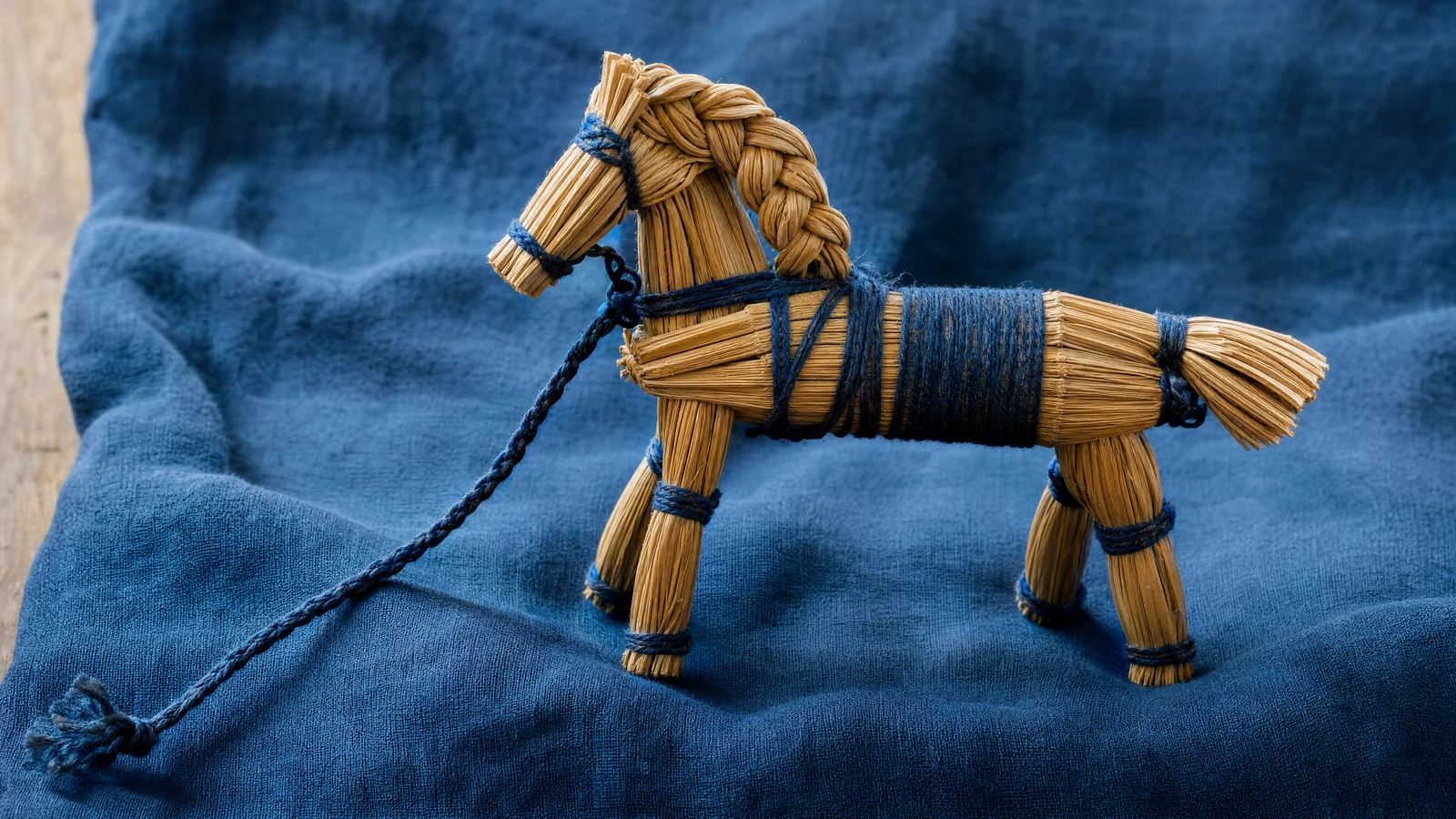
We mentioned earlier that horses were painted on protective talismans. Folk materials preserve images of a cheonma painted to ward off misfortune.
Dream Talisman grew out of that same tradition. It looks at the dream scene you record together with your day stem (ilgan) in the Five Elements system, and creates a color and phone wallpaper for the day. It's less an app that interprets your dream for you than one that helps you carry today's dream with you for the day.
Curious what color the horse you just read about would become?
Record today’s dream in Dream Talisman
References
- "Thirty-Six Beasts" — Encyclopedia of Korean Culture · Principles behind the zodiac assignments, the horse's pure-yang designation, and the thirty-six-beast subdivisions
- "Dreams" — Encyclopedia of Korean Culture · Folk dream-reading tool catalog, Yi Ik's Monggamnon, the Samguk Yusa's account of King Wonseong's dream interpretation
- "Horse" — Encyclopedia of Korean Culture
- National Folk Museum of Korea archival material on cheonma and sinma protective talismans
- General research in modern sleep and dream psychology