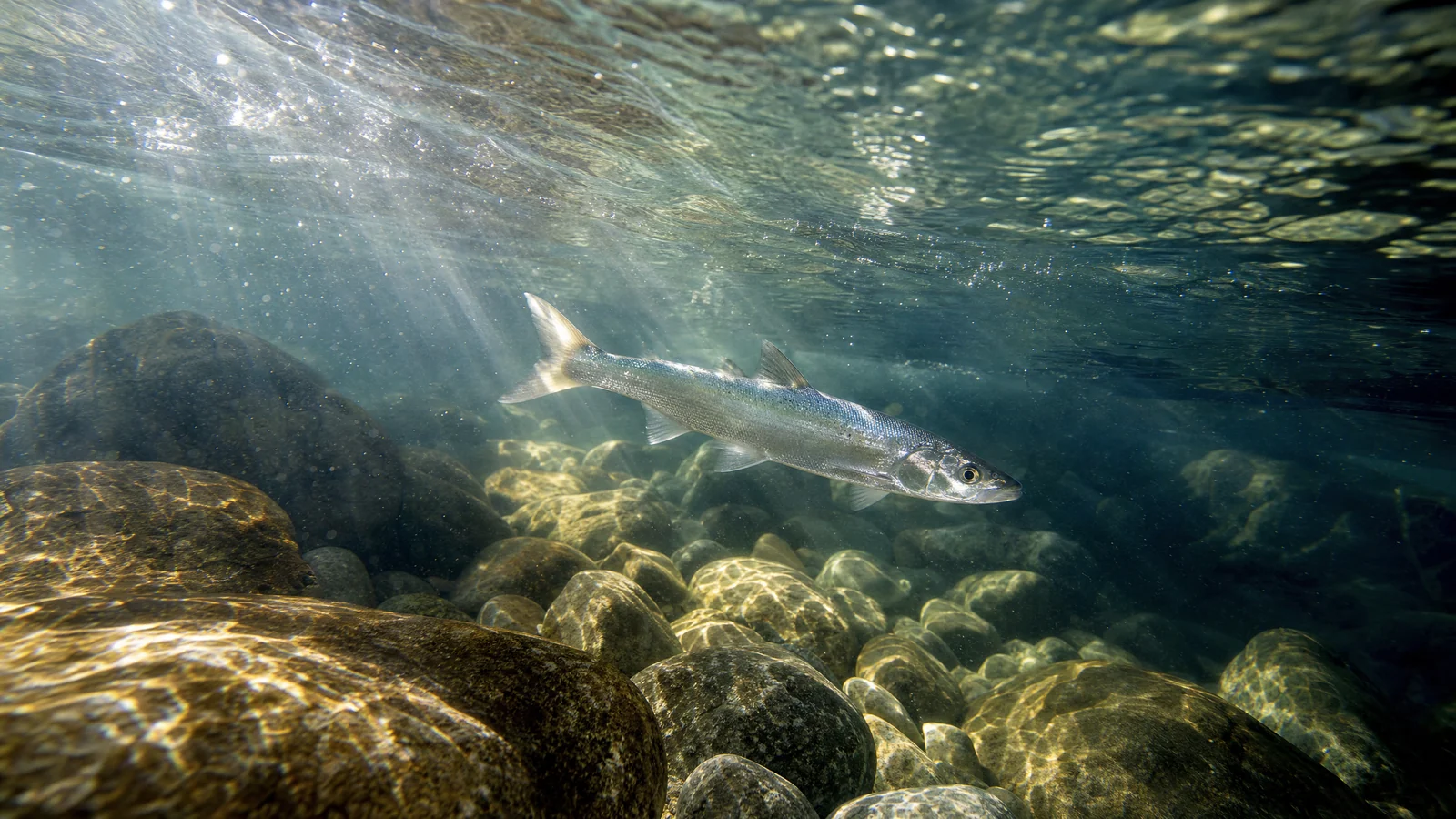
A fish dream usually sends people searching for one of two things.
Is it a taemong (conception dream)? And does it mean money is coming?
We'll answer both. But first, there's something worth noticing: where fish sat in old classification systems. Once you see that, it becomes clear why this dream was read the way it was.
Lumi
"Did you catch it, or did it get away?
That's really the whole story with fish dreams.
Size and color come second."
Table of contents
The Fish Was One Step Before the DragonThe Fish Doesn't Appear on the Old Interpretation ListWhy Temple Eaves Carry Fish CarvingsA Dream of Catching a FishA Dream of Losing the FishA Fish Tank, an Aquarium, or Just WatchingA Dead Fish, or a Fish Out of WaterA Large Fish, or a School of FishA Dream of Eating FishFish as a Taemong SymbolThe Most Honest AnswerFrequently Asked QuestionsThe Fish Was One Step Before the Dragon
Our dragon dream guide covers how the old system divided the hour of the dragon (jinshi) into finer segments. The "Thirty-Six Beasts" (samsibyuksu) entry of the Encyclopedia of Korean Culture (a major reference work on Korean history and culture) lays it out this way:
At the start of the dragon hour: the dragon. In the middle: the imugi (a serpent believed to become a dragon after a thousand years). At the end: the fish.
The fish sits at the far end of the dragon's rank.
The dragon comes first, the imugi — a dragon that never quite made it — sits in the middle, and the fish comes last. Within the same span of time, something complete and something not-yet-complete are placed side by side.
This ordering isn't an accident. Other sources confirm it.
There's a Korean expression, deungyongmun (登龍門, "ascending the dragon gate"). It comes from a story about a carp that swims upstream against a violent current and clears a gate, transforming into a dragon. Even today, passing a difficult barrier is still described this way.
Joseon-era paintings return to this scene often. A painting of a fish turning into a dragon is called eobyeonseongnyongdo (魚變成龍圖), and a painting of a carp leaping out of the water is called yakrido (躍鯉圖). Both were painted to wish someone success in the state examinations.
Put simply: the fish occupies the place of something not yet become. The potential is there, but it hasn't arrived yet.
Once you know that, it's easier to see why catching or losing the fish matters so much in this dream.
The Fish Doesn't Appear on the Old Interpretation List
The "Dreams" entry of the Encyclopedia of Korean Culture lists animal symbols in its folk dream-reading catalog: dragon, snake, crane, parrot, tiger, swallow, rat, pig.
Fish is not among them.
The reason is probably similar to why cow and chicken are also missing. Fish was food. It was too ordinary an animal to carry symbolic weight.
So the fish-dream interpretations you'll find online — claims about wealth or promotion — are mostly impossible to trace to a source.
What we can say for certain is how fish were used in paintings and stories, as covered above. That's the limit of what the record supports.
Why Temple Eaves Carry Fish Carvings
This next detail isn't from a dream-interpretation record, but it helps explain the fish's symbolic place.
At Korean Buddhist temples, wind chimes shaped like fish (pungyeong) often hang from the eaves. Inside the main hall, you may also find a wooden fish called mogeo hanging on display.
One explanation is passed down for this: a fish never closes its eyes.
Because fish appear to keep their eyes open even while resting, they were hung as a reminder for practitioners to stay awake and alert at all times.
Read in a modern light, the fish becomes an image of something that never sleeps, something that keeps watching. If a fish dream lingers with a sense of surveillance or observation, this cultural association may be part of why.
A Dream of Catching a Fish
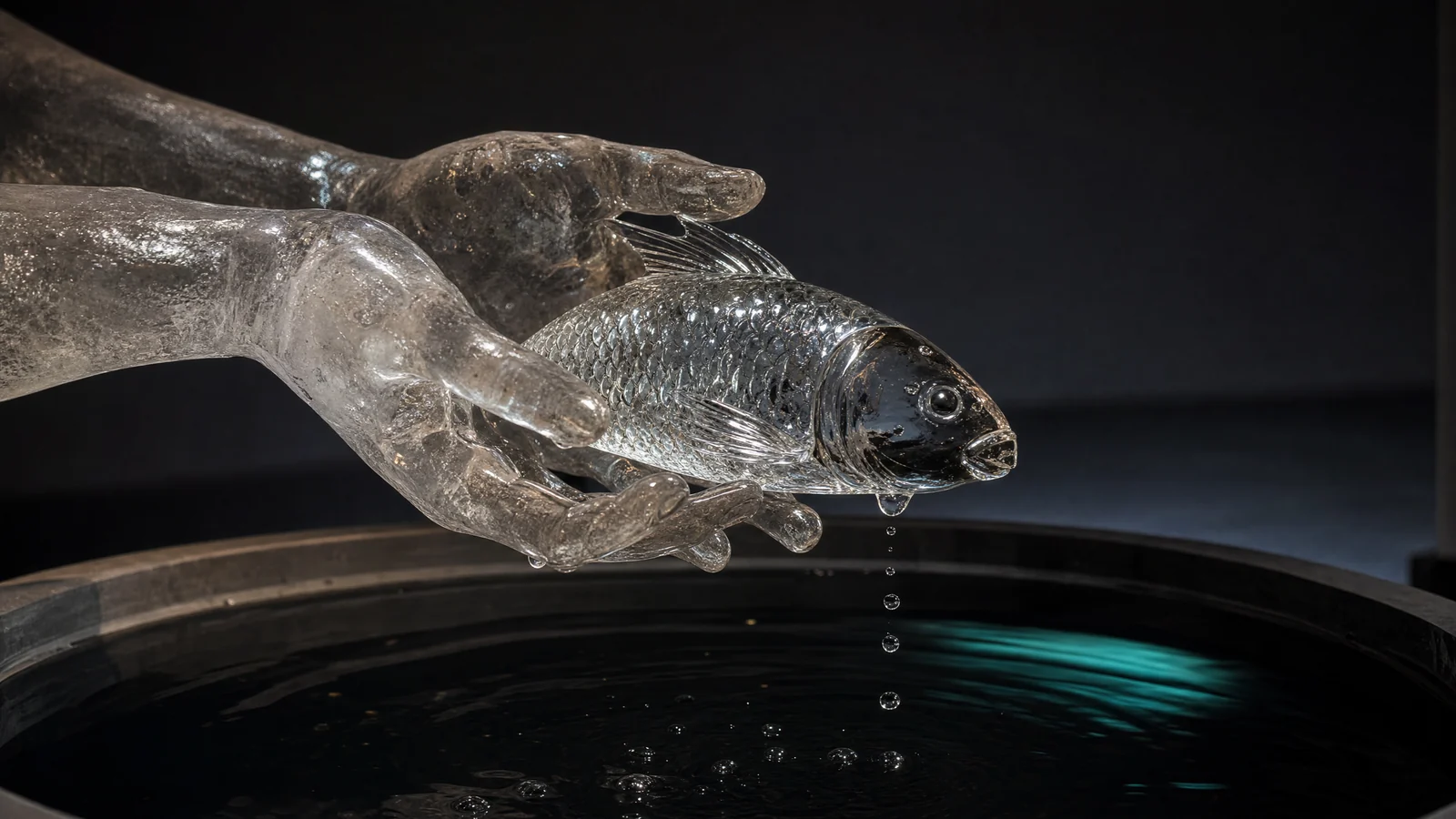
This is the most-searched scene in fish dreams.
In traditional interpretation, capturing an animal was generally read as acquisition. But there's no dedicated entry specifically for fish.
From a modern psychological perspective, catching something is often read as an image of control or achievement. Fish are different in one respect, though: even in your hand, they keep moving.
That's why what happens after the catch matters.
- Did you hold on without losing it?
- Did it slip away after you'd already caught it?
- Did you let it go?
The third option comes up more than you'd expect. If you caught the fish and then released it, that's less a scene of acquisition than a scene of letting go. Whether that moment felt relieving or regretful is the information worth keeping.
Whether you caught it bare-handed or with a net or fishing rod matters too. A tool in hand suggests a state of preparation.
A Dream of Losing the Fish
Lumi
"It slipped right out of your hands, didn't it? Do you remember that feeling?
That's the part that lingers longest in fish dreams.
Because there was a moment when it was actually yours."
From a modern psychological perspective, a dream of losing the fish isn't simply the opposite of catching one. It's a dream about having had it, then losing it.
Never catching something at all and catching it and then losing it are entirely different sensations. The second one carries a moment when the thing was already in your hands.
From a modern psychological perspective, this scene is often described as an image of something unresolved, or of regret. One reading connects it to situations where something felt almost finished, only to slip away at the last moment.
This overlaps with the imugi imagery mentioned earlier — something that almost happened but didn't. That's the same territory covered in our dragon dream guide.
If this dream repeats, it's worth writing down the interval between occurrences.
A Fish Tank, an Aquarium, or Just Watching
This is when you saw a fish in water from the outside, without touching it.
From a modern psychological perspective, this scene is an image of distance. You didn't reach in, and you didn't try to catch anything.
If it was a tank or an aquarium, there's an added layer: a fish that's confined. It sits behind glass, can't get out, and lives within a fixed size.
What matters here is the emotion attached to the scene — did it feel beautiful, stifling, or pitiable? If it felt stifling, that may not really be about the fish at all.
If the water looked cloudy or the tank looked dirty, that's worth noting too. It carries a sense of something unmaintained.
A Dead Fish, or a Fish Out of Water
This is the version that leaves you with an unpleasant feeling on waking.
In traditional interpretation, a drying-up water source was never read favorably. As we cover in our water dream guide, not yet available in English, one entry states that when a spring runs dry, wealth diminishes. A fish stranded outside water belongs to that same family of imagery.
From a modern psychological perspective, a fish out of water is an image of being out of place — somewhere it doesn't belong. It leans closer to maladjustment than to death.
Some readings describe this image as showing up when you're adjusting to a new environment, or when your current situation doesn't feel like a fit.
If the fish was floating belly-up, that's an image of something already over. There's no evidence, though, that this scene predicts any actual event.
A Large Fish, or a School of Fish
A Large Fish
From a modern psychological perspective, size is about scale. What matters is whether it felt manageable or overwhelming.
If the fish was so large it frightened you, that's less a fish dream and more a dream about being overwhelmed.
A School of Fish
From a modern psychological perspective, a school of fish carries a different feeling than other groups of animals. They all move in the same direction at once. That's different from the swarming rats in our rat dream guide, not yet available in English, or the scattered, independent presence of cats in cat dreams.
Whether the sheer number felt pleasant or overwhelming is one thing to note. Whether you were among them or watching from outside is another.
Carp and Goldfish
Carp carry cultural weight because of the deungyongmun story and the eobyeonseongnyongdo paintings mentioned earlier. Still, they don't appear as a confirmed entry in dream-interpretation records.
Goldfish couldn't have appeared in old records at all — they're an ornamental fish kept as a pet, so it's natural to read a goldfish dream through the aquarium lens instead.
A Dream of Eating Fish
From a modern psychological perspective, eating dreams are generally best explained by the body first. If you were hungry or ate something salty before bed, that may simply be the raw material.
Yi Ik (이익), a late-Joseon Silhak scholar, wrote in his essay Monggamnon (몽감론, "On the Causes of Dreams") that what we hear and experience becomes the substance of dreams.
Read symbolically, this scene goes one step further than catching. The fish was caught, became yours, and entered your body.
If you remember the taste, that's worth writing down. Taste rarely survives in dream memory.
Fish as a Taemong Symbol
Many readers search specifically for this section, so it gets its own space.
Fish are frequently mentioned as taemong material. Because they lay many eggs, they're sometimes linked to fertility, and there's a widespread claim that fish appear often in reported taemong cases.
Still, a line has to be drawn here.
A dream cannot tell you whether you're pregnant or what sex your child will be. Claims that a fish taemong means a son, and equally confident claims that it means a daughter, both circulate — neither has any real basis.
The encyclopedia's examples of common taemong material are foods like peppers, strawberries, and squash, or household items like brass bowls and vases. Fish isn't specifically listed among them.
And most taemong stories are attached after the fact. A dream only gets labeled a taemong once the child has already been born. More detail is available in our taemong guide.
If you're reading this while waiting to become pregnant, whether a fish appeared or not is a matter for your body, not your dreams.
The Most Honest Answer
Lumi
"The most common claim about fish dreams is that they mean wealth.
There's no fish entry on the dream-interpretation list.
But the 'not yet become' place is solid. That much we can say."
Traditional dream interpretation and modern psychology rely on different kinds of evidence.
What the old records confirm is this: the fish sat at the far end of the dragon's rank, and in paintings and stories it was treated as something not yet become. There's no dedicated entry for it on the interpretation list.
The encyclopedia itself notes, after laying out its list of dream-reading methods, that such interpretations formed naturally from many people's experiences rather than from a consistent theoretical basis.
A few points should be made clearly.
No verified dream-interpretation entry says a fish dream means wealth.
A fish taemong cannot reveal a child's sex.
There's no verified connection between fish dreams and lottery numbers, either. Money-related dreams are covered separately in our guide to picking up money in a dream.
Seeing a dead fish doesn't mean something bad will happen. This isn't a predictive dream.
Frequently Asked Questions
Is a fish dream a taemong? Fish are indeed common taemong material, but a fish appearing doesn't mean pregnancy. Most taemong stories are attached after the fact.
Does a fish dream mean money is coming? There's no fish entry on the interpretation list. It's a widely circulated claim, but hard to trace to any source.
I caught it, then it got away. That's a different dream from never catching it at all. The core of this dream is that there was a moment when it was already in your hands — some readings connect it to a sense of something unresolved or left undone.
The fish was out of water. This is an image of being somewhere you don't belong. Some readings lean closer to maladjustment than to death.
Is a carp dream special? Carp do carry cultural weight because of the story of the carp becoming a dragon. Still, it isn't confirmed as a formal dream-interpretation entry.
I keep forgetting my dreams. Memory starts fading about 90 seconds after waking. Staying still for a moment instead of getting up right away can help more details surface.
Fish dreams tend to have vague endings — caught and then lost, seen and then gone.
There's nothing specific you need to do today. If you want one thing to check, look at whether something in your life feels almost finished but isn't quite wrapped up. That fits especially well if yours was a losing-the-fish dream.
If you know what that unfinished thing is, moving it forward by even one step today isn't a bad idea.
The same fish dream leaves a different color for each person who has it.
Dream Talisman looks at the dream scene you record together with your day stem (ilgan) in the Five Elements system, and creates a color and phone wallpaper for the day. It's less an app that interprets your dream for you than one that lets you carry today's dream with you for the rest of the day.
Curious what color that fish would come out as?
→ Record your dream in Dream Talisman
References
- "Thirty-Six Beasts" — Encyclopedia of Korean Culture · The finer 36-beast segments of the dragon hour and the fish's place within them
- "Dreams" — Encyclopedia of Korean Culture · The folk dream-reading catalog, Yi Ik's essay Monggamnon
- General art-history material on Joseon-era eobyeonseongnyongdo (魚變成龍圖) and yakrido (躍鯉圖) paintings tied to wishes for exam success
- General Buddhist cultural material on temple wooden fish (mogeo) and eave wind-chime fish decorations
- General research in modern sleep and dream psychology